
If you live in Oslo, Stockholm, Copenhagen, Amsterdam, or Antwerp, late December is rarely about cold alone; it is about the relentless lack of sunlight. In Stockholm on December 29, dawn stirs weakly around 08:43 AM and surrenders by 14:52 PM. Across the Netherlands and Belgium, Atlantic stratus clouds can seal the sky solid grey for ten consecutive days, turning festive week into an endurance exercise in candlelit interiors and soaked bicycle commutes.
Now check the latitude line of Kashmir. Srinagar sits at 34 degrees north — roughly level with Crete and Morocco — yet tucked inside a 1,585-metre Himalayan bowl ringed by 4,000-metre snow ridges. Between Christmas and New Year, the sun climbs high and bright for nearly ten full hours every clear day, bouncing crisp gold light across frozen willow marshes and cedar-forested slopes. For Nordic travellers raised on friluftsliv and Dutch or Belgian walkers weary of crowded Alpine mega-resorts, New Year’s Kashmir Tours offer something remarkably rare: authentic winter snow paired with real solar warmth, rural quiet, and centuries-old artisan village life.
Designing a thoughtful Kashmir winter tour from Netherlands Sweden Norway or Denmark takes a very different philosophy than ticking off hurried tourist checklists. Instead of burning half your week inside highway traffic, slow valley pacing trades resort bustle for mud-and-timber eco-lodges in Ganderbal, quiet family-run Nigeen Lake houseboats, silent conifer snowshoeing across Doodhpathri and Yusmarg, and ethical visits straight to Kashmiri weaving looms. Here is your grounded field manual for planning low-impact Kashmir Tour Packages across the festive turn of the year.
The 34°N Solar Advantage: Northern Europe vs. Kashmir in Late December
Nordic and Benelux guests often arrive in Srinagar bracing for Arctic chill, only to unzip their winter shells over midday kahwa beside Srinagar‘s Mughal garden terraces. Because Kashmir sits far closer to the Tropic of Cancer than Northern Europe, noon solar intensity in late December feels astonishingly restorative — even when morning puddles carry a thin glaze of frost.
| City / Valley (Dec 30 Average) | Latitude | Daylight Hours | Typical Midday Feeling |
|---|---|---|---|
| Oslo, Norway | 59.9°N | 5h 57m | Low twilight glare, -2°C to +1°C |
| Stockholm, Sweden | 59.3°N | 6h 08m | Dim dusk by 15:00, -1°C to +2°C |
| Copenhagen, Denmark | 55.7°N | 7h 06m | Damp maritime breeze, +2°C to +4°C |
| Amsterdam / Brussels | 52.4°N / 50.8°N | 7h 48m / 8h 02m | Overcast drizzle, +5°C to +7°C |
| Srinagar & Manasbal Valley | 34.1°N | 9h 58m | Bright dry sun, +7°C to +10°C (frosty nights -3°C) |
| Doodhpathri & Yusmarg (2,400–2,730 m) | 33.9°N | 9h 56m | Sunlit snow trails, 0°C to +4°C (nights -6°C) |
That extra three to four hours of bright high-angle sunshine transforms your daily rhythm. You can linger over freshly baked girda bread and walnut honey at 08:30 AM, walk forested winter ridges all afternoon without headlamps, and still watch pink alpenglow fade softly off snowbound peaks around 17:20 PM.
European Eco-Stays in Kashmir: Sagg Eco Village, Manasbal & Quiet Nigeen Lake
Mainstream winter tourism in Kashmir clusters tightly around noisy boulevard strips and concrete resort blocks. Travellers committed to sustainable winter travel Kashmir have much richer, quieter options when they look toward rural Ganderbal, Manasbal Lake, and Nigeen’s willow-lined western shore.
Sagg Eco Village, Ganderbal: Rural Immersion Without Greenwashing
Forty-five minutes north of Srinagar toward the Sind Valley foothills sits Sagg Eco Village — Kashmir’s pioneering regenerative rural homestead and arguably the single finest fit among European eco-stays Kashmir can offer. Built using local mud plaster, hand-hewn deodar timber, and traditional Kashmiri insulation techniques rather than imported poured concrete, Sagg operates with zero single-use plastics, seasonal root-cellar kitchens (serving heirloom winter collard greens haakh, turnips, dried lotus stems, and free-range village dishes), and local staff from neighbouring hamlets. Evenings gather around clay-and-brick wood stoves with folk musicians playing the rabab rather than loudspeaker DJs — a quiet New Year’s Eve that resonates deeply with Dutch, Swedish, and Norwegian guests.
Manasbal Lake: Winter Birdwatching & Nadru Harvesters
A short drive west of Ganderbal lies Manasbal Lake, the deepest freshwater lake in the Kashmir Valley and one of its least visited during winter. While Dal Lake buzzes with motor traffic along its outer boulevard, Manasbal sleeps in near silence beneath bald walnut orchards and terraced Mughal ruins at Jarokha Bagh. Come December, migratory waterfowl — greylag geese, tufted ducks, northern pintails, and kingfishers — shelter among submerged reed beds while local boatmen use long bamboo poles to pull crisp white nadru (lotus stems) straight from the cold lake mud for winter curries.
Slow Travel on a Family-Run Nigeen Lake Houseboat
For your Srinagar nights, prioritize slow travel Srinagar Nigeen Lake houseboat hospitality over main-road hotels. Choose a three- or four-room family cedar boat moored along Nigeen’s quiet inner cove where your host family has tended the craft for three generations, heated sustainably with pruned orchard willow in cast-iron bukhari stoves. Pair two or three restful Nigeen nights with quiet heritage strolls using our Kashmir Houseboat Escape 3-Day stay or browse vetted small-scale properties inside our Kashmir hotels and houseboats collection.
Snowshoeing Doodhpathri, Yusmarg & Aru: Silent Trails Away from Lift Crowds
Nordic hikers and Belgian trail walkers rarely fly seven thousand kilometres to queue ninety minutes for a noisy gondola cabin or dodge revving snowmobiles. While hard-charging Alpine downhill riders head straight to Apharwat Ridge — covered in detail in our European winter skiers’ New Year’s Kashmir tours — slow outdoor travellers find Kashmir’s real magic in three hushed winter valleys ideal for snowshoeing Doodhpathri Yusmarg winter itineraries.
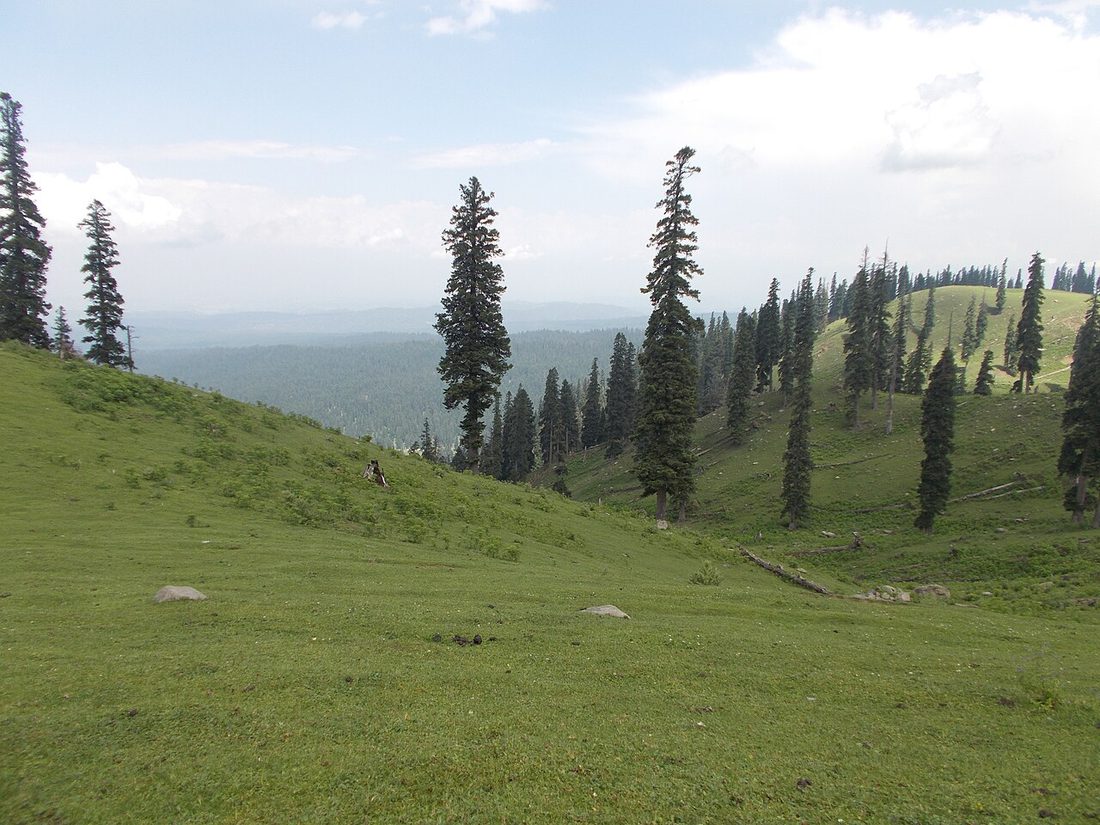
Doodhpathri (2,730 m): Frosted Rivulets & Conifer Glades
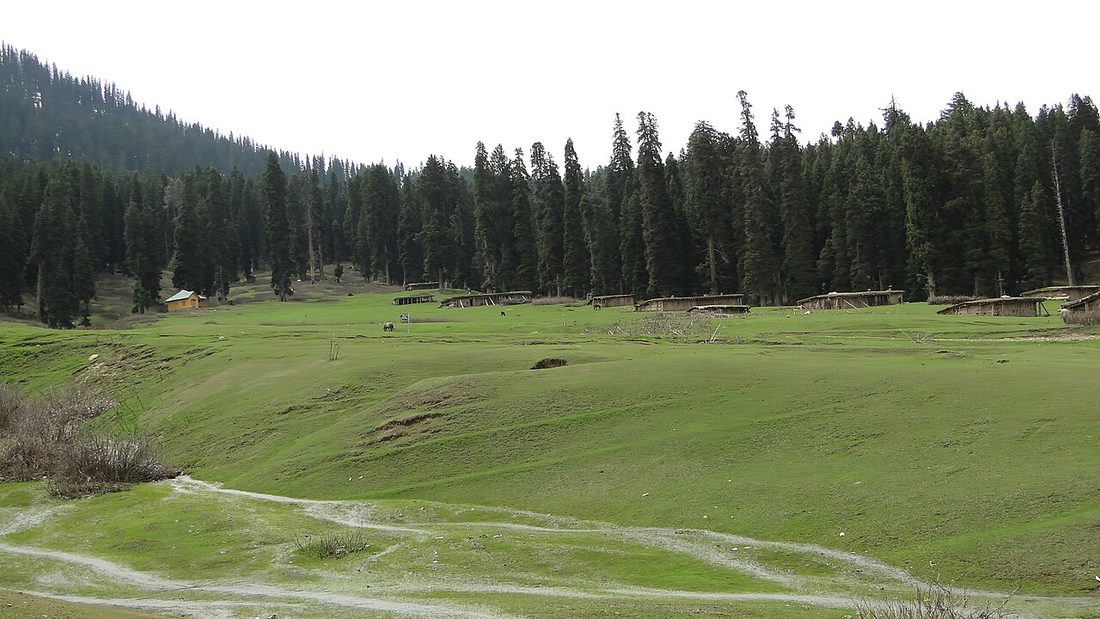
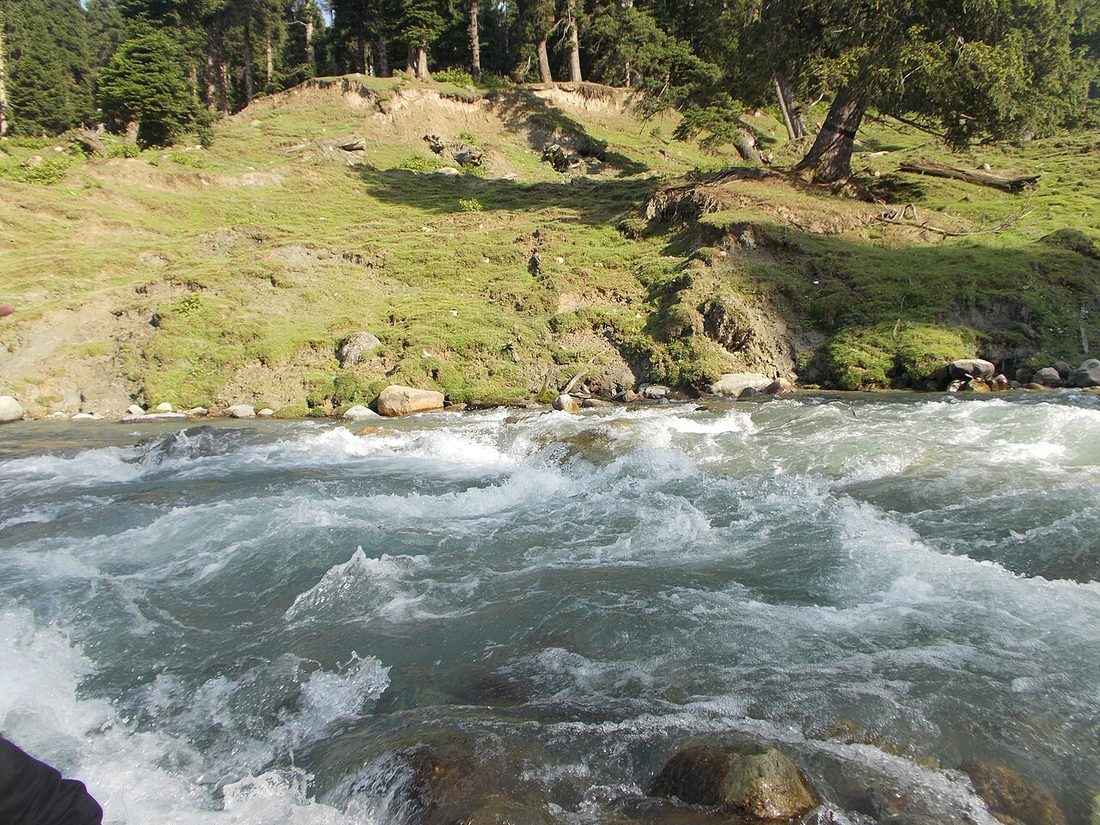
Just 42 kilometres southwest of Srinagar in Budgam district, Doodhpathri (literally “Valley of Milk”) spreads across an undulating bowl of tall fir forests and icy whitewater streams. Because there are no concrete multi-storey resort hotels inside the meadow, winter mornings belong almost entirely to wind in the spruce canopy and the sound of snowshoes crunching over untouched drifts beside the Shaliganga stream. Bring a thermos of saffron kahwa, follow a local Budgam mountain guide two hours uphill toward Tangnar ridge, and you may encounter fewer than ten other hikers all morning.
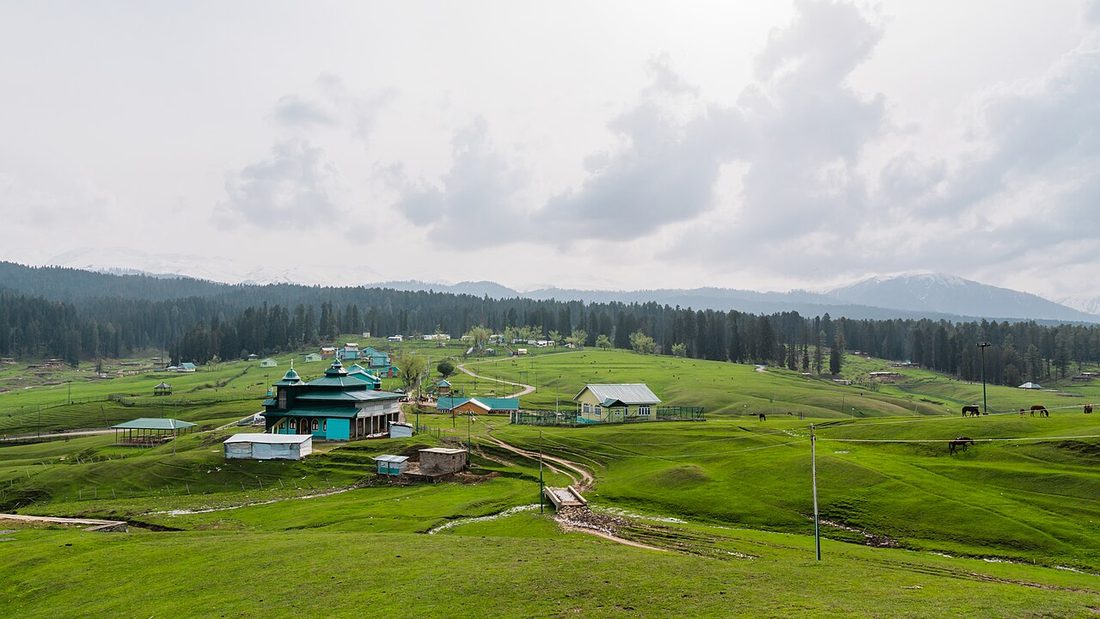
Yusmarg (2,396 m) & Charar-i-Sharief
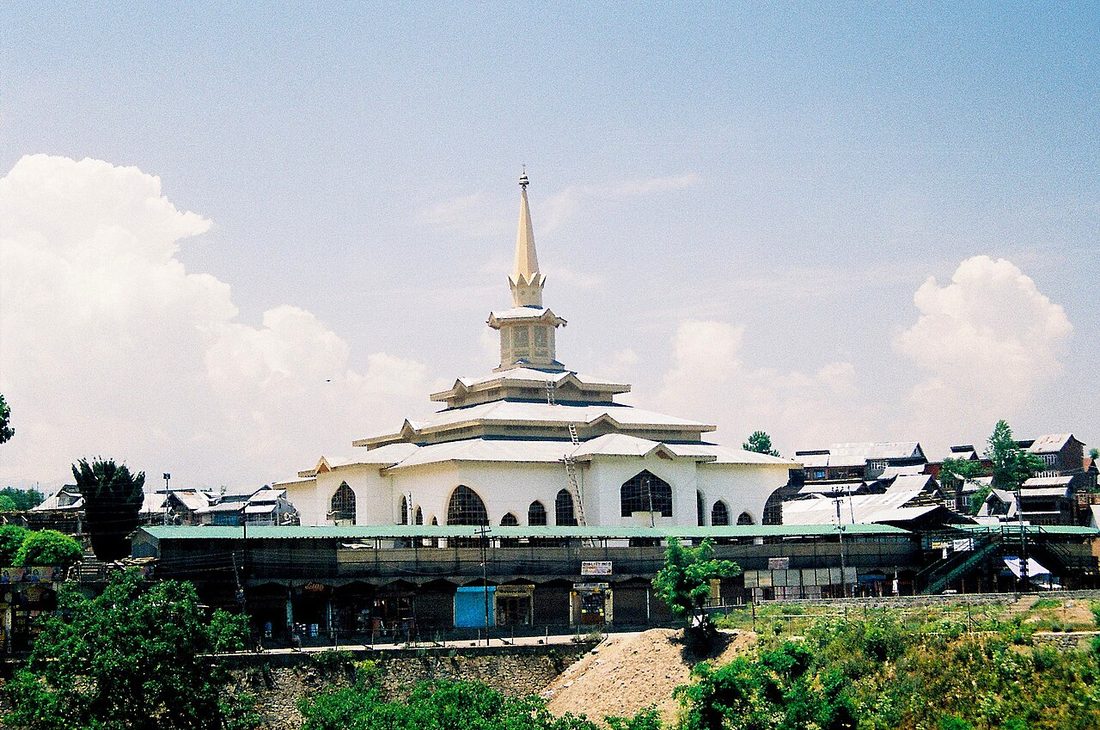
Further south across rolling apple-orchard ridges sits Yusmarg, flanked by the dramatic Pir Panjal summits of Tatakooti (4,725 m) and Sunset Peak. On the ridge leading in stands Charar-i-Sharief, the multi-tiered wooden Sufi shrine dedicated to Kashmir’s 14th-century mystic poet Sheikh Noor-ud-Din Noorani (Nund Rishi) — whose verses celebrated forest stewardship centuries before modern ecology existed. Past the meadow floor, an easy forested snow walk winds gently four kilometres toward frozen Nilnag lake, making Yusmarg a natural favourite on low-impact New Year’s Kashmir Tours.
Aru Valley & Drung Frozen Cascade
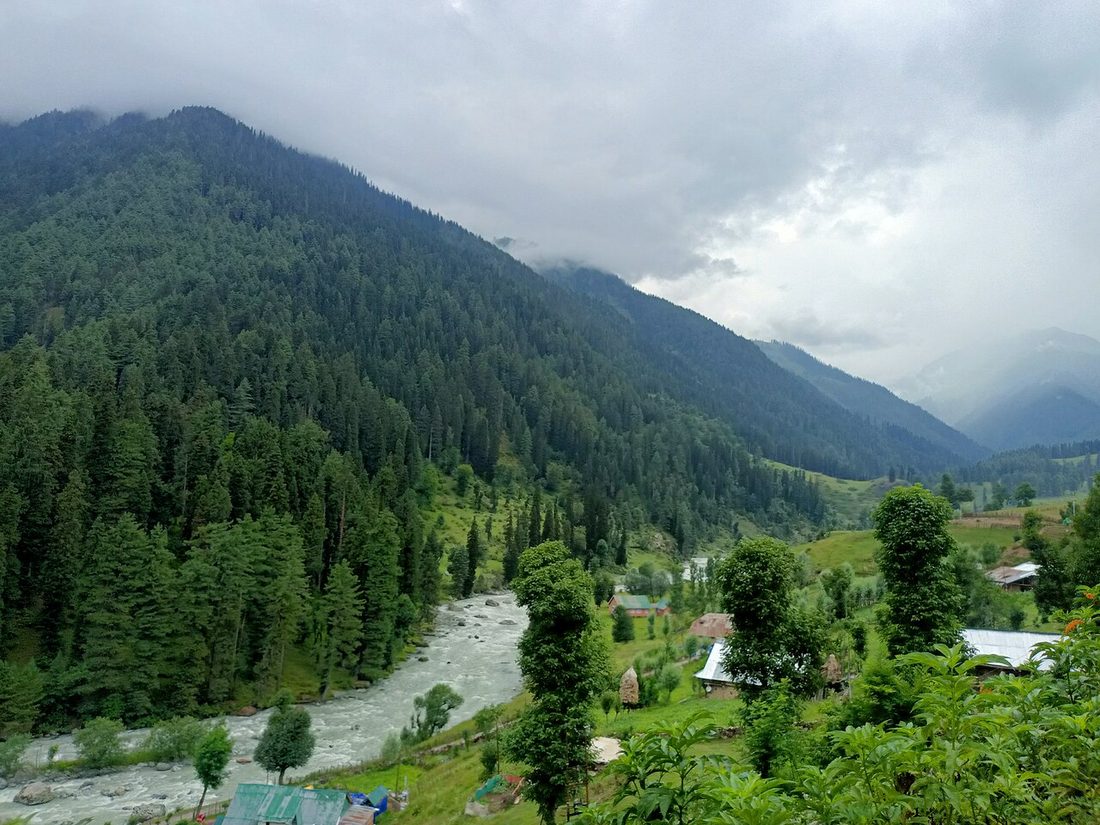
Adding two unhurried days in South Kashmir brings you above Pahalgam to Aru Valley (2,408 m), a pastoral hamlet of wooden shepherd houses tucked beneath glaciated ridges where winter trails climb gently alongside icy creeks without vehicle roar. Pair that quiet valley loop with an early-morning excursion to the frozen turquoise ice curtains of Drung Waterfall — smoothly combined inside our Kashmir 6N/7D Winter & Drung Waterfall itinerary or our flexible Charismatic Kashmir Tours route.
Flights from Amsterdam, Stockholm, Oslo, Copenhagen & Brussels
Carbon-conscious Northern European travellers flying east prefer clean one-stop widebody routings and longer 9-to-12-day stays to make long-haul mileage worthwhile. Here is how the Amsterdam Stockholm Oslo to Srinagar flights corridor aligns cleanly via New Delhi (DEL):
- Amsterdam Schiphol (AMS): KLM operates daily nonstop Boeing 777/787 flights straight from Schiphol to New Delhi Terminal 3 (approx. 8h 15m eastbound), arriving in early morning right in time for midday Air India or IndiGo departures up to Srinagar (SXR). Air India also flies AMS–DEL nonstop on high-capacity schedules.
- Stockholm (ARN), Oslo (OSL) & Copenhagen (CPH): Finnair via Helsinki (HEL) offers one of Northern Europe’s shortest great-circle routings into New Delhi, while KLM (via AMS), Lufthansa (via FRA/MUC), and Qatar Airways (via Doha) connect seamlessly out of all three Scandinavian capitals plus Gothenburg and Bergen. SAS passengers connect smoothly onto Star Alliance Air India or Lufthansa legs via Copenhagen or Frankfurt.
- Brussels (BRU): Most Belgian travellers either catch the 1h 50m Thalys/Eurostar rail link straight into Amsterdam Schiphol terminal for KLM’s nonstop Delhi flight, or fly Brussels Airlines/Lufthansa via Frankfurt and Munich.
Ethical Direct-from-Weaver Craft Sourcing (Zero Commission Loops)
Nordic and Benelux guests consistently ask the same principled question before stepping into any Srinagar textile studio: “How do we make sure our euros actually reach the woman spinning yarn and the weaver at the loom — not a 40% roadside broker commission?”
In Kashmir, honest craft shopping comes down to avoiding glossy highway emporiums that pay heavy kickbacks to unsolicited taxi drivers, and instead visiting registered artisan workshops directly across Old Srinagar, Kanihama, and Budgam. Genuine hand-spun Kashmiri Pashmina, Kani tapestry shawls, and hand-knotted Qaleen carpets now carry tamper-proof Geographical Indication (GI) QR-code labels issued after laboratory verification by Srinagar’s Craft Development Institute (CDI / PTQCC) and Indian Institute of Carpet Technology (IICT). Scanning the tag on your smartphone reveals the registered artisan, fibre micron grade, and origin — protecting centuries of handcraft from powerloom imitations.
Whether you are buying one heirloom shawl for your winter wardrobe in Copenhagen or sourcing fair-trade Kashmiri crafts commercially for a boutique in Amsterdam or Stockholm, review our technical 2026–2027 EU & UK export update covering REX origin rules and GI QR traceability alongside our European Kashmiri Pashmina and Kani buying guide.
Slow-Travel Winter Budget (EUR, SEK, NOK & DKK) for 9 Days
Below is a grounded per-person estimate (two adults sharing, festive week December 26 – January 4) for a 9-day slow-paced circuit combining Sagg Eco Village, a family Nigeen Lake cedar houseboat, Manasbal birding, guided snowshoeing in Doodhpathri and Yusmarg, and quiet Aru Valley walks. Approximate conversions reflect €1 ≈ 11.4 SEK ≈ 11.7 NOK ≈ 7.46 DKK.
| Expense Item (8N/9D Slow Circuit, Twin Share) | EUR (€) | SEK (kr) | NOK (kr) | DKK (kr) |
|---|---|---|---|---|
| Return Flights (AMS/ARN/OSL/CPH/BRU–DEL–SXR) | €840 – €1,120 | 9,580 – 12,770 | 9,830 – 13,100 | 6,265 – 8,355 |
| 8 Nights Eco-Lodges & Heated Nigeen Houseboat (Half-Board) | €690 – €980 | 7,865 – 11,170 | 8,075 – 11,465 | 5,145 – 7,310 |
| Private Heated Hybrid/Diesel SUV + Local Snow-Chain Transfers | €220 – €290 | 2,510 – 3,305 | 2,575 – 3,395 | 1,640 – 2,165 |
| Local Snowshoe Guides (Doodhpathri, Yusmarg, Aru) & Shikara | €135 – €195 | 1,540 – 2,225 | 1,580 – 2,280 | 1,005 – 1,455 |
| Eco-Village Farm Dinners, Quiet NYE Supper & Artisan Lunches | €150 – €210 | 1,710 – 2,395 | 1,755 – 2,455 | 1,120 – 1,565 |
| Indian e-Visa + Specialist Regional Travel Insurance | €135 – €190 | 1,540 – 2,165 | 1,580 – 2,225 | 1,005 – 1,420 |
| Total Realistic 9-Day Slow Winter Budget | €2,170 – €2,985 | 24,745 – 34,030 | 25,395 – 34,920 | 16,180 – 22,270 |
Curate a Low-Impact Nordic or Benelux Winter Escape
We partner directly with Ganderbal eco-homesteads, three-generation Nigeen boat families, and licensed Budgam walking guides — zero resort noise, transparent EUR invoices, and direct local pay.
Sample 9-Day Slow Valley & Snowshoe Itinerary
- Day 1 (Dec 26): Evening departure from Amsterdam, Stockholm, Oslo, Copenhagen, or Brussels via Delhi.
- Day 2 (Dec 27): Midday flight into Srinagar; unhurried transfer straight to your willow-heated cedar houseboat on quiet Nigeen Lake. Rest beside the bukhari with herbal saffron kahwa.
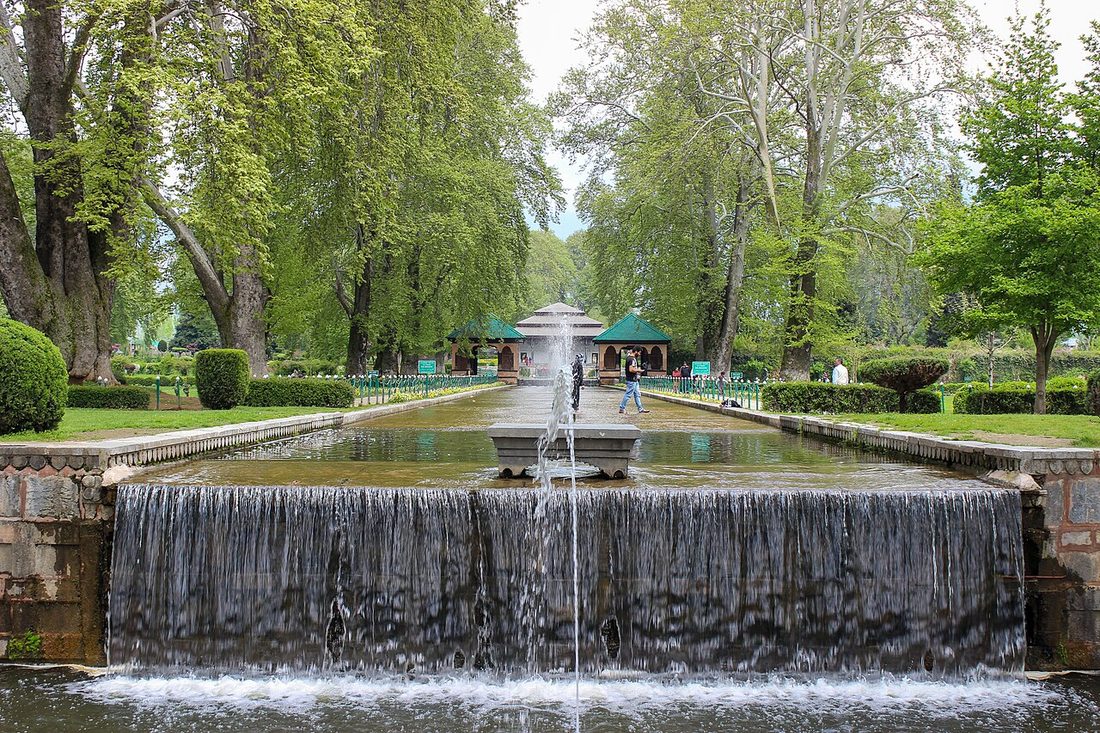
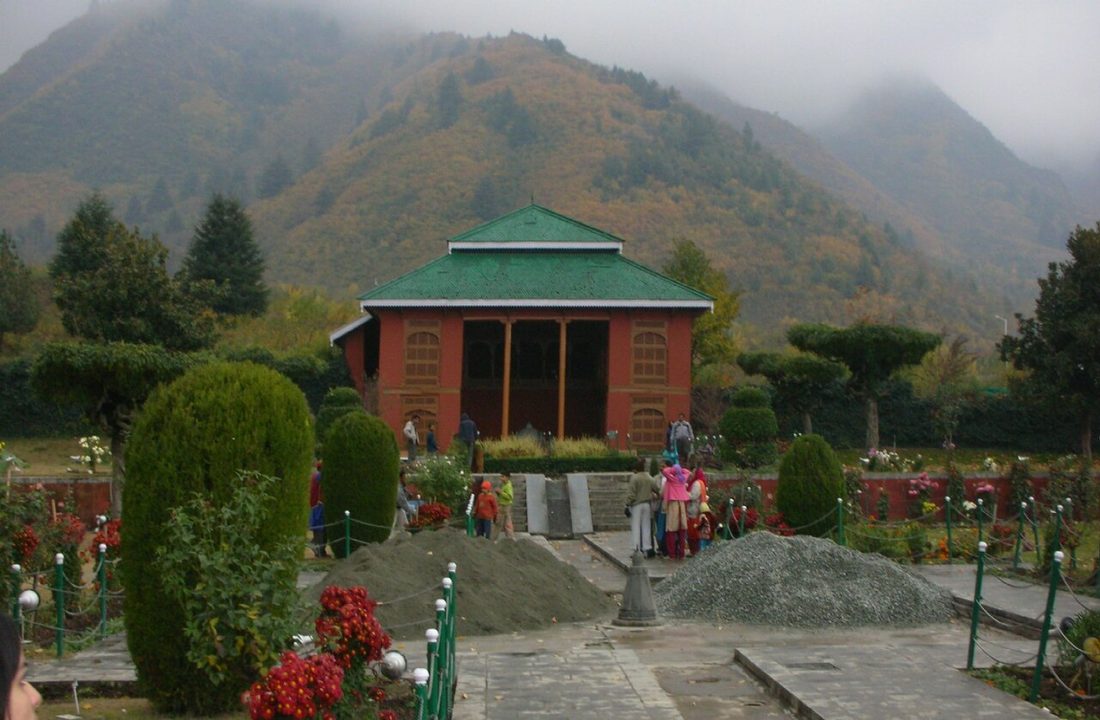
- Day 3 (Dec 28): Dawn shikara glide through reed channels, winter sunlight walks inside empty Shalimar Bagh and Chashme Shahi, and an unpressured afternoon visiting Old Srinagar wooden shrines and GI-tagged weaving studios.
- Day 4 (Dec 29): Drive north to Manasbal Lake for silent winter birdwatching and lotus-root demonstrations, checking into Sagg Eco Village in Ganderbal by afternoon for organic village cooking over wood smoke.
- Day 5 (Dec 30): Rural heritage walk through terraced Sind Valley hamlets, woodcraft demonstrations, and fireside storytelling — zero rushing, letting winter light dictate the clock.
- Day 6 (Dec 31): Guided pine-forest snowshoe excursion across Doodhpathri’s frozen Shaliganga rivulets, returning by dusk for an intimate acoustic rabab and farm-to-table New Year’s Eve supper (no loud nightclub gala fees).
- Day 7 (Jan 1): Scenic rural drive past Charar-i-Sharief wooden shrine into Yusmarg; slow snow walk through spruce trails toward frozen Nilnag, then continue south toward Pahalgam’s Lidder Valley.
- Day 8 (Jan 2): Peaceful morning walk across snowy shepherd pastures in Aru Valley before returning gently to Srinagar for final fair-trade craft pickups and packing.
- Day 9 (Jan 3–4): Midday SXR–DEL transfer with a calm Delhi Aerocity buffer night ahead of your nonstop European flight home.
Travellers keen to widen this slow loop with southern Mughal gardens and deeper culinary trails can pair ideas from our Southern European cultural and culinary winter guide, while UK-based friends joining your family reunion can cross-check flights via our UK departures guide. Explore every full-valley itinerary across our Kashmir Paradise Tour, complete tour packages catalog, Kashmir destinations directory, and seasonal Kashmir travel blog before messaging our Srinagar desk via our contact page.
Design Your Slow-Paced 2026–2027 Winter Retreat Direct in Srinagar
Skip high-volume tour buses. Our local planners tailor ethical New Year’s Kashmir Tours for Scandinavian, Dutch, and Belgian guests — pairing eco-stays, quiet snowshoe trails, and verified direct-artisan meetings.
Frequently Asked Questions
Do I need technical winter mountaineering gear for Doodhpathri and Yusmarg snowshoeing?
Not at all. Gradients along Doodhpathri’s Shaliganga basin and Yusmarg’s spruce trails stay mild and scenic. Bring sturdy waterproof ankle-high hiking boots, merino base layers, wool socks, gaiters, and trekking poles (packed inside checked luggage); local guides supply snowshoes or micro-spikes whenever fresh drifts exceed 20 centimetres.
What travel insurance do Nordic and Benelux citizens need for Jammu and Kashmir?
Because the Ministries of Foreign Affairs in Sweden (UD), Norway (UD), Denmark (UM), the Netherlands (BZ — typically orange/red code for Kashmir Valley), and Belgium maintain cautious travel advisories for Jammu and Kashmir, standard Nordic/Dutch home-or-bank travel insurance policies frequently exclude claims there. Always obtain written confirmation from your insurer or purchase specialist regional medical and evacuation coverage before departing Europe.
Are vegetarian and plant-forward winter meals easy to arrange in Kashmir?
While traditional celebratory Wazwan leans heavily on lamb, everyday Kashmiri home cooking features outstanding winter vegetarian dishes: collared haakh simmered in mustard oil, crisp nadru yakhni (lotus stem in saffron-fennel yogurt), Kashmiri rajma, slow-cooked turnips, and dum aloo. Eco-stays like Sagg Eco Village and family Nigeen houseboats cheerfully prepare 100% vegetarian or plant-based menus with 24 hours’ notice.
Can we hire electric or low-emission transport inside the Kashmir Valley?
Full electric SUV charging networks are still emerging across mountainous districts like Budgam and Pahalgam, so winter snow clearance still relies on modern BS-VI clean-diesel or hybrid Toyota Innovas and local 4×4 snow-chain vehicles. The highest-impact way to shrink your footprint is slow pacing: choosing 3–4 nights per base rather than racing across five districts in five days.
How early should we book Sagg Eco Village and family Nigeen houseboats for New Year’s week?
Small eco-lodges hold fewer than a dozen winter-insulated rooms, and genuine heritage Nigeen boats carry only two to four suites each. Booking between August and mid-October secures prime late-December dates without resorting to noisy mainstream hotel strips.