
Anyone who has fought for elbow room on the Galzigbahn in St. Anton on December 30, or paid €88 for a single lift day in Verbier only to scrape down artificial snow ribbons framed by brown grass, knows why Europe’s Silvester ski week tests a freerider’s patience. Every peak-season bed in the Arlberg and Valais triples in price, off-piste stashes are tracked out within twenty minutes of first chair, and half your afternoon disappears inside cafeteria queues.
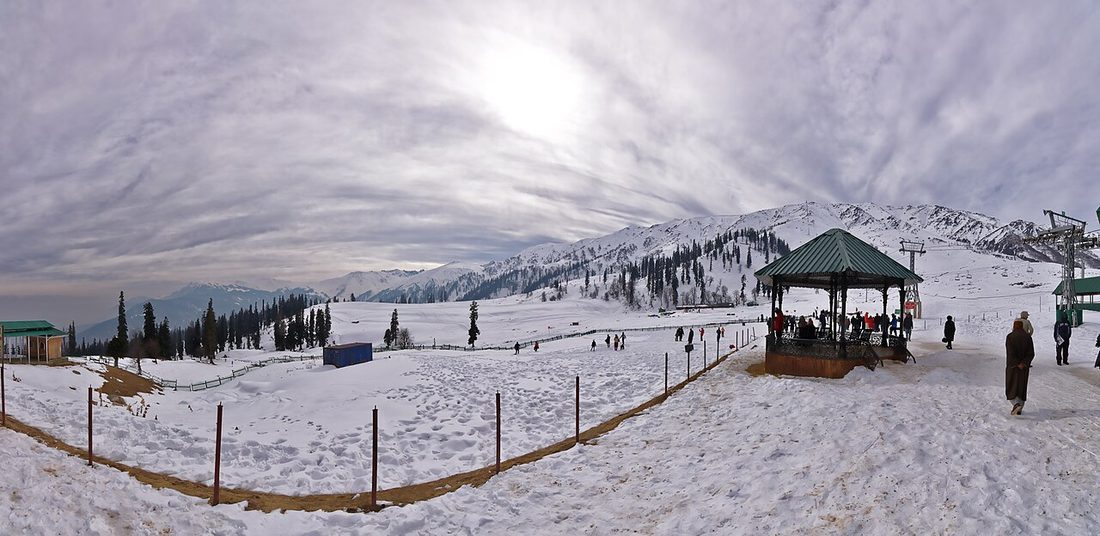
Now shift the map six thousand kilometres southeast to the Pir Panjal range of Kashmir. Step out of a Poma-built gondola cabin at Kongdoori Station (3,050 m) at 09:10 AM on New Year’s Eve, click into 108 mm underfoot touring skis, and look down across widely spaced Himalayan blue pines and silver firs dropping straight toward Baba Reshi. Nobody is racing you to the fall line. There are no groomed motorway pistes crowded with snowploughing holidaymakers, no thumping Euro-pop deck speakers — just 1,300 vertical metres of raw lift-served terrain topped by Apharwat Ridge at 3,979 metres.
That stark contrast is pulling a growing wave of experienced riders from Munich, Zurich, Geneva, Lyon, and Innsbruck onto New Year’s Kashmir Tours built specifically around freeriding and Kashmiri winter craft. Yet skiing the Western Himalaya is nothing like dropping into Zermatt or Chamonix with a pocket trail map. Lift infrastructure consists of a single two-stage gondola plus one quad chairlift; avalanche control is partial rather than resort-wide; and late December sits at the opening edge of Kashmir’s snowpack season. Written from my boots on the ground in Gulmarg, this technical briefing covers snowpack honesty, European vs. Himalayan EUR budgets, Lufthansa/SWISS/Air France ski-bag routing, backcountry guide protocols, and how to pair five vertical mountain days with two restorative heritage days via our Kashmir Tour Packages.
Apharwat Powder vs. Chamonix & Zermatt: Understanding Gulmarg’s Terrain Anatomy
First-time visitors comparing Apharwat powder vs Alps Chamonix Zermatt need to discard European piste assumptions immediately. Gulmarg is not a 300-kilometre interconnected ski circus with heated six-pack bubbles and colour-coded grooming reports. It is a single colossal freeride mountain anchored by one world-class French-engineered Poma Gondola rising from 2,650 m village level to 3,979 m, backed by a chairlift serving the upper Mary’s Shoulder bowl.
What makes Gulmarg addictive for DACH and French backcountry skiers is its vertical micro-climate. Western Disturbances rolling in off the Mediterranean and Caspian sweep straight across the arid Karakoram corridor before slamming into the Pir Panjal barrier — dumping remarkably light, low-density cold-smoke snow at elevation while shielding lower tree lines from European-style rain events.
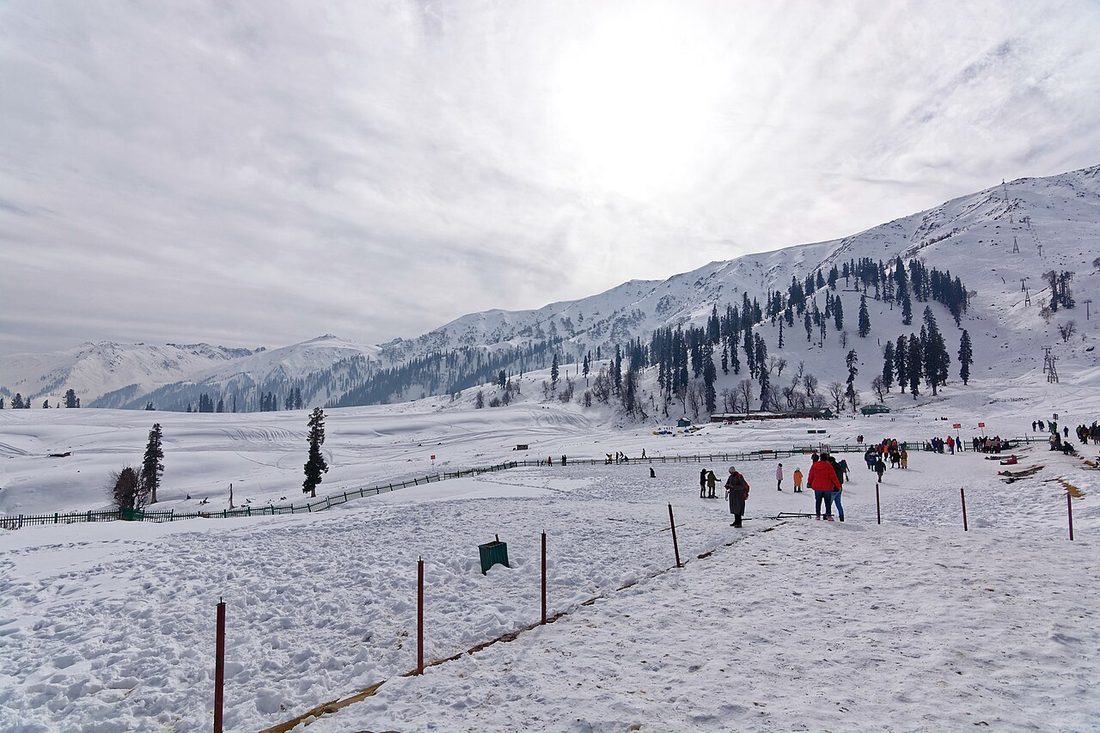
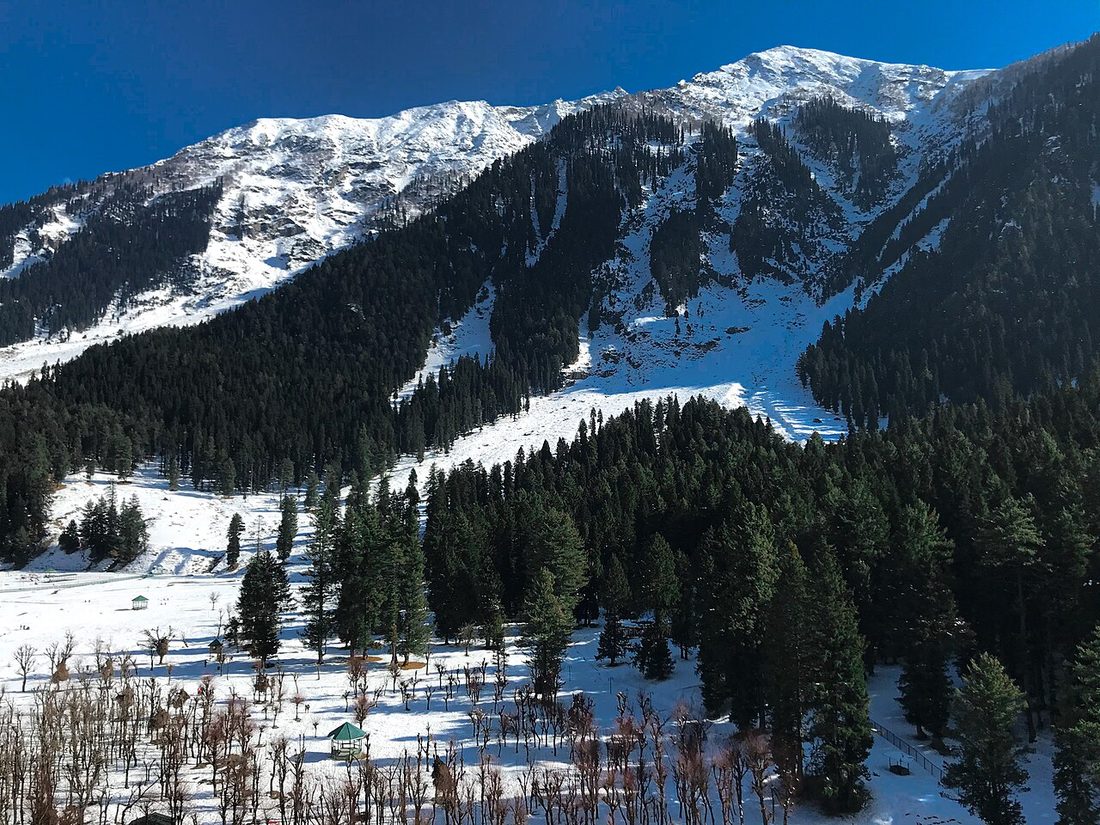
- Lower Glades & Phase 1 Trees (2,650 m – 3,050 m): When storm clouds sock in Apharwat’s upper ridge on December 29, skiers stay below treeline on Phase 1. Steep, pillow-dotted lines through giant deodars and blue pines toward the village bowl and the classic Baba Reshi shrine run (requiring a short chained 4×4 shuttle back from 2,200 m) stay skiable even in near-whiteout visibility.
- Kongdoori Bowl & Mary’s Shoulder (3,050 m – 3,450 m): Accessed via Phase 1 and the Kongdoori Chairlift, these rolling open benches offer ideal warm-up legs for skiers shaking off Frankfurt or Zurich overnight jet lag, plus playful natural wind-lips once early storms fill the gullies.
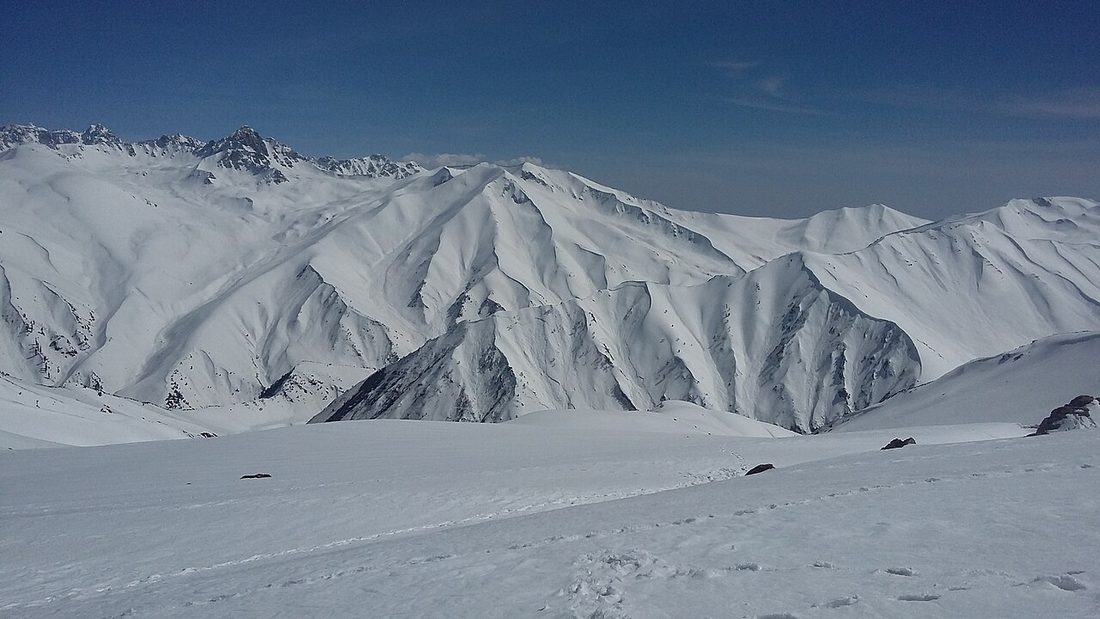
- Apharwat Peak & Phase 2 Bowls (3,450 m – 4,124 m with skinning): Exiting Phase 2 at 3,979 m puts you higher than Chamonix’s Aiguille du Midi mid-station and straight into broad north- and northeast-facing alpine bowls — Main Bowl, Shark Fin, Paper Trees, and the vast Hapat Khud drainage. Add 25 minutes of skinning along the crest to reach the 4,124 m summit ridge, and untracked 1,200-metre descents open straight beneath your tips.
Honest Late-December Snowpack Reality & Backcountry Safety Rules
Here is the honest mountain-guide assessment that glossy brochure websites omit when selling Gulmarg skiing from Europe over New Year’s week. Peak deep-winter base depth in Gulmarg historically hits between mid-January and late February. Late December through January 5 is early-winter transition territory: in strong Western Disturbance years, storm cycles drop 120–180 cm across Christmas week and Phase 2 bowls ski bottomless by December 29; in drier December cycles, Phase 2 can remain bony with sharky rocks near ridgelines while Phase 1 tree lines and the groomed Kongdoori bowl carry the best coverage.
That variability is precisely why experienced riders from Germany, Switzerland, France, and Austria should pack rock-friendly freeride skis (98–112 mm waist, freshly tuned edges, touring bindings plus climbing skins) rather than ultra-wide 125 mm Japan-only powder boards, and pair Gulmarg flexibly with scenic touring corridors toward Sonamarg and Pahalgam if early winds hold Phase 2 on standby.
Equally critical is understanding guided backcountry skiing Kashmir safety realities. Unlike Zermatt or Val Thorens, Gulmarg has no standby commercial Air Zermatt helicopter fleet hovering five minutes away. Ski Patrol performs limited avalanche mitigation strictly within the central Phase 2 control corridor; step twenty metres past the boundary rope into Hapat Khud or Drung drainage and you are in true self-rescue Himalayan backcountry.
- Mandatory Avalanche Kit: Every skier riding above Kongdoori MUST carry a modern 3-antenna digital transceiver (fresh lithium batteries above 85%), metal snow shovel, and 280+ cm probe — checked physically at the base terminal before loading Phase 2.
- Certified Local Guides: Hire only Jammu & Kashmir Tourism-licensed guides holding CAA/AIARE avalanche qualifications and multi-season Apharwat snowpack logs. Local Kashmiri guides read wind-slab loading on northeast aspects far better than visiting solo riders relying on offline GPS tracks.
- Rescue & High-Altitude Insurance: Standard European ADAC, Alpine Club (DAV/ÖAV/SAC/CAF), or credit-card travel insurance frequently excludes Jammu and Kashmir due to Foreign Ministry advisories (Auswärtiges Amt, EDA, Quai d’Orsay). Confirm written coverage for Jammu & Kashmir up to 4,200 metres with specialist expedition underwriters (such as Global Rescue evacuation paired with regional high-risk medical cover) before departing Europe.
EUR (€) Cost Showdown: Gulmarg New Year Week vs. St. Anton, Verbier & Chamonix
Every winter I guide Swiss and German crews who tell me the exact same story: once they priced a 7-night Silvester week in Zermatt, Verbier, or St. Anton — lift passes, mountain-guide day rates, half-board 4-star hotels, and peak-week flights or rail — flying east to Kashmir actually cost less door-to-door, even factoring long-haul airfare and ski-bag fees.
Below is a transparent per-person EUR (€) comparison (twin-share occupancy, converted near ₹90–₹92 per €1) measuring a guided 7-night Kashmir ski holiday Germany Switzerland France Austria skiers book over December 27–January 4 against a comparable New Year’s week in flagship Alpine resorts.
| Expense Line (7N/8D Per Skier, Twin Share) | Gulmarg + Srinagar Craft Week (EUR €) | St. Anton / Verbier / Chamonix NYE Week (EUR €) |
|---|---|---|
| Return Flights (FRA/MUC/ZRH/CDG/VIE–DEL–SXR + Ski Bag) | €880 – €1,220 | €180 – €420 (Rail / Fuel / Short-Haul) |
| 7 Nights Heated 4-Star Lodging (Half-Board Breakfast & Dinner) | €740 – €1,050 (5N Gulmarg + 2N Srinagar) | €1,950 – €3,400 (Peak Silvester Minimums) |
| Lift Tickets (5 Ski Days: Gondola Ph 1 & 2 + Chairlift) | €175 – €215 total (5 days) | €410 – €495 (Arlberg / 4 Vallées / Mont Blanc) |
| Certified Mountain Guide (5 Days, Split Across 4 Skiers) | €240 – €320 per skier | €650 – €875 per skier (IVBV/UIAGM NYE Rate) |
| Private Airport Transfers, Tangmarg 4×4 Snow-Chain & Valley Sightseeing | €185 – €245 | €160 – €310 (Geneva/Zurich Transfer + Parking) |
| Mandatory NYE Gala Dinner, Lunches & Hot Tea on Mountain | €145 – €210 | €340 – €580 (Mountain Huts & Silvester Menu) |
| Indian e-Visa + Specialist High-Risk Ski Insurance | €145 – €215 | €65 – €120 (Standard Alpine Club Cover) |
| Total Realistic New Year’s Week EUR (€) Budget | €2,510 – €3,475 | €3,755 – €6,200 |
Look closely at the EUR cost Gulmarg ski tour New Year figures above: five days of lift tickets plus a full-time backcountry mountain guide split across four friends runs under €535 per rider — barely what a single Swiss mountain guide charges for one Silvester morning in Verbier. Explore our structured intermediate and advanced lift-plus-guide programmes inside the Gulmarg Skiing Intermediate 6N/7D Package or, for riders staying ten days to chase storm cycles, our Gulmarg Skiing Advanced 9N/10D Package.
Lock Certified Apharwat Guides & Heated Ski-In Lodges Early
Our Gulmarg mountain desk pairs CAA/AIARE-trained local guides, daily transceiver checks, heated boot rooms, and Tangmarg 4×4 snow transfers directly inside fixed EUR-equivalent itineraries.
Frankfurt, Zurich, Paris & Vienna to Srinagar: Ski-Bag Flight Playbook
Moving a 190 cm double ski bag plus a boot backpack smoothly along the Frankfurt Zurich Paris to Srinagar winter corridor comes down to two airline rules: interline through-checking and domestic Indian sports-equipment allowances.
- Lufthansa (FRA & MUC) & SWISS (ZRH): Both Star Alliance carriers fly daily overnight widebodies direct into New Delhi Terminal 3 and generally include one complimentary ski/snowboard equipment bag in Economy Classic and above (confirm sports-bag registration via Manage Booking at least 72 hours prior; Economy Light fares exclude free ski bags). Pairing Lufthansa or SWISS with an Air India domestic DEL–SXR leg keeps you inside Terminal 3 — though you must still collect skis at Delhi customs, clear immigration, and drop them at the T3 domestic transfer desk.
- Air France (CDG) & Austrian Airlines (VIE): Air France operates daily nonstop Paris CDG–DEL widebodies, while Austrian connects cleanly via Vienna or Lufthansa hubs. For French riders carrying avalanche airbag canisters (compressed nitrogen or argon cylinders), remember IATA rules strictly restrict one cartridge per passenger inside checked luggage with airline prior approval — battery-powered supercapacitor packs (Alpride E2 / Litric) clear Delhi and Srinagar aviation security far more smoothly than pressurized gas cylinders!
- Domestic Ski-Bag Fees (DEL – SXR): Air India and IndiGo levy an oversized sports-equipment handling charge (roughly €18–€28 per sector) plus excess weight fees above 15 kg (IndiGo) or 15–20 kg (Air India economy). Pre-pay extra 15 kg baggage slabs online 48 hours ahead — airport counter excess rates triple in December.
- Fog & Return Buffer: Winter ground fog in Delhi peaks between 04:00 AM and 09:30 AM. Always choose midday DEL–SXR flights (11:30–14:30) and sleep one buffer night beside Delhi Terminal 3 on your return before boarding your early-morning Frankfurt, Zurich, or Paris nonstop.
Travellers departing from Britain or Ireland alongside European ski buddies can coordinate joint airport pickups in Srinagar by checking our sister guide to New Year’s Kashmir Tours from the UK and Ireland (and earlier UK hub tips on Kashmir tour packages from UK cities).
Beyond Apharwat: Drung Frozen Cascades, Sonamarg Gateways & Pahalgam Snowfields
What separates memorable New Year’s Kashmir Tours from ordinary European ski weeks is what happens on rest days or wind-hold mornings. When high gusts pause Phase 2 lifts, you are never trapped inside a concrete ski village playing cards.
Fifteen minutes down the Tangmarg road sits Drung Waterfall, a steep glacial chute that freezes solid every late December into a thirty-metre turquoise ice cathedral — a highlight woven straight into our Kashmir 6N/7D Winter & Drung Waterfall Tour. Further northeast up the Sind River gorge lies Sonamarg (2,730 m): while the Zoji La pass toward Ladakh closes in deep snow, the newly operational Z-Morh tunnel corridor has transformed winter access toward Gagangir and Sonamarg’s golden snow walls, giving ski-mountaineers a glimpse of the high alpine basin that climbs toward summer lakes like Vishansar.
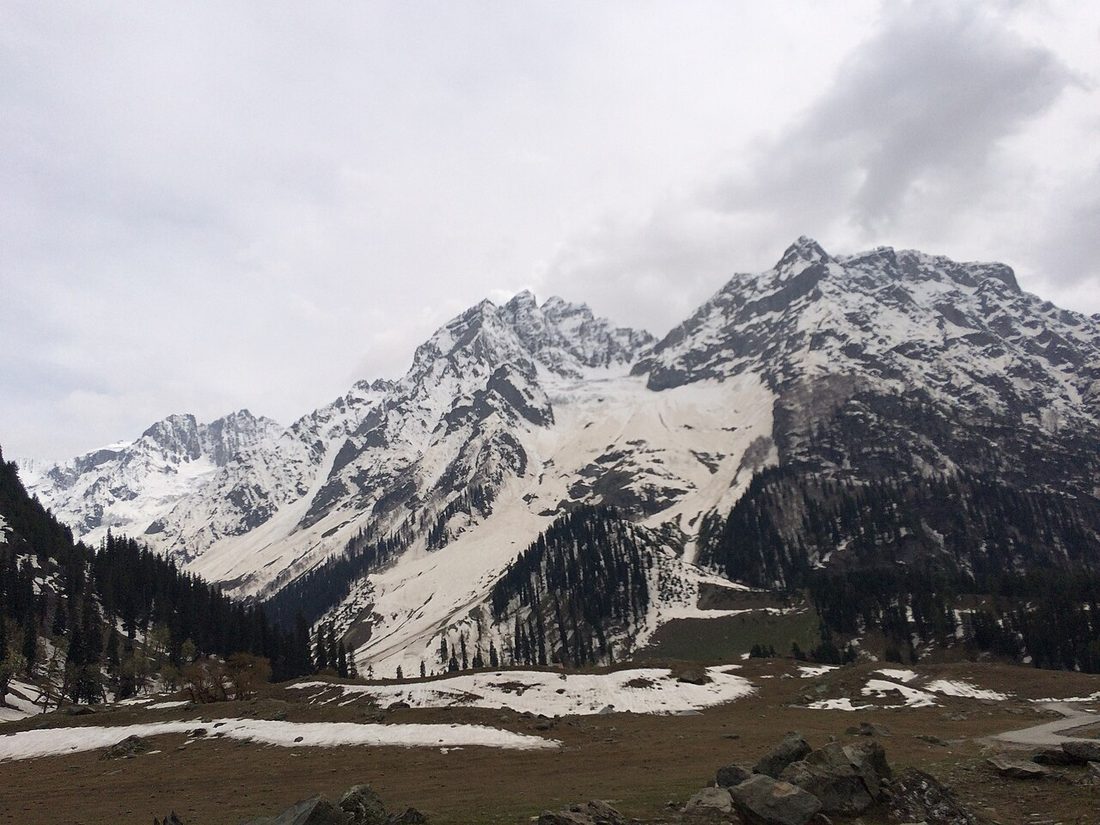
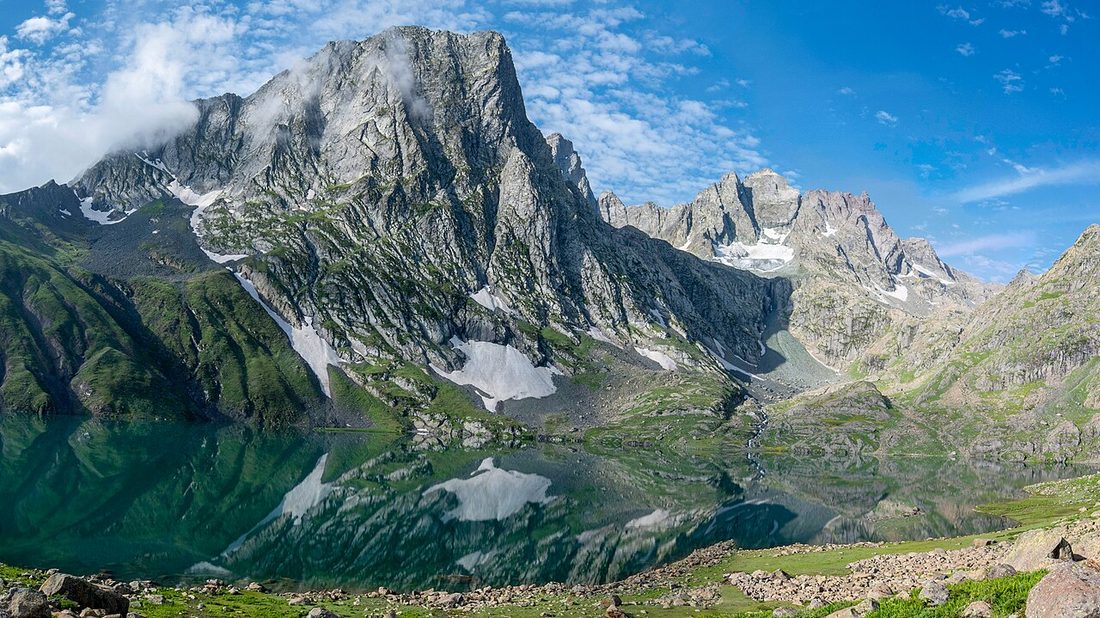
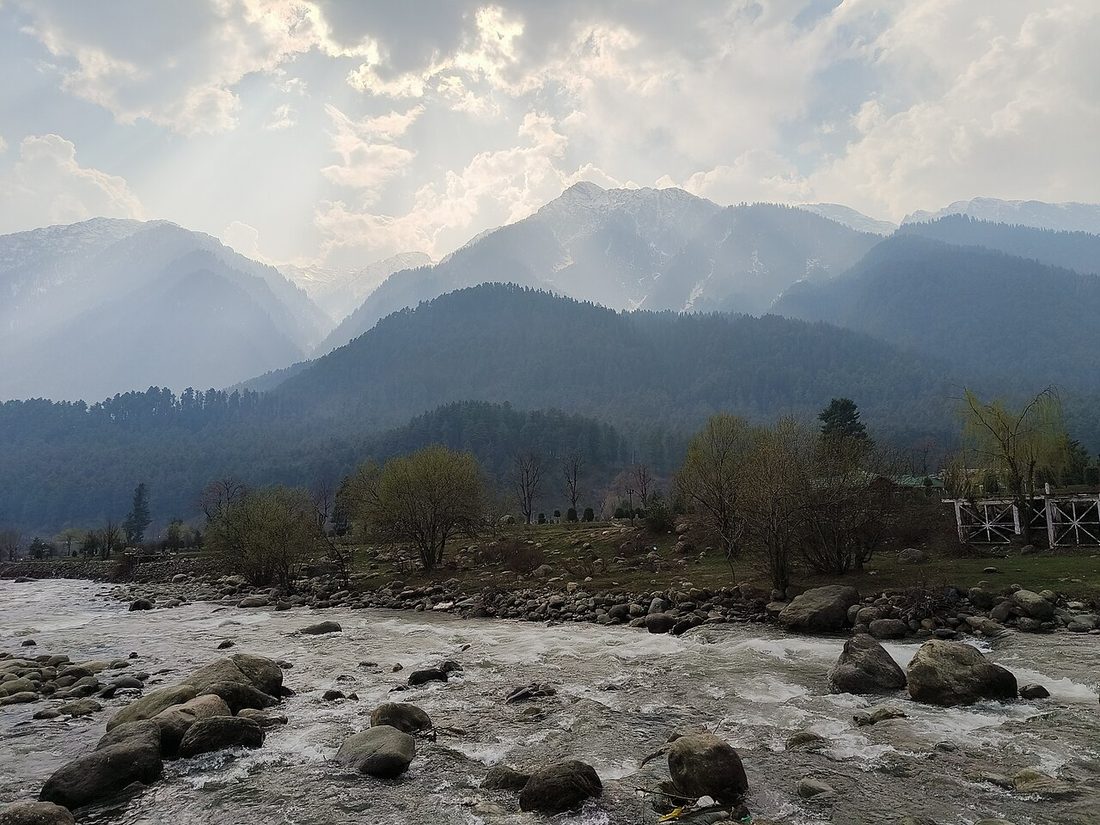
South across the valley floor, Pahalgam (2,130 m) offers a softer snow landscape along the icy turquoise Lidder River and frosted meadows of Betaab Valley — ideal for non-skiing partners travelling alongside freeriders, or for gentle skinning recovery walks after four hard days on Apharwat. Mixed-ability friend groups combining ski days with scenic valley drives often customize our Winter Adventure 7-Day itinerary, while eco-minded travellers seeking silent Nordic-style snowshoeing in Doodhpathri and Yusmarg should inspect our Nordic and Benelux slow-valley winter guide.
Pairing 5 Powder Days with 2 Srinagar Heritage & Artisan Craft Days
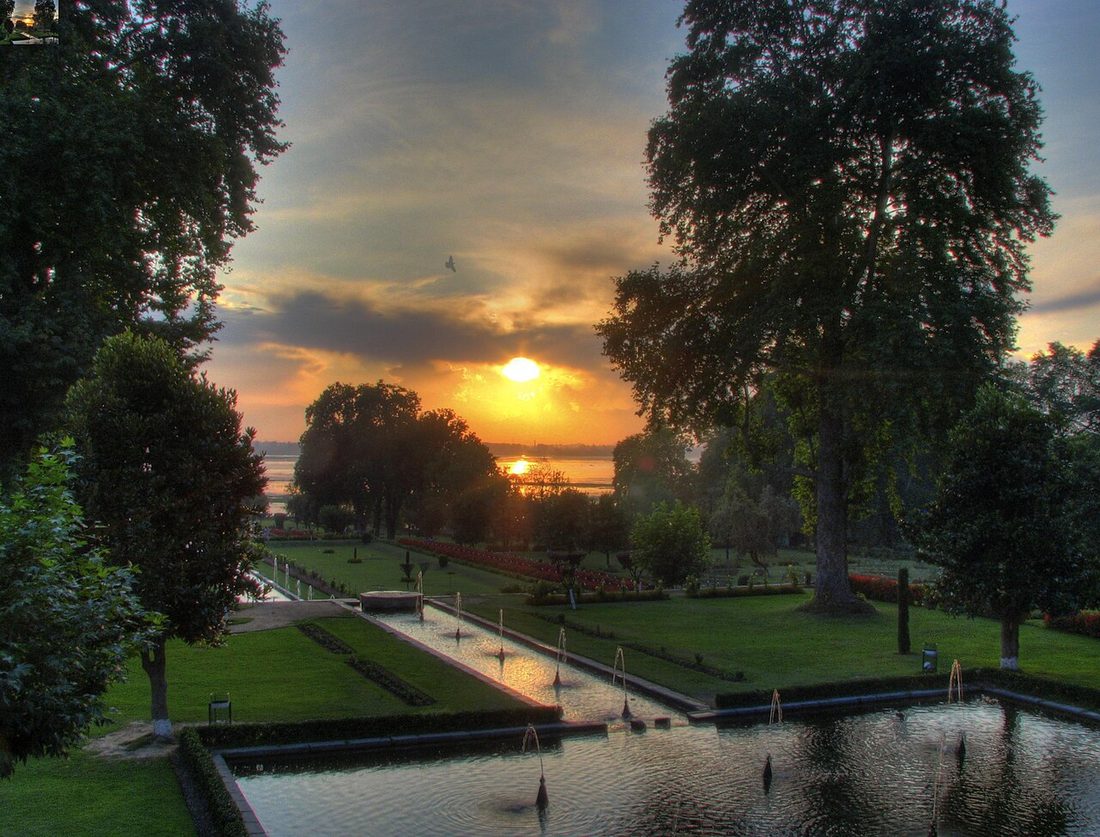
European riders who bolt straight from Gulmarg back to Srinagar Airport miss half the soul of Kashmir. Spend your final two nights down at 1,585 metres in Srinagar — trading Gore-Tex shells for warm woollen coats, soaking tired quads inside a heated cedarwood houseboat on Nigeen Lake, and watching winter amber sunset wash across Nishat Bagh’s terraced Mughal pavilions.
Those two valley days also double as Europe’s most rewarding artisan craft sprint. Across Old Srinagar’s Kanihama, Zadibal, and Rainawari quarters, winter is peak weaving season — artisans gather beside warm stoves working hand-spun Changthangi cashmere on wooden pit looms, carving seasoned walnut furniture, and painting gold-leaf papier-mâché boxes. Swiss, German, and French guests looking to bring back heirloom Pashmina or silk carpets with verifiable GI QR-code certificates should review our Kashmiri Pashmina and Kani export guide for European buyers before visiting any showroom. Architecture and gastronomy enthusiasts adding culinary depth to their winter trip will also enjoy our Southern European cultural and Mughal heritage winter guide.
8-Day Gulmarg Powder & Srinagar Craft Blueprint (Dec 27 – Jan 4)
- Day 1 (Dec 27): Evening widebody departure from Frankfurt, Munich, Zurich, Paris CDG, or Vienna straight to New Delhi Terminal 3.
- Day 2 (Dec 28): Midday DEL–SXR domestic hop. Airport pickup in heated SUV, stop at Tangmarg (2,150 m) for snow-chain 4×4 switch, arrive Gulmarg (2,650 m) by 16:30. Boot-dry check, guide briefing, and transceiver verification over steaming rogan josh.
- Day 3 (Dec 29): Acclimatization laps off Gondola Phase 1 (3,050 m) and Kongdoori Chairlift. Ski pine glades toward village bowl, run rescue-beacon drills in fresh snow, and test bindings ahead of upper mountain days.
- Day 4 (Dec 30): First full Phase 2 Apharwat day (3,979 m). Ride Main Bowl and Mary’s Shoulder under guide supervision; finish with a long tree descent down to Baba Reshi shrine with chained jeep shuttle back to Gulmarg.
- Day 5 (Dec 31): Early 08:45 skier-gate load for clean New Year’s Eve storm laps or short 25-minute ridge skinning along Apharwat crest. Return by 15:00 for hot kahwa, sauna/steam recovery, and New Year’s Eve fireside Wazwan banquet.
- Day 6 (Jan 1): Flexible alpine morning — chase fresh powder laps on Kongdoori or excursion to frozen Drung Waterfall before descending in late afternoon to your heated Nigeen Lake cedar houseboat in Srinagar.
- Day 7 (Jan 2): Slow dawn shikara ride across misty Dal and Nigeen channels, Old Srinagar wooden mosque architecture, GI-certified Pashmina & Kani weaving workshop tour, and golden-hour stroll through Nishat Bagh.
- Day 8 (Jan 3–4): Midday flight SXR–DEL with a comfortable Aerocity overnight buffer beside Terminal 3, followed by your morning nonstop flight back to Germany, Switzerland, France, or Austria.
Reserving Your 2026–2027 Ski Week Direct in Kashmir
Gulmarg’s best centrally heated alpine lodges sit within a ten-minute walk of the gondola base and book out months before snow starts falling. Browse heated winter properties across our Kashmir hotels directory, compare mountain circuits inside our complete tour packages hub, explore regional weather profiles across our Kashmir destinations index, and read seasonal snow reports on our Kashmir winter travel journal. When your group dates firm up, message our Srinagar ski desk directly via our contact page to reserve guides, lift passes, and chained transfers.
Build Your Custom DACH & France Gulmarg Powder Week
Skip middleman European agency markups. Our Srinagar ski operations desk organizes custom New Year’s Kashmir Tours directly with certified local Apharwat guides, heated mountain hotels, and seamless Srinagar craft extensions.
Frequently Asked Questions
Is Gulmarg safe and suitable for intermediate piste skiers from Europe?
Intermediates comfortable skiing European red runs smoothly enjoy Gulmarg’s groomed Kongdoori Bowl, lower meadow slopes, and mellow tree runs with an instructor. However, Phase 2 (Apharwat at 3,979 m) is un-groomed, high-altitude freeride terrain best suited to confident parallel off-piste skiers accompanied by a certified avalanche guide.
Can I bring an avalanche airbag canister on flights from Frankfurt, Zurich, or Paris to Srinagar?
IATA rules allow one compressed-gas cylinder inside checked baggage with prior airline approval, yet Delhi and Srinagar airport security officers frequently scrutinize pressurized canisters during domestic re-check, risking confiscation. Electronic battery-powered avalanche backpacks (such as Scott Alpride E2 or Ortovox Litric) transit Indian aviation checkpoints with dramatically fewer headaches.
Do European postpaid SIM cards work on the mountain in Gulmarg?
Prepaid Indian SIM cards and prepaid global travel eSIMs do not function inside Jammu and Kashmir. Major European postpaid plans (Telekom Germany, Swisscom, Orange France, A1 Austria) generally roam on Airtel/Jio towers if international roaming is activated beforehand — check daily roaming rates prior to travel, and carry local two-way UHF radios supplied by your ski guide on Apharwat.
What happens if wind or early snow conditions close Gondola Phase 2?
Phase 1 (3,050 m) runs far more reliably in storm winds than exposed Phase 2, keeping steep blue-pine tree skiing and Baba Reshi descents open. On rare full-storm closures, guides pivot smoothly to Drung frozen waterfall excursions, skinning lower meadows, or valley cultural outings without wasting holiday days.
How early should European groups reserve New Year’s ski week in Gulmarg?
Reserve accommodation, certified guides, and Gondola pass allocations between July and October for December 27–January 4 departures. Waiting until November leaves only poorly heated outlying lodgings and forces steep last-minute holiday airfares from Zurich, Munich, and Paris.