
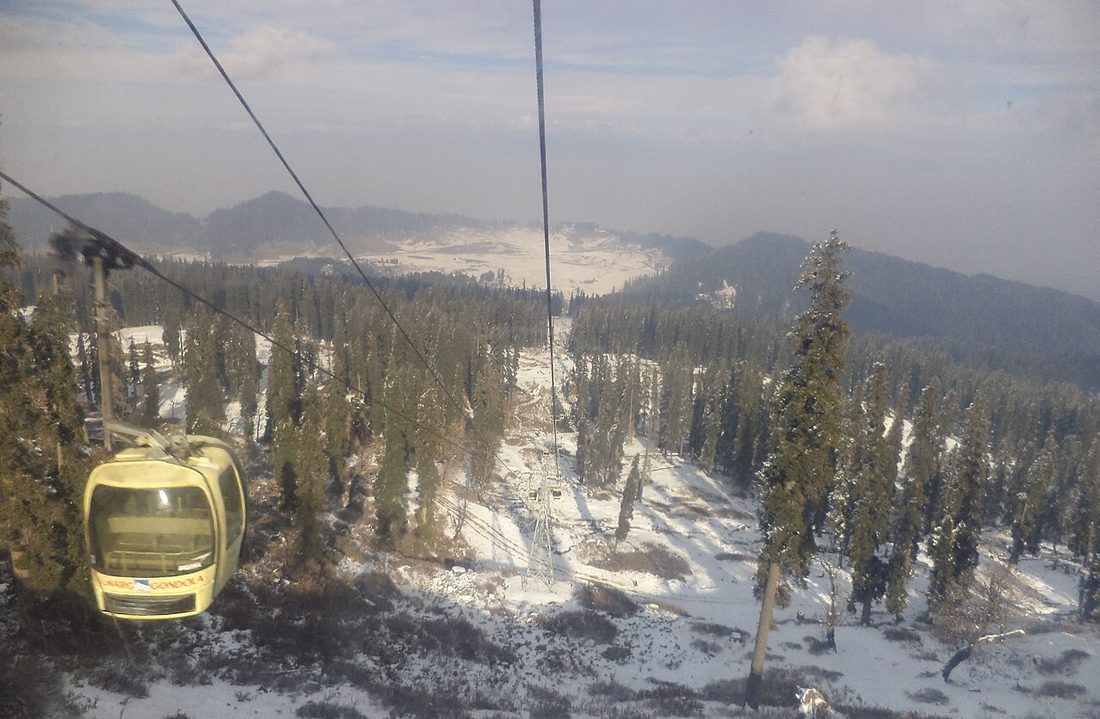
Last December 30, three Denver skiers stepped out of the upper cable-car terminal at 3,979 meters (13,054 feet), clipped into 112mm underfoot skis, and stared down Mary’s Shoulder without another soul in sight. Two days earlier, they had checked single-day holiday window rates at Vail ($329) and Aspen Snowmass ($274) and quietly laughed into their kehwa cups. Even after flying halfway across the planet through New Delhi, their entire ten-day alpine week was pacing cheaper than seven peak nights in Summit County.
Before you book a ticket out of Denver, Salt Lake City, or San Francisco, you deserve straight talk rather than brochure hype. Gulmarg is not a manicured North American mega-resort with groomed corduroy, heated six-pack bubbles, and ski patrol bombing every couloir before 8:30 AM. Once you step off Phase 2 of the Gulmarg Gondola, there are no rope lines, no marked green trails, and no patrolled boundary keeping you out of avalanche terrain. You are stepping straight into wild Pir Panjal backcountry served by one of the highest passenger cable cars on Earth.
That raw equation—massive Himalayan relief, low on-mountain costs, and genuine mountain risk—is precisely why serious American freeriders increasingly structure their New Year’s Kashmir Tours around Apharwat Peak instead of queuing for forty minutes at Gondola One in Vail Village. Below is the honest, boots-on-snow breakdown I give every US skier who emails our Srinagar dispatch desk before holiday airfares lock in.
The Mountain Numbers: Apharwat Peak vs Colorado & Utah Flagships
Americans who ski Snowbird, Jackson Hole, Telluride, or Highlands Bowl understand elevation quickly, so let’s talk in feet and meters. The meadow base of Gulmarg sits at 2,650 meters (8,694 feet)—nearly identical to the base of Breckenridge. Phase 1 of the French Poma-built gondola lifts you to Kongdoori Bowl at 3,050 meters (10,006 feet). Phase 2 climbs a steep granite and alpine-tundra flank to the upper shoulder of Apharwat at 3,979 meters (13,054 feet).
From the top terminal, a twenty-five-minute bootpack up the wind-scoured ridgeline puts you past 4,120 meters (13,517 feet) looking across the Kashmir Valley toward Nanga Parbat on crystalline post-storm mornings. Drop into any of the north- or east-facing bowls—Shark Fin, Lily White, Main Bowl, or the expansive chutes flanking Hapat Khud—and you hold continuous fall-line skiing for 1,300 vertical meters (4,265 vertical feet) back to the base gondola. On deep-snowstorm days when the lower valley holds base depth, you can ski straight past the golf-course meadow through old-growth blue pine and silver fir all the way down to Drung and the roadhead at Tangmarg (2,150m / 7,053 ft), logging an uninterrupted 1,800-meter (5,900-foot) descent before a waiting 4×4 shuttles you back up the hairpins.
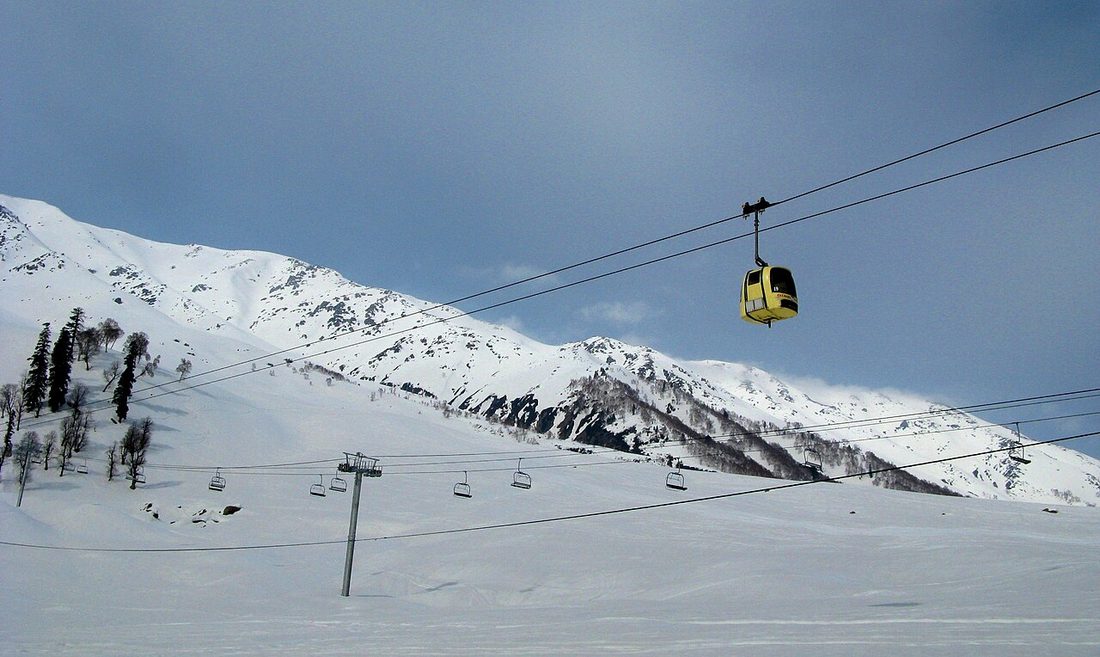
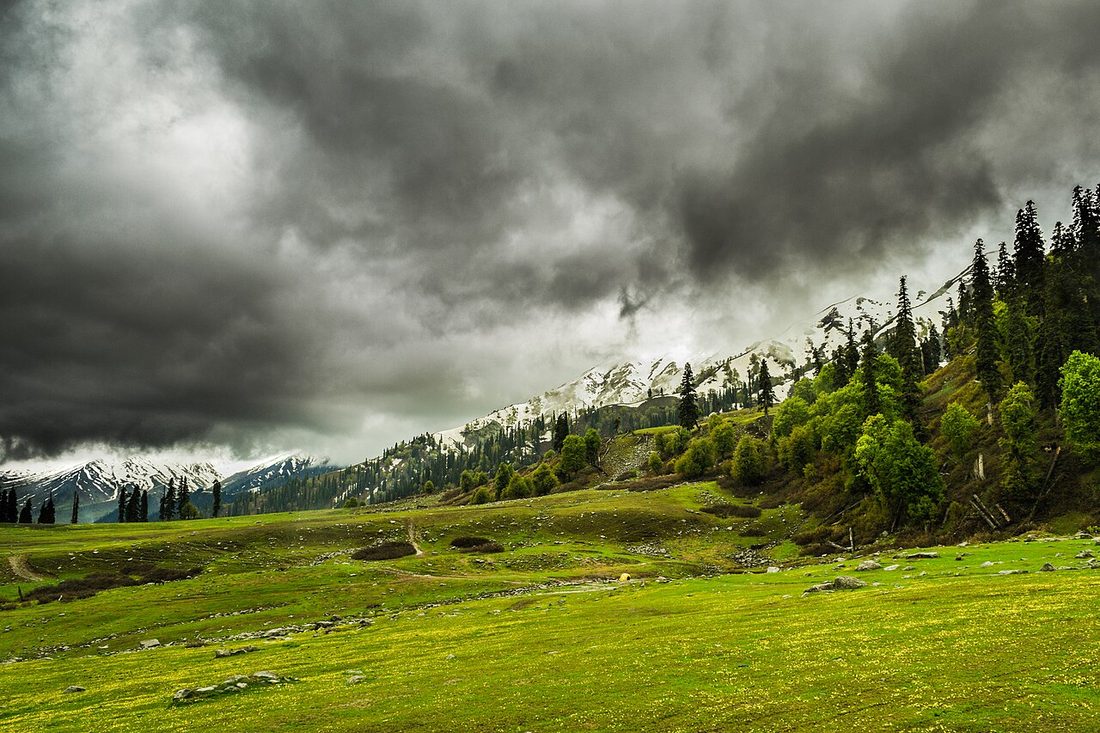
Comparing Himalayan skiing vs Colorado Utah comes down to terrain access versus polish. Aspen Highlands Bowl requires a grueling 40-minute hike for 2,600 feet of steep chutes, and it gets tracked into chalk within two hours of patrol dropping the rope. Alta and Snowbird deliver legendary Little Cottonwood Canyon blower snow, yet Red Snake traffic up Highway 210 on December 29 can turn a twelve-mile drive into a two-hour gridlock. In Gulmarg, your hotel is five to ten minutes from the Phase 1 loading bay—or ski-in/ski-out if you stay near the golf-course loop—and the backcountry bowls stretching five kilometers south along the Apharwat spine stay untouched for days when you hire a guide who knows the traverses.
Honest Snowpack Reality: New Year’s Week vs Mid-January Storms
Here is where I earn my keep by telling you what glossy Instagram reels hide. Gulmarg receives its winter snow from Western Disturbances—extra-tropical storm systems sweeping east across the Mediterranean, Iran, and Afghanistan before slamming into the Pir Panjal wall. Historically, the heaviest dump cycles roll through between January 10 and February 25, when 30-to-60-centimeter overnight refills turn the lower conifer forests into a pillow-lined playground reminiscent of Niseko crossed with Chamonix.
New Year’s week—specifically December 26 through January 4—sits squarely inside early Chillai Kalan, Kashmir’s forty-day core winter window. What does that mean on the ground? In strong La Niña or active December storm years, two early disturbances lay down a meter of base above 3,000 meters by Christmas, opening Phase 2 bowls and upper Kongdoori trees right on cue for a dream New Year ski holiday Kashmir veterans brag about for years. In dry December seasons, however, the lower trees down to Tangmarg can be thin, and Apharwat’s rocky upper aprons may hide sharks—submerged boulders waiting to core-shot brand-new bases.
How do smart US skiers play late December without gambling their vacation? Three practical adjustments separate frustrated first-timers from stoked crews:
- Pack your daily-driver rock-tolerant powder skis (104–114mm underfoot) rather than featherweight carbon touring sticks. If the bowls are wind-buffed or early-season chalk, a damp freeride ski handles variable snow with authority; if a 50 cm New Year storm rolls in, 110mm floats effortlessly.
- Build a 9-to-10 day window leaning into early January (Dec 27 – Jan 6) rather than Dec 21 – Dec 28. Shifting your trip just five days later dramatically multiplies your odds of catching the first major January Western Disturbance while still spending New Year’s Eve in the Himalayas.
- Keep flexible lower-valley backup options ready. If Phase 2 stays on wind-hold or early-season snowpack is thin, you can tour high-elevation basins toward Sonamarg (road-permitting past Gagangir) or pivot for forty-eight hours to a heated heritage houseboat on Dal Lake in Srinagar instead of staring at clouds. Read our broader December, Christmas & New Year snow forecast guide for historical storm dates before locking flights.
Built for Expert Freeriders: 9N/10D Gulmarg Advanced Ski Expedition
Includes 7 full guided backcountry days with UIAGM/JIM-trained local avalanche leads, Phase 1 & 2 gondola passes, Tangmarg 4×4 chained transfers, heated Gulmarg lodge, and Srinagar airport handling.
Real USD Cost Breakdown: 8 Ski Days in Gulmarg vs Aspen & Vail
Every fall I run numbers with American ski clubs who assume flying to India blows up their holiday budget. It doesn’t—not during New Year’s week, when North American resorts hit peak surge pricing. Compare an 8-night / 6-ski-day holiday for one adult sharing a double room (or splitting guide fees across a 3-skier group) over December 28 – January 5:
| Expense Line (Peak New Year Week) | Gulmarg, Kashmir (USD) | Aspen Snowmass, CO (USD) | Vail / Beaver Creek, CO (USD) | Alta / Snowbird, UT (USD) |
|---|---|---|---|---|
| Round-Trip Flights (Major US Hub) | $1,280 – $1,650 (US–DEL–SXR) | $550 – $880 (ASE/EGE) | $480 – $790 (DEN + shuttle) | $380 – $650 (SLC) |
| 6 Days Lift / Gondola Access | $155 – $190 ($26–$32/day) | $1,490 – $1,644 (walk-up) | $1,790 – $1,974 (walk-up) | $1,180 – $1,350 |
| 8 Nights Upper-Mid / Boutique Lodging (per person, double) | $920 – $1,550 (heated lodge + MAP) | $2,800 – $4,600 (room only) | $2,600 – $4,400 (room only) | $1,850 – $3,100 |
| 6 Days Certified Backcountry Guide (split 3 ways) | $210 – $270 ($35–$45/person/day) | $1,450 – $1,800 | $1,400 – $1,750 | $1,250 – $1,600 |
| Food, Dinners & Dec 31 Gala Surcharge | $220 – $360 (mostly included) | $780 – $1,200 | $720 – $1,150 | $580 – $920 |
| Ground Transfers / 4×4 Chained Shuttles | $95 – $140 (private Innova + 4×4) | $160 – $280 | $180 – $310 | $140 – $260 |
| Total Estimated Outlay (Per Skier) | $2,880 – $4,160 | $7,230 – $10,404 | $7,170 – $10,374 | $5,380 – $7,880 |
Look closely at two caveats in that table. First, if you already hold an Ikon or Epic pass bought back in April, your Colorado/Utah lift column drops sharply—though New Year blackout dates still bite base-tier passholders, and holiday lodging in Aspen or Vail remains brutally expensive. Second, Gulmarg’s lodging column already covers hearty Kashmiri breakfasts and hot multi-course dinners (MAP meal plan), plus a mandatory December 31 hotel New Year’s Eve gala dinner surcharge ($75–$160 per guest at upscale Gulmarg properties). Even with business-class domestic upgrades or five-star suites at Khyber Himalayan Resort, your Gulmarg ski trip cost USD lands at roughly half of a comparable Rocky Mountain holiday—while handing you a private certified mountain guide every single morning.
Not everyone in your group skis 45-degree alpine couloirs, and that is where modular itineraries shine. Intermediate skiers comfortable on blue-black resort runs can step into our Gulmarg Skiing Intermediate Package (6N/7D) focusing on Kongdoori bowls and lower mellow tree alleys, while partners or teenagers learning parallel turns fit cleanly into the Gulmarg Skiing Beginners Package (4N/5D) on the gentler Highland Park and Baby Slope nursery runs. Mixed groups where half the crew prefers snowshoeing, scenic gondola rides, and Srinagar sightseeing often combine ski mornings with the Winter Adventure 7 Days template—or browse our full catalog of Kashmir Tour Packages for custom multi-ability splits.
Avalanche Safety, Transceivers & Hiring Certified Guides
Let me be blunt: skiing Phase 2 without proper companion-rescue hardware and an experienced local guide is reckless, and every winter we pull under-equipped visitors out of gullies where they had zero business dropping in. Unlike North American resorts with morning howitzer artillery and ski patrol control work, Gulmarg’s avalanche mitigation is limited mostly to the immediate gondola line and lower Kongdoori boundary. Step fifty meters skiers’ left toward Shark Fin or skiers’ right into Mary’s Shoulder, and you are wholly responsible for snowpack stability assessment.
In early winter (late December), shallow snowpacks resting over cold ground often build weak, sugary facet layers near the base—classic continental snowpack behavior familiar to Colorado backcountry skiers. When a heavy Western Disturbance dumps 40 cm on top of faceted early-season snow, slab avalanches can propagate wide across convex rolls above 3,400 meters. That is why a qualified Gulmarg avalanche guide transceiver protocol is non-negotiable.
What Every American Backcountry Skier Must Pack (or Rent Locally)
- 3-Antenna Digital Transceiver (457 kHz): Bring a familiar Mammut Barryvox, Pieps, or BCA Tracker with fresh alkaline batteries—sub-zero alpine air drains half-used cells rapidly.
- Metal-Blade Shovel & 280–300 cm Probe: Plastic blades snap in dense Himalayan avalanche debris; carry both in a 28–32L pack.
- Avalanche Airbag Pack — Indian Security Warning: CISF airport security at Delhi and Srinagar routinely confiscates compressed nitrogen/CO2 canisters. Fly with an electric supercapacitor pack (Alpride E2) in cabin baggage OR carry your canister pack empty and rent a locally refilled cylinder in Gulmarg.
- Touring Skins & Frame/Tech Bindings: Climbing skins unlock sidecountry ridges off Apharwat and full touring laps whenever ridge winds pause Phase 2 cabins.
- High-Altitude Evacuation Insurance: Standard travel policies exclude off-piste skiing past 3,000 meters. Carry Global Rescue or World Nomads Explorer explicitly covering backcountry rescue to 4,500 meters.
Vet your lead guide for JIM&WS or IISM alpine certification and daily avalanche-bulletin fluency. A seasoned local guide runs trailhead beacon checks, spaces riders across convex rolls, and steers straight into sheltered birch and pine glades whenever slab danger spikes.
Flying Ski Bags from the USA to Srinagar (DEL–SXR Logistics)
Reaching Srinagar from Denver, Salt Lake, or New York is smooth once you plan around domestic baggage limits and December North India fog. Fly nonstop to New Delhi (DEL) on Air India, United, or American Airlines—or one-stop via Doha, Dubai, or Istanbul—then book an overnight recovery room at Delhi Aerocity. Because December radiation fog blankets Delhi IGI and Srinagar’s runway until mid-morning, book a 10:30 AM to 1:15 PM nonstop DEL–SXR flight (85 minutes; sit on the right window northbound for Pir Panjal views).
Domestic Ski-Bag & Ground Transfer Rules
- Domestic 15 kg Baggage Cap: Separate Delhi–Srinagar economy tickets allow only 15 kg checked weight. Pre-buy 15–20 kg online 48 hours ahead (~$65–$90 total) plus the ₹1,500–₹2,500 ($18–$30) oversized ski-bag handling fee levied by Air India and IndiGo.
- Boots in Cabin & Outbound SXR Security: Pack custom ski boots, transceiver, and goggles in a compact cabin backpack. Remember Srinagar Airport enforces strict defence-field rules on departure: zero ski poles or metal tools in cabin bags, and keep all lithium power banks strictly in hand baggage.
- Tangmarg 4×4 Chained Switch: Heated Toyota Innova Crystas run smoothly from SXR to Tangmarg (39 km). Once snow covers the final 13 km up to Gulmarg, traffic police require 4×4 vehicles wearing iron chains—we pre-stage a chained Thar, Gypsy, or Sumo with ski racks at Tangmarg for a quick 3-minute transfer.
Staying Warm & Well-Fed: Gulmarg Lodging & New Year’s Eve Vibes
Post-ski evenings trade rowdy bar strips for cedar bukhari woodstoves, saffron-almond kehwa, slow-simmered Kashmiri Rogan Josh, and swapping storm stories with Swiss, Australian, and Colorado skiers. Because night temperatures drop to -10°C (14°F), insist on 24-hour central heating or hydronic boilers backed by diesel generators—we pre-vet winter-ready lodges across our verified Kashmir hotels and alpine lodges, from heritage bungalows like Nedou’s and Highlands Park to luxury heated suites at The Khyber Himalayan Resort & Spa and skier favorites like Shaw Inn and Vintage Gulmarg. On December 31, snow bonfires, live Kashmiri folk sets, and multi-course Wazwan galas fill the ridge (factor in mandatory hotel NYE gala surcharges of $80–$180 per adult, itemized transparently upfront).
Pairing Your Ski Week with Dal Lake, Heritage Crafts & Family Extensions
Save your final two nights (January 2–4) for a centrally heated cedar houseboat on Dal or Nigeen Lake in Srinagar—waking to shikara vendors gliding past frost-rimmed lotus stems and strolling Old City artisan lanes. American crews frequently add a Kanihama loom visit right along the Gulmarg–Srinagar road using our US CBP guide to GI-tagged Kashmiri Pashmina and Kani shawls, or swing south via Pampore with our FDA & ISO 3632 Pampore saffron and Mamra almond export guide. Travelling with parents or non-skiing relatives? Read our Indian-American and NRI multi-generational New Year guide, or explore winter stopovers across our Kashmir destinations hub and Srinagar travel journal.
Ready to Lock Your Apharwat Ski Dates & Certified Local Guide?
Peak New Year lodges and certified UIAGM/JIM-trained backcountry guides fill by late October. Start planning your custom New Year’s Kashmir Tours ski roster directly with our Srinagar mountain desk.
Frequently Asked Questions
Is late December reliable enough for Gulmarg powder skiing, or should US skiers wait for February?
Mid-January through February brings the deepest average base (2–4 meters up high) and full tree skiing down to Tangmarg. Late December through January 5 still delivers great alpine skiing above 3,000 meters in active storm winters with fewer international crowds—just aim for Dec 27–Jan 6 and pack 104–112mm all-mountain freeride boards.
Can I rent fat powder skis and avalanche gear in Gulmarg?
Yes—specialty base shops rent modern fat skis (Armada, Black Crows, K2, Rossignol), touring bindings, 3-antenna transceivers, metal shovels, and probes for ~$35–$55/day combined. Always pack your own broken-in boots, helmet, and goggles, since US Men’s 11.5+ rental shells sell out during New Year’s week.
How steep is Gulmarg Gondola Phase 2 terrain?
Phase 2 is solid advanced-to-expert backcountry (30–45° alpine bowls with variable wind-crust and avalanche risk), comparable to Snowbird or Jackson Hole sidecountry. Intermediates should stick to Kongdoori (Phase 1) and guided lower meadow bowls.
Do US citizens need special permits to ski Gulmarg?
No Inner Line Permit is required—only a standard Indian e-Tourist Visa applied online two weeks ahead, plus a quick two-minute Foreigners Registration slip beside baggage claim at Srinagar Airport.
How early should US skiers book New Year’s Kashmir Tours for Gulmarg?
Reserve centrally heated Gulmarg lodges and vetted backcountry guides by September or October for December 26–January 5. Gondola tickets release online closer to winter, whereas heated rooms near the gondola loop sell out months ahead.