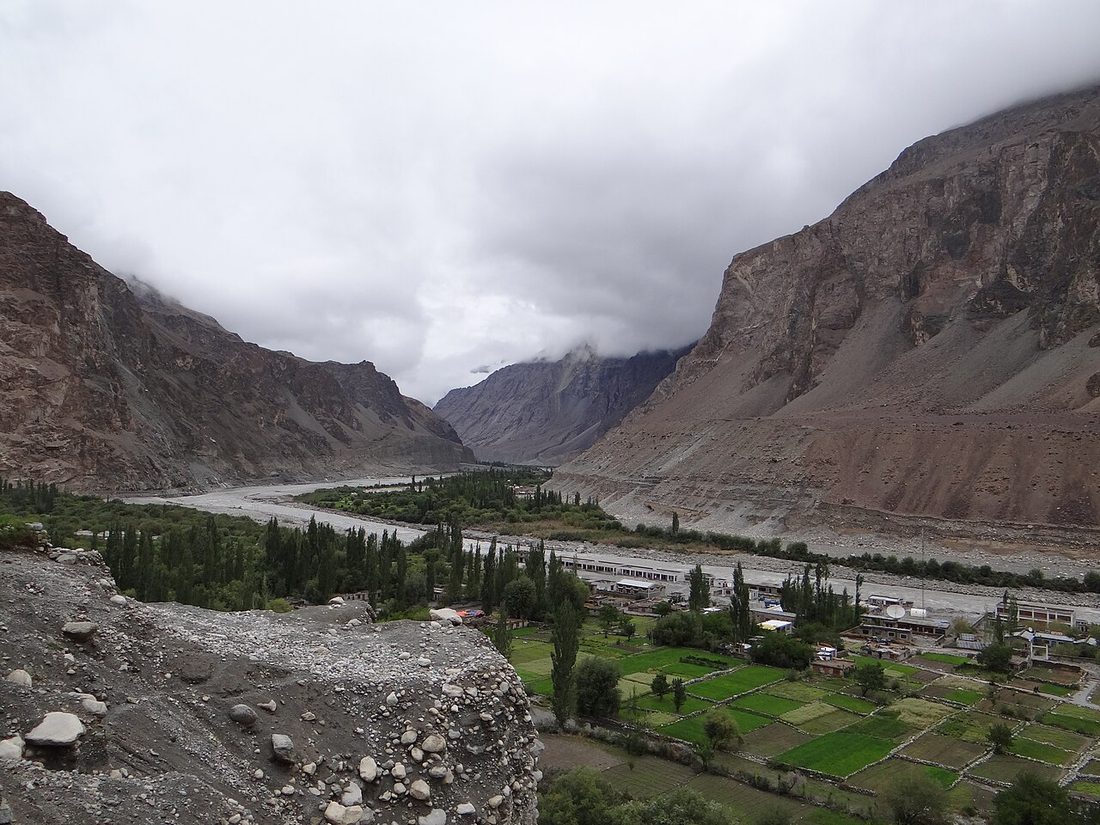
Drive eighty-five kilometers northwest past Hunder’s sandy flats—following the muscular Shyok River as granite gorge walls squeeze tighter and tighter—and something uncanny happens to the air coming through your car window. The altitude drops to roughly 2,900 meters, the dry dust of central Ladakh gives way to the sweet, earthy perfume of ripe apricots and walnut leaves, and whitewashed Buddhist chortens vanish overnight, replaced by carved timber mosques, green-eyed children speaking melodic Balti, and terraced buckwheat plots fed by racing glacial irrigation channels. Welcome to Turtuk: a piece of historic Baltistan that stayed inside Pakistan-administered Gilgit-Baltistan until December 1971, reopened to civilian travelers only in 2010, and today stands as the single most soulful cultural detour in all of Ladakh.
While ordinary six- or seven-day packages leave travelers spending just one hurried night in Nubra Valley before racing back to Leh, our 6-Night / 7-Day Ladakh with Turtuk Village Tour anchors two full nights in Nubra so Day 4 belongs wholly to Turtuk and neighboring Tyakshi, India’s final inhabited border hamlet just kilometers from the Line of Control. Combined with proper arrival acclimatization in Leh, Sham Valley’s Sangam rapids, Hunder’s dusk dunes, and an overnight camp beside Pangong Tso, this itinerary balances raw pass-crossing adventure with rare human warmth.
You cannot understand Turtuk through a car windshield—vehicles stop along the lower asphalt strip while the village itself climbs uphill across a swaying cable footbridge linking lower Farol with older hillside Yul. Every path inside Yul is hand-laid slate bordered by whispering snowmelt channels (kuhls) diverted from glaciers clinging to the Karakoram flanks above. Ask a local villager to lift the flat rock lid off a hillside nangchung—an ingenious natural cold-storage stone box built over subterranean mountain air vents where Balti families keep butter, goat milk, and fresh meat refrigerator-chilled through July without a watt of electricity.
Climb ten minutes higher to sit inside the Balti Heritage House Museum—a centuries-old timber-and-mud residence preserving hammered copper kettles, carved wooden looms, hand-cranked stone grain mills, and antique turquoise jewelry—before strolling over to the modest courtyard of the Yabgo Royal House, home to descendants of the former royal dynasty who ruled parts of Baltistan from the sixteenth century. Down along the sunlit bench overlooking the Shyok canyon sits Turtuk’s beloved traditional polo ground; if you arrive on a clear summer afternoon when village teams saddle up sturdy Zanskari ponies, grab a stone seat beside cheering elders and watch mountain polo played at breakneck speed. Before climbing back into your SUV for the eight-kilometer border drive to Tyakshi—where a quiet hillside observation deck looks right across the Zero Line toward Balti ridges on the opposite side—pause at a shaded orchard café for freshly griddled buckwheat kisir pancakes smeared with pressed apricot-kernel oil and dark walnut chutney.
Spend twenty minutes chatting over salted Balti tea with a septuagenarian orchard keeper in Yul and history stops feeling abstract. On a snowy December morning in 1971, villagers in Turtuk, Bogdang, Chalunka, and Tyakshi woke up to learn that the frontline had shifted west overnight—leaving cousins, wedding ties, and ancestral meadows on the far side of the new Line of Control. Today, nearly fifty-five years later, Turtuk greets guests with extraordinary poise and gentle pride. Wander past carved cedar balconies of traditional two-storey khangpas—ground floors built thick with granite boulders to shelter cattle through winter, upper timber rooms catching summer breezes off snow peaks—and follow the narrow shaded trail climbing fifteen minutes beyond upper Yul to a secluded glacial cascade rushing into clear mossy pools.
Just above the upper barley terraces sits a tiny whitewashed Buddhist monastery overlooking the predominantly Muslim village below—a quiet visual symbol of Ladakh’s enduring pluralism and a stunning perch for wide-angle photographs of Turtuk’s quilted emerald fields framed by towering granite walls of the Karakoram. Because Turtuk’s lanes remain blissfully car-free, travelers who arrive by 10:30 AM from Hunder get four unhurried hours to walk at village tempo: browsing woven woolen rugs, watching village women crack sweet apricot kernels on flat river stones, and picking up sealed jars of golden orchard jam and pure walnut oil directly from farming households. Keep your original government ID and two printed permit sheets right inside your daypack, as courteous Indian Army checkposts near Bogdang and approaching Tyakshi log every visiting vehicle swiftly before waving you onward. Early June and late August remain our favorite windows here—apricot foliage stays lush, afternoon highs hover pleasantly near 24°C, and village lanes stay calm enough to share unhurried stories with local elders.
First-time visitors are continually astonished by how sharply geography, cuisine, and architecture change once you turn down the Shyok gorge toward Bogdang and Turtuk:
| Feature | Central Leh & Sham Valley | Nubra (Diskit / Hunder) | Turtuk & Tyakshi Border Belt |
|---|---|---|---|
| Elevation & Climate | 3,500 m; crisp high-altitude cold desert | 3,048 m; wide warm sandy valley oasis | ~2,900 m; mild canyon microclimate, two harvests/year |
| Primary Heritage | Tibetan-Ladakhi Buddhist royal gompas | Silk Road caravan hub & Diskit monastery | Sunni & Noorbakhshi Balti culture (integrated 1971) |
| Signature Cuisine | Thukpa, skyu, momos, salted butter tea | Barley tsampa, sea-buckthorn juice | Buckwheat kisir, walnut sauce, sweet Halman apricots, apricot jam |
| Permit Rules | No Inner Line Permit required | Ladakh ILP mandatory (Indian & foreign) | ILP covers Turtuk; Tyakshi LoC point strictly Indian nationals |
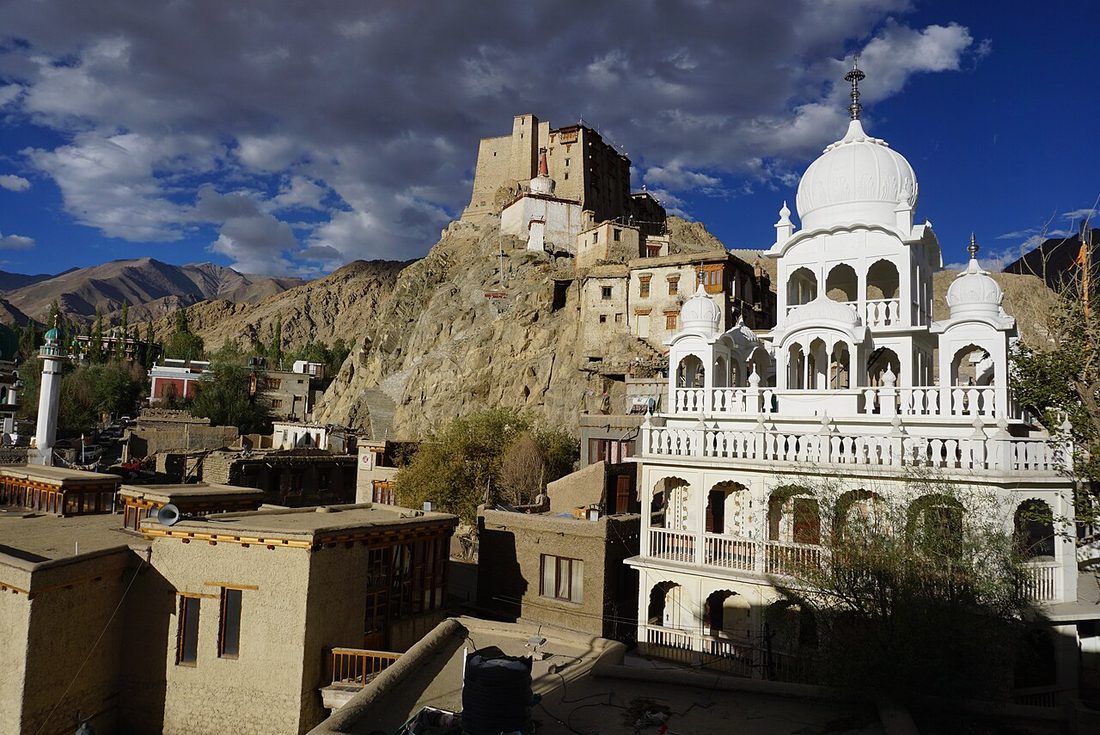
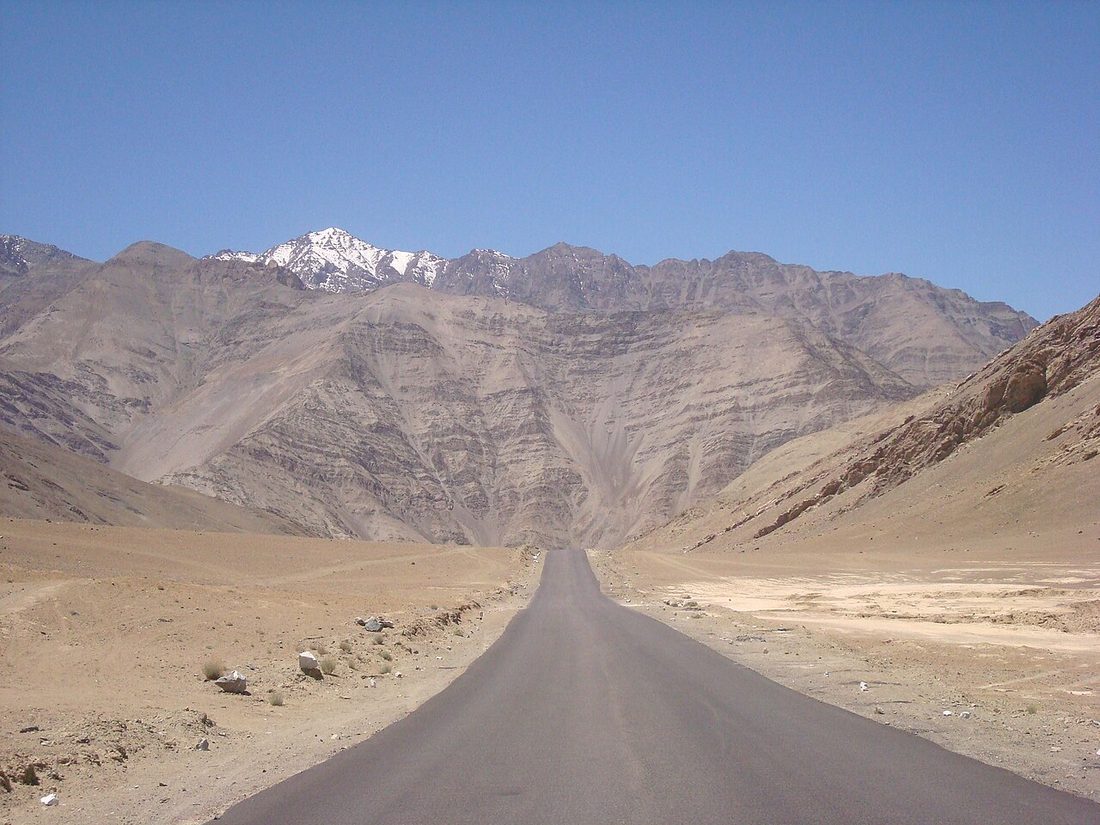
Before diving north into the Karakoram canyon, we follow the strict mountain rhythm that keeps altitude sickness away. Landing on Day 1 morning into Leh (3,500 m), you settle into one of our verified boutique Leh hotels for deliberate daytime rest, stepping out only in golden dusk light toward Shanti Stupa and the nine-storey mud-brick skyline of Leh Palace. Day 2 keeps you comfortably active along the smooth western NH1 corridor—pausing at the poignant Indian Army Hall of Fame memorial, Gurudwara Pathar Sahib, Magnetic Hill’s curious tarmac slope, Spituk Kali Mata shrine, and Nimmu Sangam, where summer adventurers can jump into Grade II–III Zanskar River rapids.
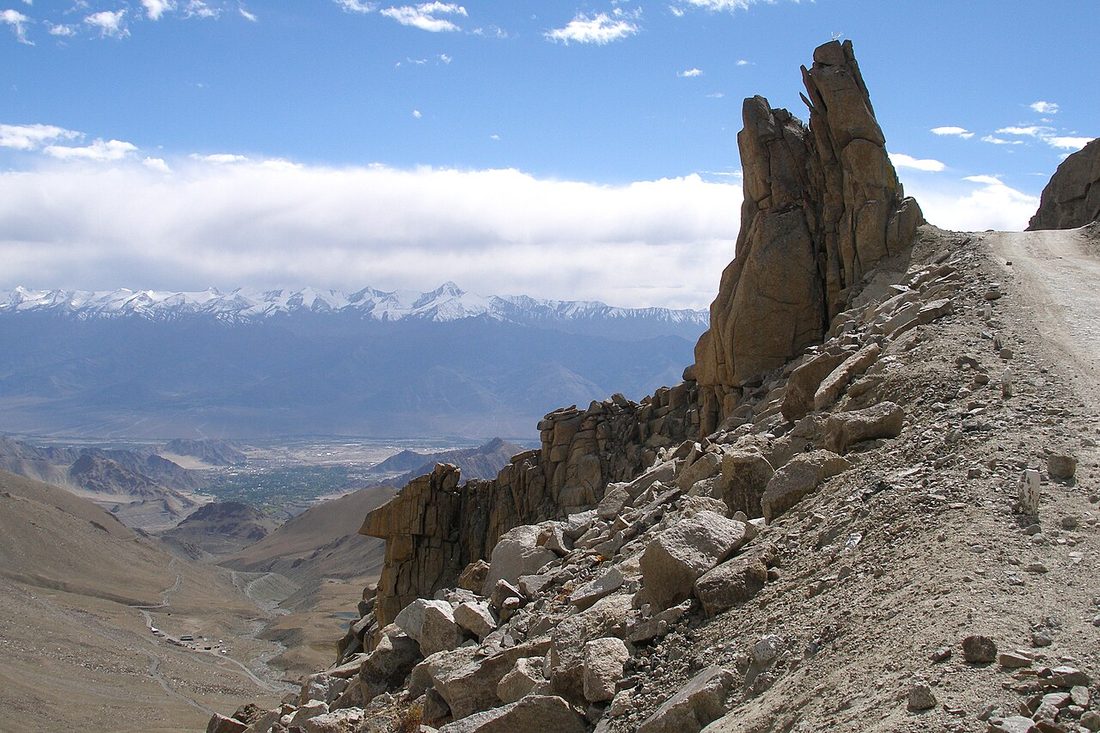
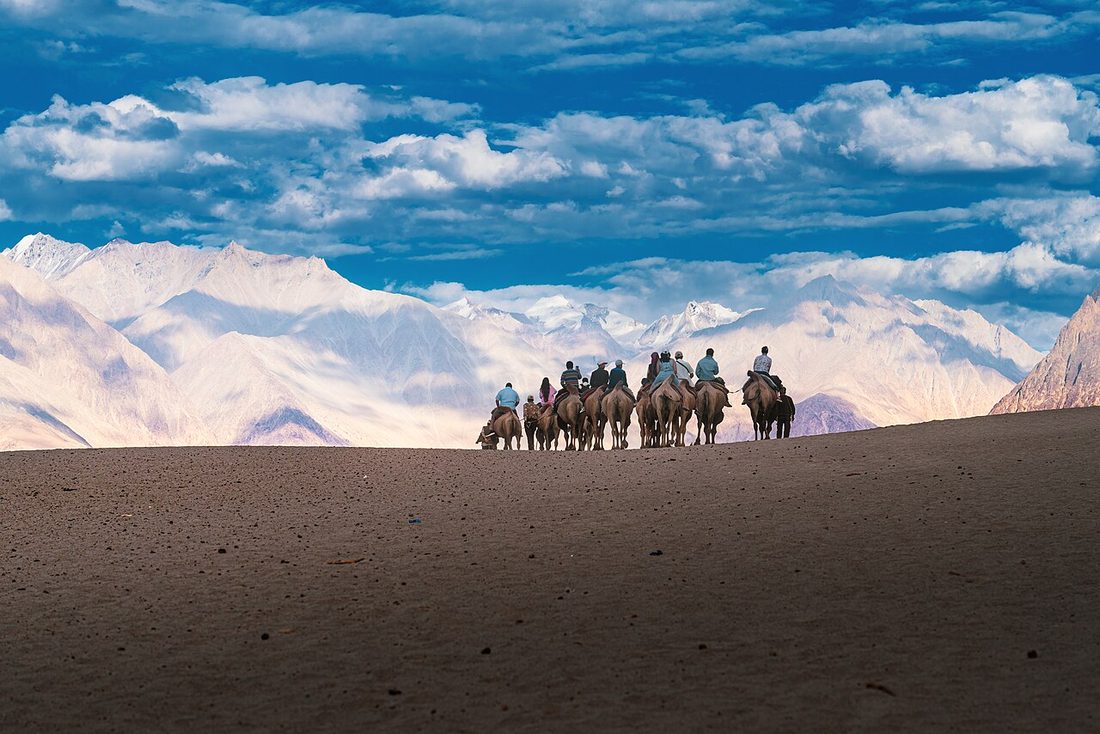
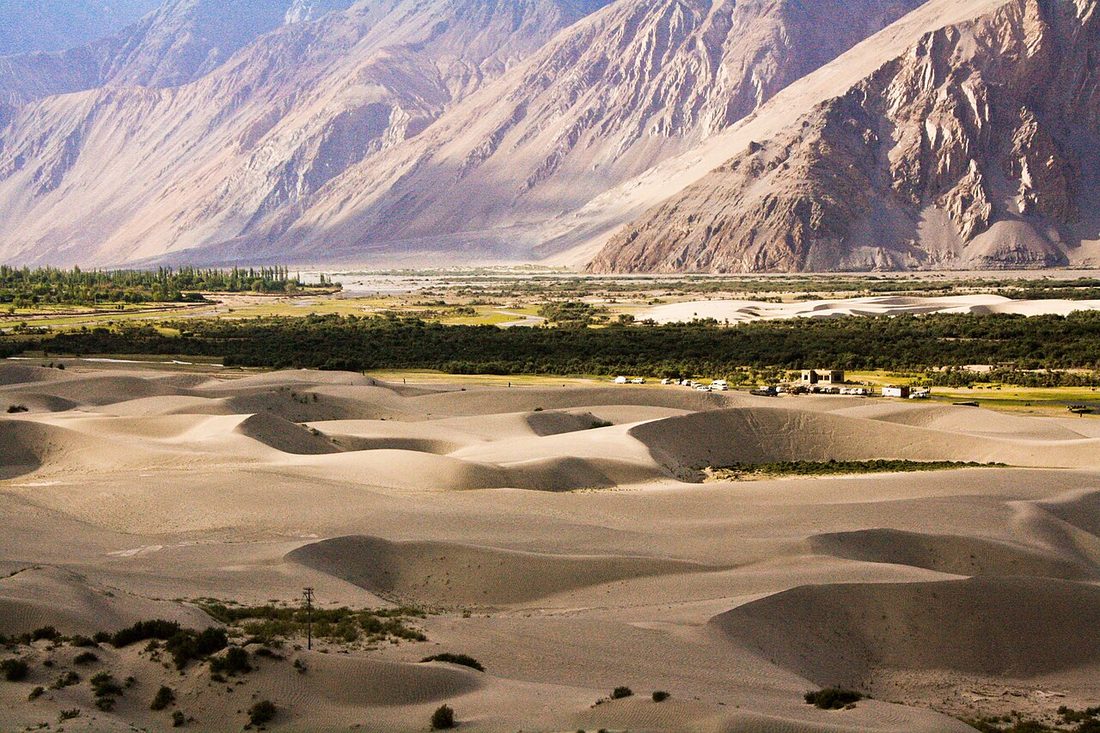
On Day 3 morning, your Ladakh Union SUV gears down for the thrilling climb across Khardung La. Keeping summit photo pauses under fifteen minutes protects your energy for the lush descent into Nubra, where pale rolling desert sand meets glacier-fed willow groves at Hunder. Walk barefoot across the cooling evening sands, hop aboard a shaggy double-humped Bactrian camel beneath stark Karakoram walls, and sleep deeply at 3,048 meters—storing energy for tomorrow’s unforgettable run up the Shyok canyon to Turtuk.
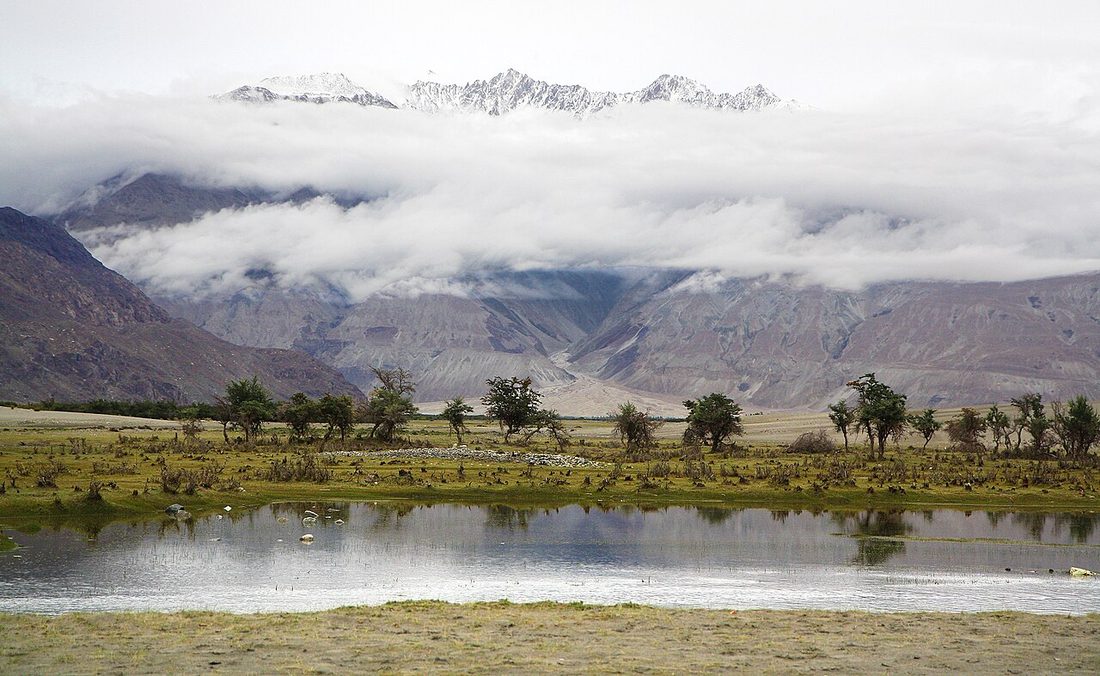
By default, staying both Nights 3 and 4 at your comfortable Hunder camp or boutique cottage spares you unpacking twice and trims ninety minutes off Day 5’s long Shyok drive to Pangong Tso. However, if you fall in love with the idea of waking up beside Turtuk’s apricot orchards and waterfall trail—and don’t mind an early 6:30 AM departure on Day 5—ask our trip customization desk to swap Night 4 into a verified Turtuk garden homestay or orchard glamping lodge.
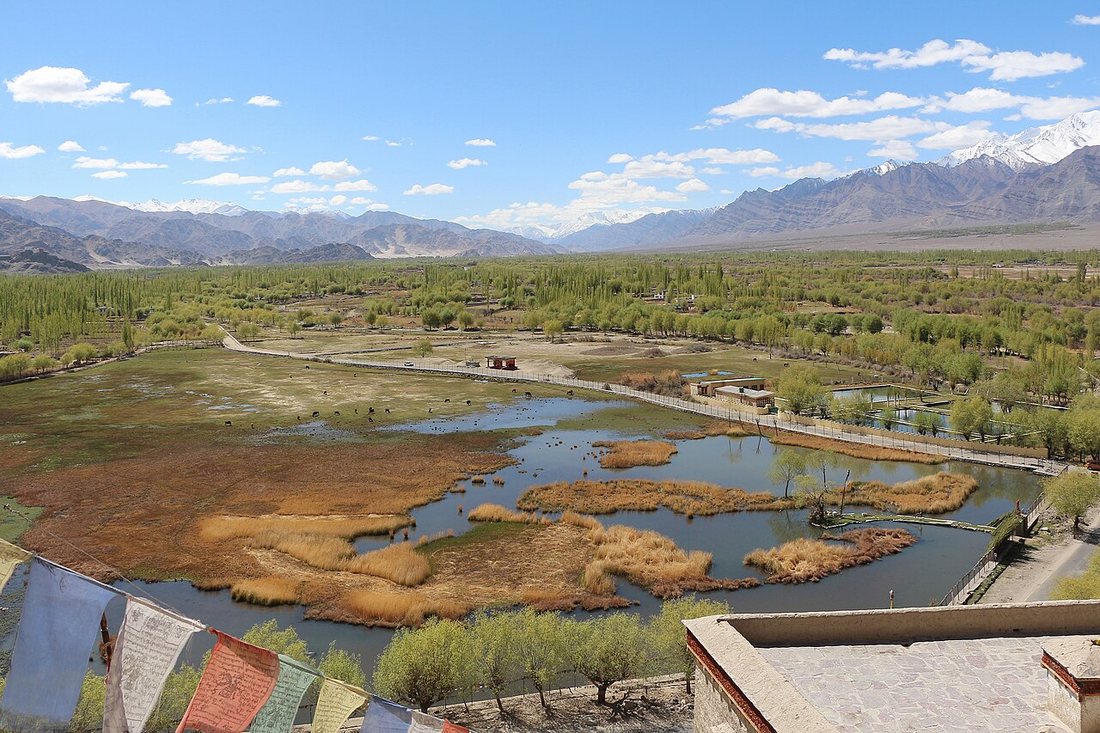
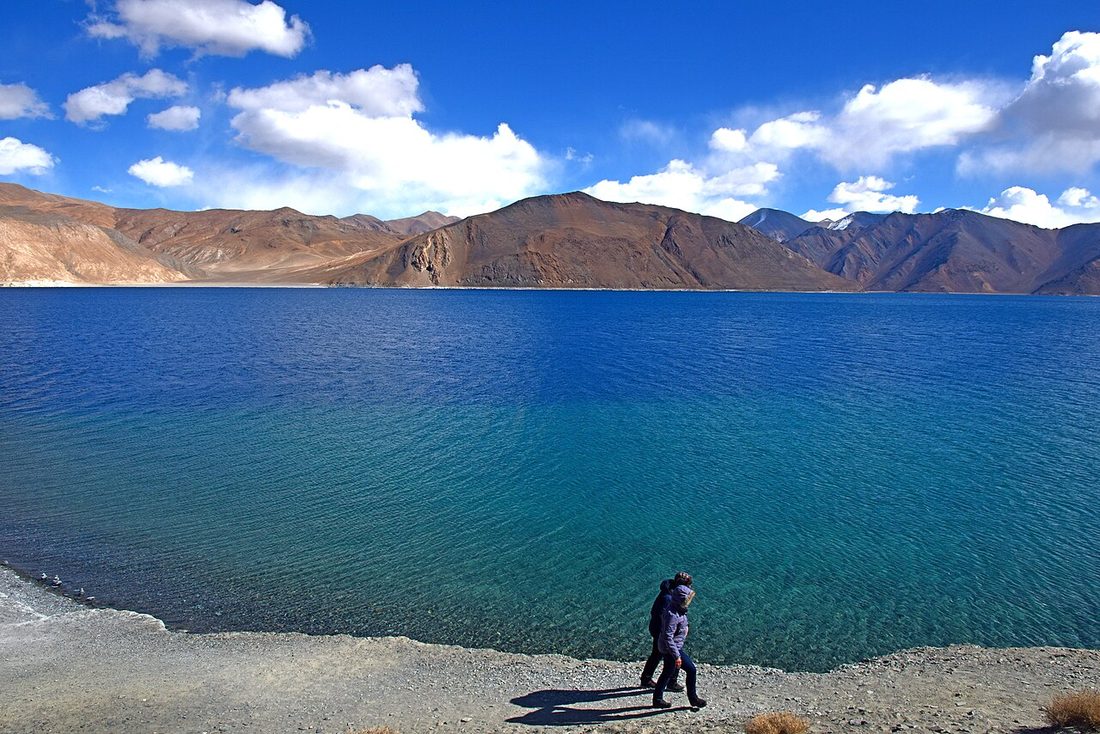
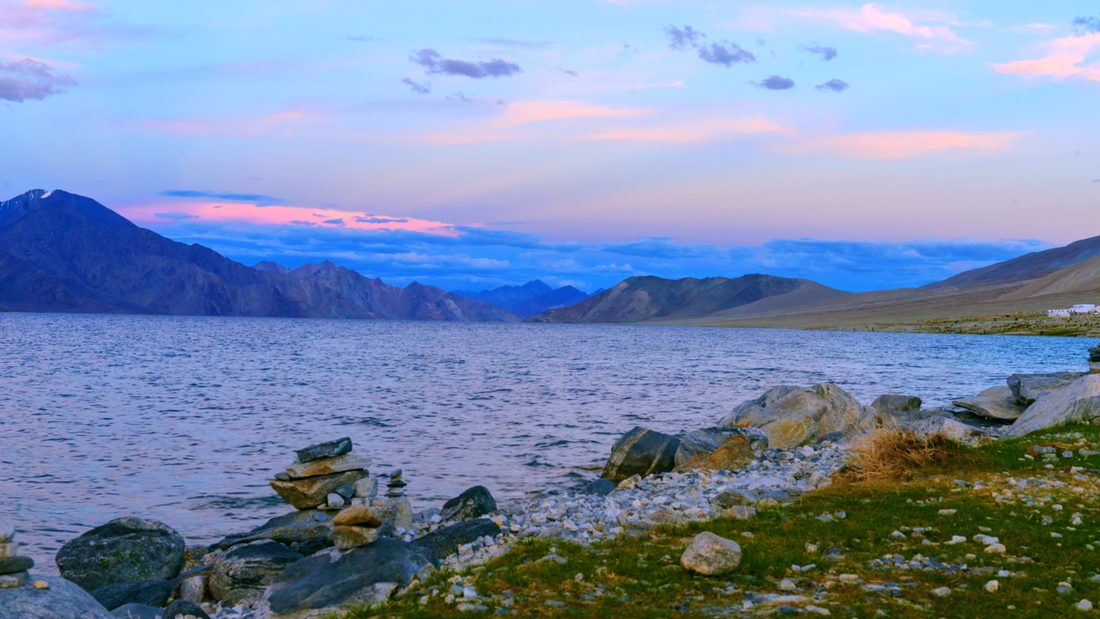
Leaving Hunder after breakfast on Day 5, your SUV steers east across steel Bailey bridges spanning the churning Shyok River—threading through Agham, Shyok village, Durbuk, and Tangtse directly to the crystalline shores of Pangong Tso. Reaching 4,250 meters on your fifth day in Ladakh means virtually every traveler arrives smiling, headache-free, and ready to savor twilight shadows sweeping across Spangmik’s pastures. After watching sunrise paint Pangong’s icy basin gold on Day 6, you cross 5,360-meter Chang La back to Leh—with optional en-route stops at Thiksey Monastery and Shey Palace—leaving your final evening free to stock up on dried Turtuk apricots, walnut oil, and woven Pashmina before Day 7’s dawn airport flight.
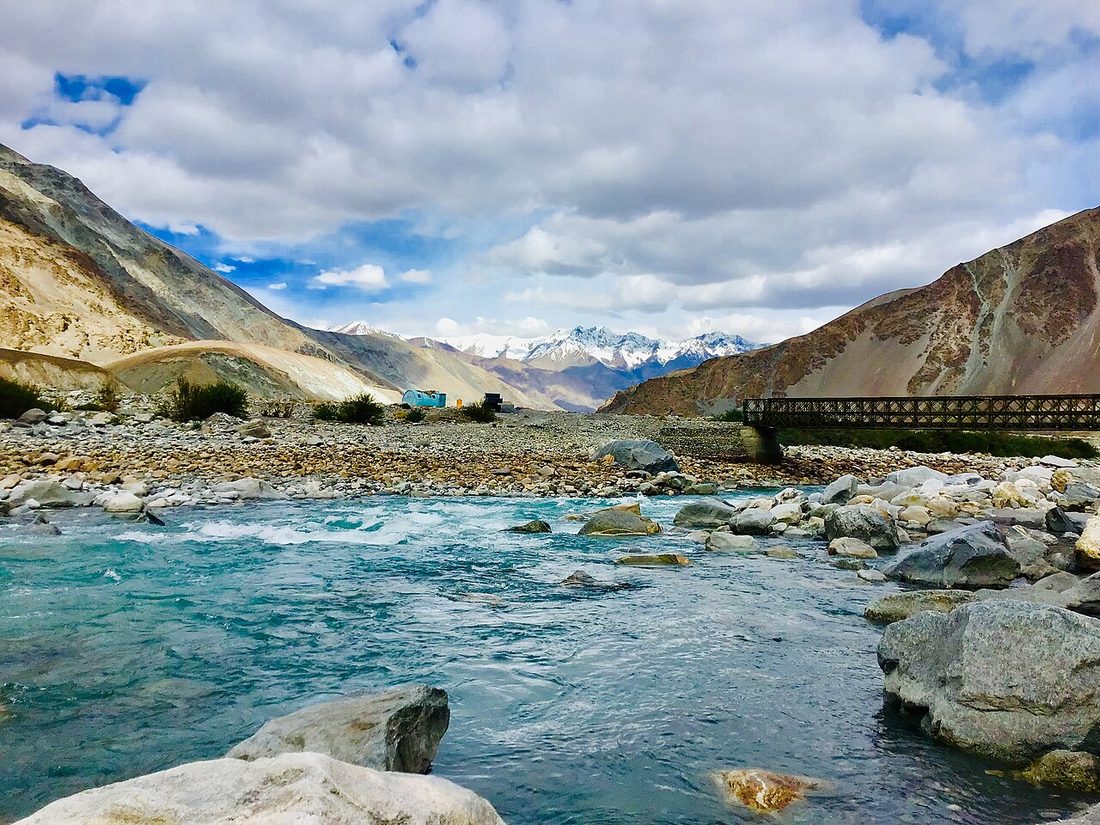
Mid-July through mid-August is peak apricot harvest in Turtuk—stone rooftops turn brilliant orange with Halman apricots drying in the sun, and locals happily sell bags of fresh orchard fruit right along Farol lanes. Always ask warmly before photographing Balti elders or village homes, never photograph military checkpoints near Bogdang or Tyakshi, and note that our package includes your complete Inner Line Permit covering Nubra, Turtuk, Tyakshi, and Pangong. Check weather windows in our month-by-month seasonal guide or explore overland options in our Srinagar–Leh road trip guide.
Weigh this border-culture route against our Amazing Ladakh Monasteries 7D, compact Explore Ladakh 6D, Magical Ladakh 7D, or two-wheel Ladakh Bike Tour.
Travelers wanting to pair Turtuk with western valleys like Alchi & Rizong Monasteries, Kargil, or remote Zanskar Valley can easily extend this itinerary by two or three days. Browse our official homepage—then message our Leh ground team to lock your preferred departure dates.
We offer special tiered group tariffs for couples, families, and ski/travel groups from 02 Pax up to 14+ Pax with Deluxe centrally heated hotels & houseboats:
| PACKAGES | 02 PAX | 04 PAX | 06 PAX | 08 PAX | 10 PAX | 12 PAX | 14 PAX | EXTRA BED |
|---|---|---|---|---|---|---|---|---|
| DELUXE / BUDGET PACKAGE |
What's covered in your package
What's not included
Senior Kashmir Tour Consultant • +91- 9103232574 | Srinagar Office
Tailored Winter & Year-Round Departures from the United States (USD), Europe/UK (EUR/GBP) & Middle East / GCC (AED/SAR/OMR/QAR): Every itinerary on our New Year's Kashmir Tours & Kashmir Tour Packages portal can be customized with centrally heated Gulmarg & Pahalgam resorts, heritage Nigeen & Dal Lake houseboats, 4x4 snow-chain transfers during Chillai Kalan, 100% Zabiha Halal Kashmiri Wazwan alongside pure vegetarian/Jain kitchens, and private Toyota Innova Crysta / Force Urbania chauffeurs.
Direct GI-Tagged Kashmiri Export Assistance (USA CBP/FDA, EU REX/UK DCTS & GCC SFDA/ESMA): Travellers and boutique buyers can pair their holiday with verified Srinagar artisan studio visits for Pampore Mongra Saffron (ISO 3632), Changthangi Pashmina & Kani Shawls (CDI QR SFAL), Hand-Knotted Qaleen Silk Carpets, White Acacia Solai Honey, and Kiln-Seasoned Walnut Woodcraft shipped with insured air freight to New York, San Francisco, London, Frankfurt, Paris, Zurich, Dubai, Riyadh, Muscat & Doha. Read our 2026–2027 New Year's Kashmir Tours Complete Guide or browse all 139 Travel & Export Guides.
Read our local field guides for every stop on this itinerary before you pack:
Well-organized trip with comfortable centrally heated hotels, friendly local driver, and smooth sightseeing across Srinagar, Gulmarg & Pahalgam.
Rahul Sharma — New DelhiThe luxury houseboat stay, sunset Shikara ride, and Gulmarg Gondola & skiing arrangements were seamless. Highly recommended!
Priya Verma — AhmedabadClean hotels, heated rooms, and 24/7 trip support from Ms. Hina Beigh and the Kashmir i Tour team throughout our vacation.
Arjun Patel — PuneGet a customized itinerary & best hotel/houseboat rates from our Srinagar travel team.