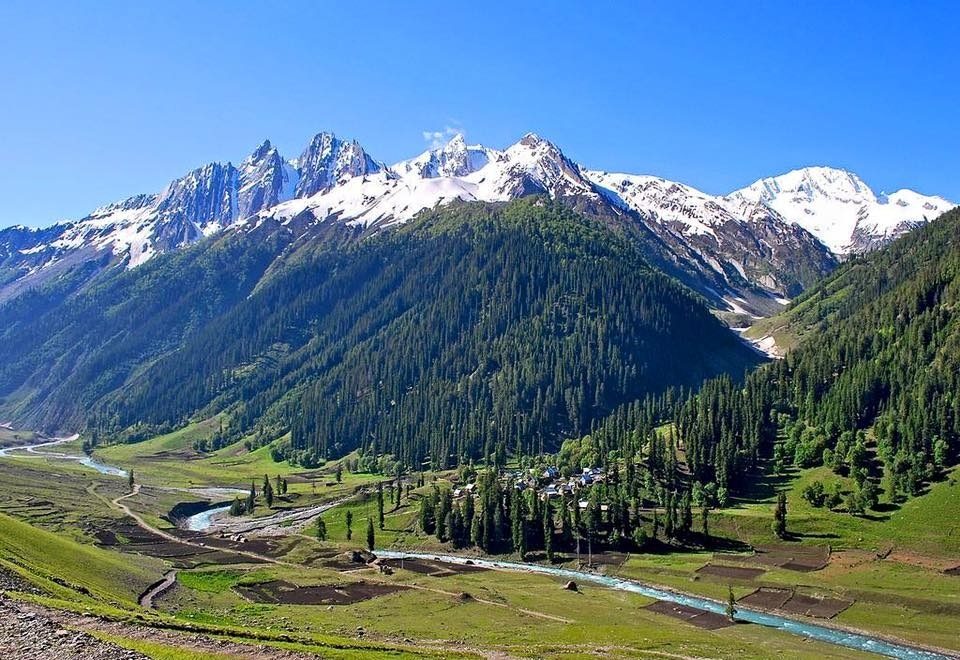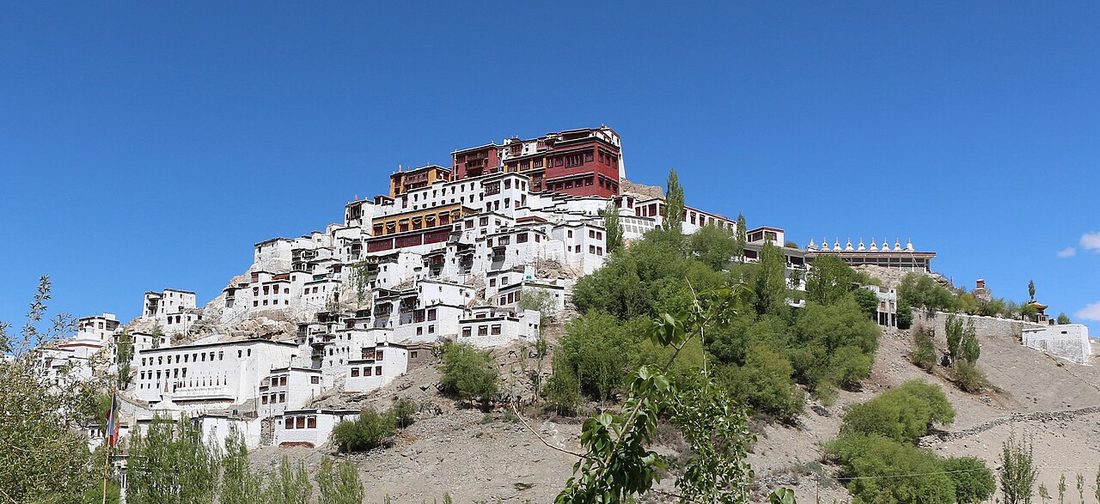
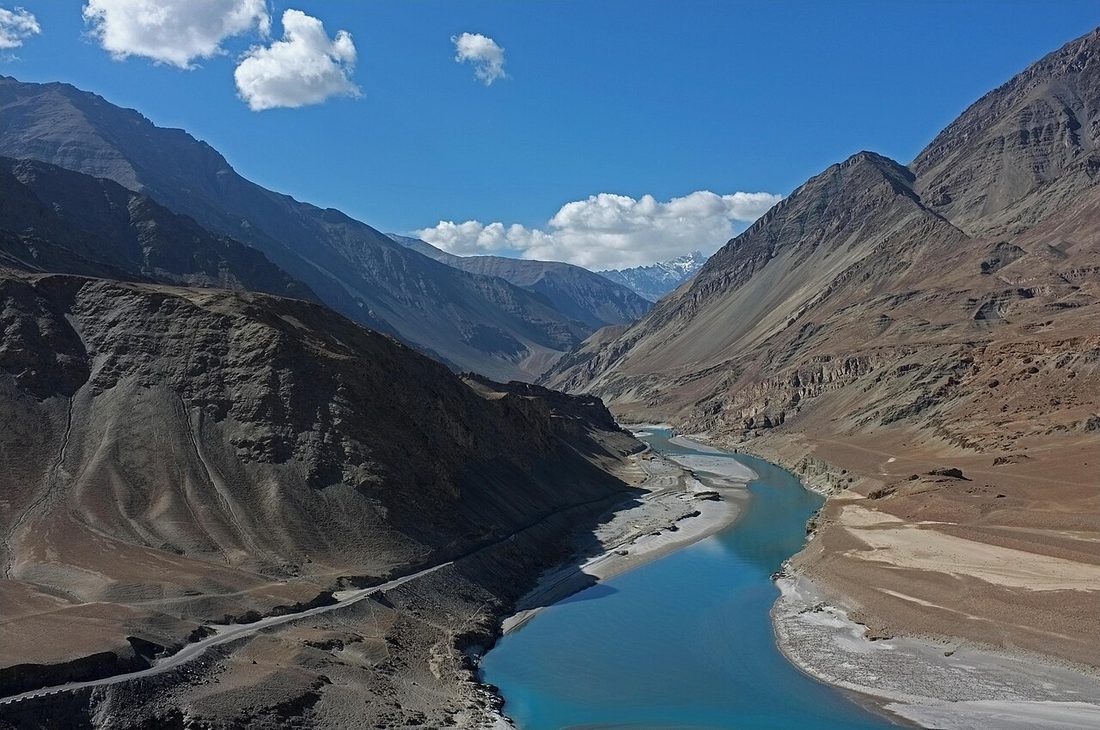
Most visitors to Ladakh spend their mornings craning their necks upward—climbing dizzying flights of stone stairs to fortified cliffside monasteries like Thiksey, Lamayuru, and Diskit. Drive sixty-six kilometers west of Leh town into Lower Ladakh’s sun-warmed Sham Valley, however, and you meet two monastic sanctuaries that break every visual cliché in the guidebooks. On the south bank of the roaring Indus, shaded by apricot orchards and walnut leaves, Alchi Choskor sits completely flat on lowland soil—guarding thousand-year-old Indo-Kashmiri murals and baroque cedar carvings that predate modern Tibetan style by centuries. Barely twenty-five minutes up-highway and tucked deep inside a silent, sun-baked tributary gorge stands Rizong Gompa—an uncompromising 1829 Gelugpa hermitage where monks still beat out daily prayer calls on a hollowed tree trunk capped with a flat stone slab.
Pairing Alchi and Rizong inside a relaxed one-night Sham Valley stay (at Alchi village or nearby Uleytokpo) is my single favorite recommendation for thoughtful travelers—not only for art lovers, but also for smart altitude pacing. Because Sham Valley sits at a gentle 3,100 meters—four hundred meters lower than Leh—spending Day 2 right here lets your body build red blood cells effortlessly before you climb Khardung La or Chang La later in the week.
Alchi Choskor: A Thousand-Year-Old Kashmiri Art Capsule on the Indus
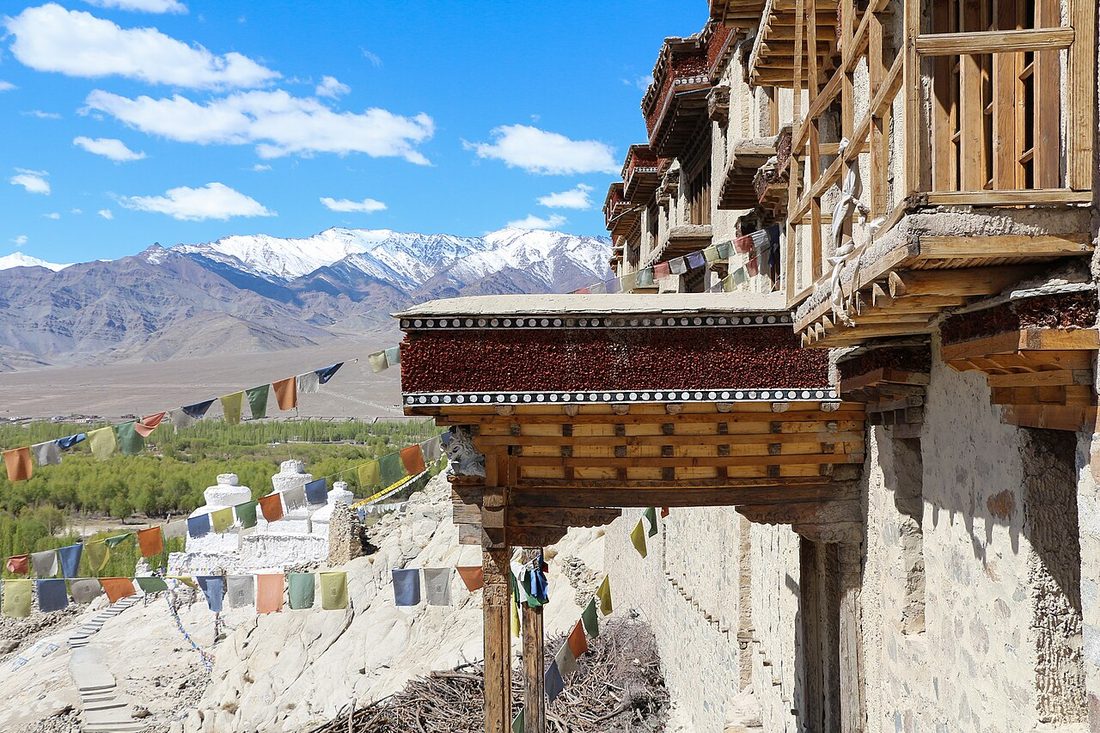
Thirty-three kilometers east of Khaltsi (Khalsi) and two kilometers before Saspol village, a paved link road branches south off NH-1 across a modern concrete bridge over the surging Indus River (thankfully replacing the hair-raising narrow jeep bridge old guidebooks used to warn about, so buses and SUVs roll straight into Alchi village with ease). Walk past rows of mud-brick gateway stupas—called kakani chortens, some fitted with vaulted tunnel archways painted floor-to-ceiling in vivid Buddhist iconography and flanked by tiny corner turret bases—and follow a cobbled orchard lane lined with stalls selling carved juniper beads and dried apricots until the outer mud enclosure of Alchi Choskor opens quietly before you.
Unlike later Ladakhi gompas fortified on defensive hilltops during centuries of regional wars, Alchi was founded peacefully on flat riverbank terrain during the late tenth or eleventh century—linked directly to the Great Translator Lotsawa Rinchen Zangpo (958–1055) and local noble patron Kaldan Sherab during Buddhism’s “Second Diffusion” across western Tibet. Because the valley floor hosted fertile trade links westward over Zoji La, the patrons invited master Kashmiri architects, woodcarvers, and mineral-pigment muralists across the Himalaya to construct and paint Alchi’s temples. When medieval political upheavals later erased virtually all standing Buddhist temples inside the Kashmir Valley itself, dry desert air in Alchi unintentionally preserved the sole surviving full-scale masterpiece of classical Kashmiri Buddhist art anywhere on Earth.
Walking Inside Alchi’s Four Primary Shrines
Protected carefully by the Archaeological Survey of India alongside the resident monastic caretakers of Likir Gompa, Alchi Choskor contains four unforgettable mud-and-timber structures. Photography and bright flashlights are strictly forbidden inside every chapel to stop ancient mineral lapis, malachite, and gold-leaf pigments from fading—let your eyes adjust slowly in the dim amber glow:
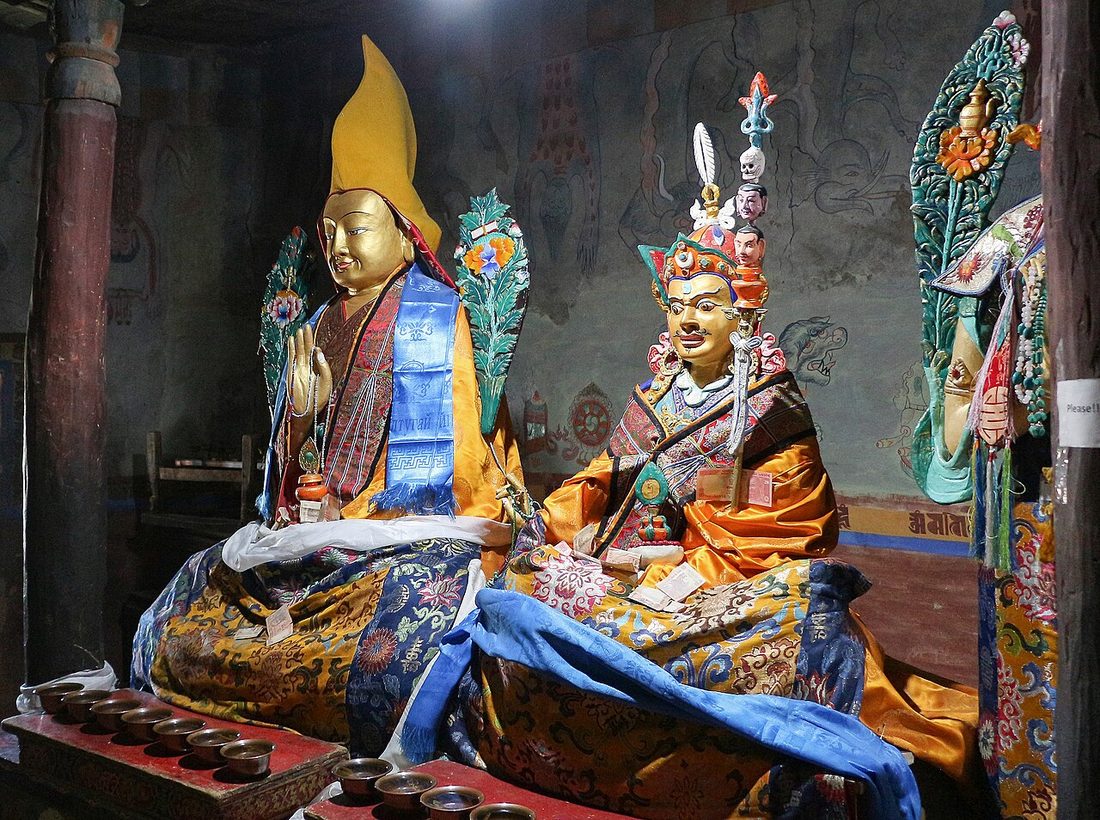
- The Sumtsek (Three-Tiered Temple): Alchi’s absolute architectural crown jewel. Step past astonishingly intricate, almost baroque carved deodar wood pillars and Kashmiri trefoil niches into a lofty three-story mud interior dominated by three colossal 4-meter standing clay Bodhisattvas—Avalokiteshvara (white), Maitreya (ochre-gold), and Manjushri (saffron)—whose heads literally rise up into the second-story light wells. Lean close to examine their painted lower robes (dhotis): Kashmiri master painters decorated every fold with microscopic miniature scenes of royal palaces, musicians, horse-riders, winged beasts, Sasanian textile roundels, and episodes from the Buddha’s life.
- The Dukhang (Assembly Hall): The oldest heart of the complex, accessed through a timber-carved porch depicting guardians and floral scrolls. Inside, gigantic geometric Vairocana mandalas cover the side walls while a celebrated secular fresco near the entrance shows an eleventh-century royal drinking banquet—complete with bearded nobles wearing patterned Central Asian coats and pointed turbans, offering priceless visual clues into medieval Ladakhi court life.
- Lotsawa Lhakhang (Translator’s Temple) & Manjushri Lhakhang: Twin smaller sanctuaries sitting toward the riverside rim of the enclosure. Lotsawa Lhakhang honors Rinchen Zangpo with portraits and finely painted thousand-Buddha rows, while Manjushri Lhakhang centers around a striking four-faced sculpture of the Bodhisattva of Wisdom painted in four symbolic directional hues.
Because Alchi’s temple ceilings sit high and windows stay tiny to block UV daylight, bring a small warm-beam pocket torch with low output—never shine harsh blue phone LEDs directly onto fragile pigment—or hire an accredited local Ladakhi art guide at the courtyard gate (roughly ₹500–₹700). A good guide points out tiny flying apsaras, Persian-influenced hunting motifs, and carved Kashmiri wooden horses on the veranda brackets that rushed visitors walk right past in five minutes.
Rizong Gompa & Chulichan (Julichen) Nunnery: Silence Carved in Desert Stone
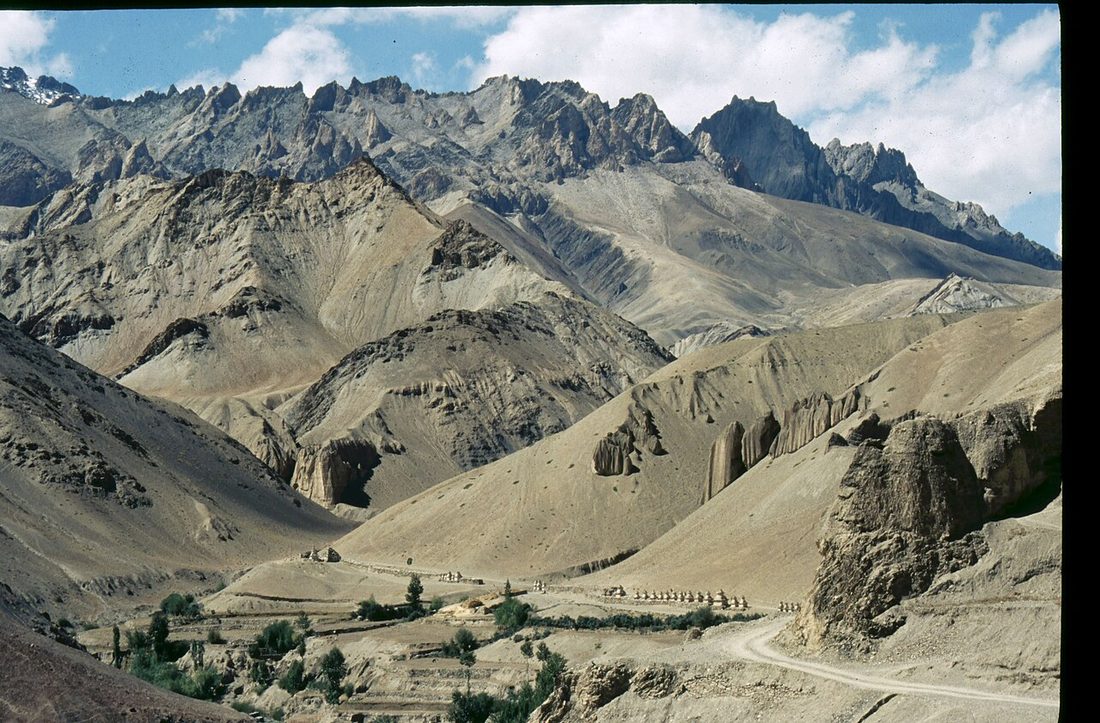
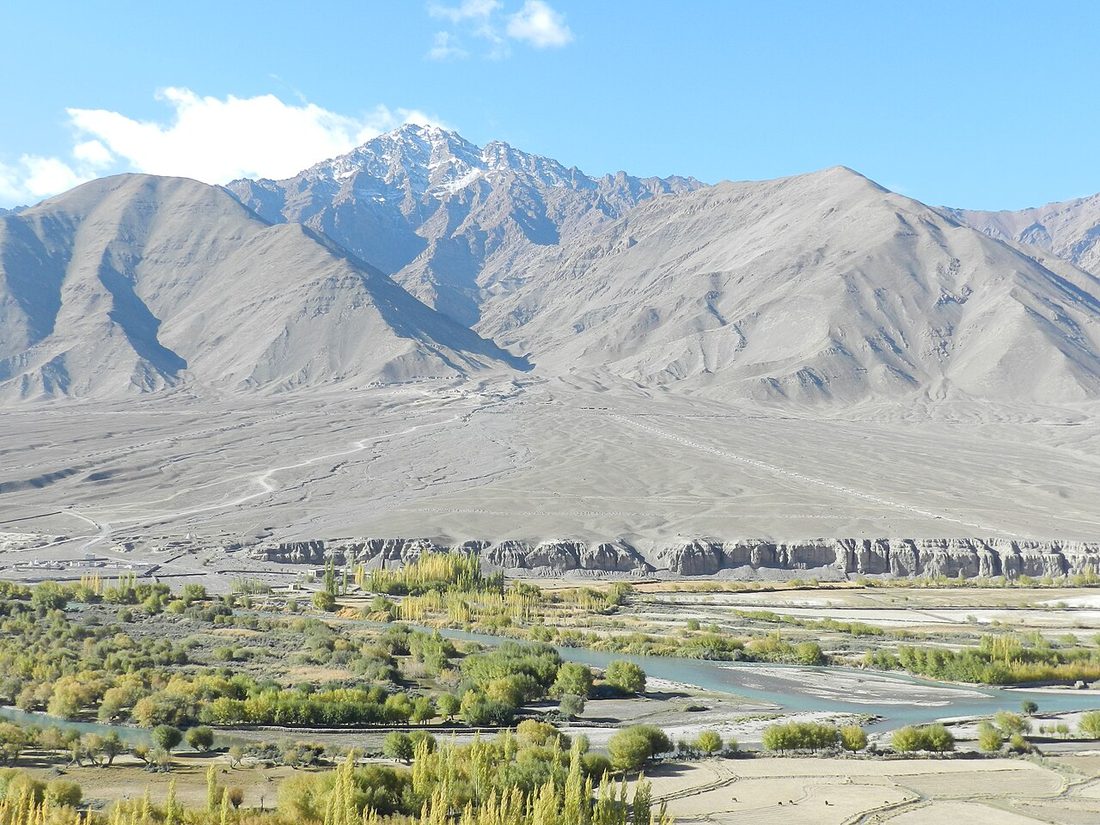
Return north across the Indus bridge back onto NH-1 and drive roughly seven kilometers west toward Uleytokpo—a serene riverside orchard hamlet sitting 26 kilometers east of Khaltsi and long favored by heritage travelers for its leafy apricot camps and cottages. Barely two hundred meters before Uleytokpo, a narrow side road slips north into a stark, sun-baked tributary canyon cut perpendicular to the Indus Valley. Leave the rumble of highway trucks behind—within ten minutes you enter a hidden geological amphitheater belonging entirely to Rizong Gompa.
In earlier decades, visitors had to park two kilometers below a bridgeless meltwater crossing and walk nearly ninety minutes uphill past terraced apricot groves. Today a well-graded paved motorable road threads cleanly all the way up the canyon floor—though walking the final stretch remains an unforgettable meditative climb. Roughly half-way up the gorge, shaded by rustling apricot branches and clear glacier rivulets, sits Chulichan (Julichen) Nunnery, an integral sister community belonging to Rizong Gompa. Step gently into its sunlit courtyard and you will find roughly twenty to twenty-five dedicated Gelugpa nuns spinning raw Ladakhi wool, milking hardy mountain cows, tending vegetable beds, and preparing oil and butter supplies carried uphill daily for the monks above.
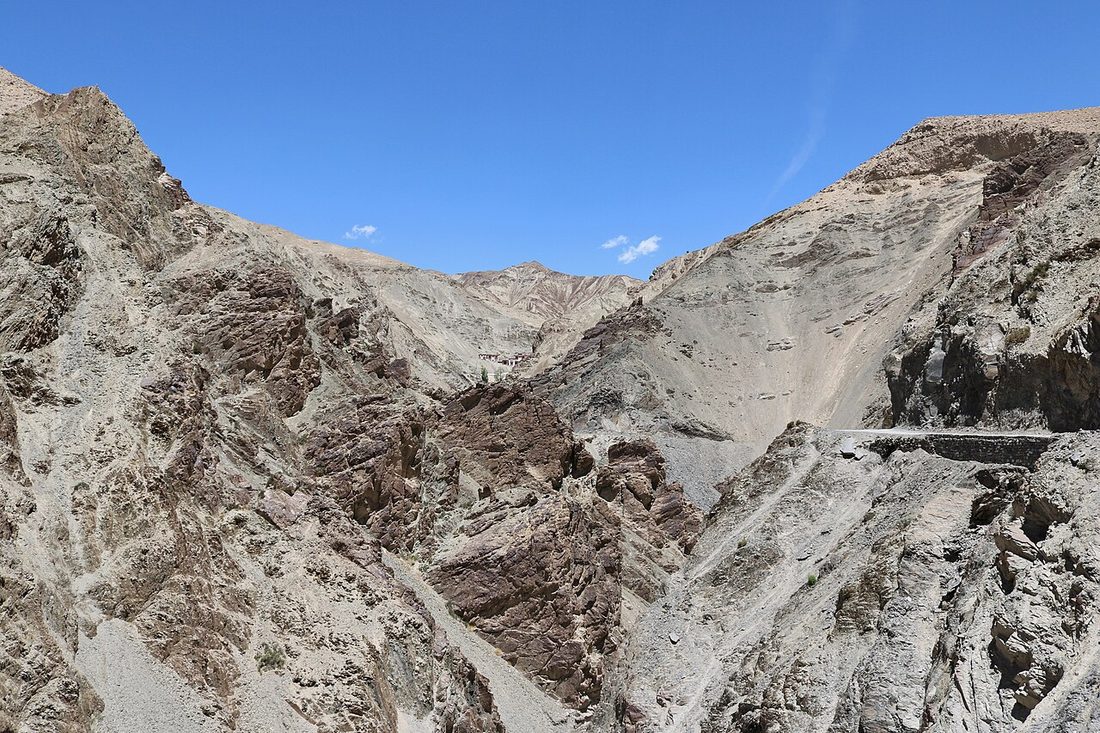
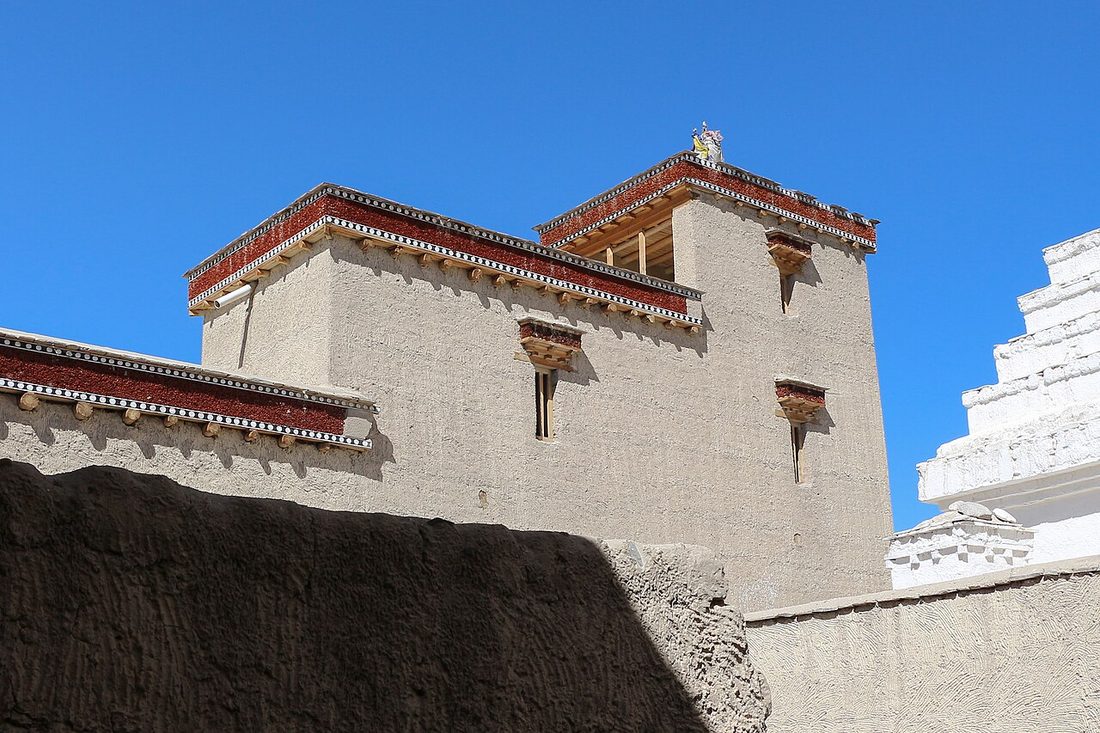
Continuing beyond Julichen past a fork marked by fluttering blue prayer flags, stacks of hand-carved mani stones, and Tibetan rock inscriptions painted directly across the canyon cliff walls, the gorge winds upward to the first whitewashed Rizong Chorten. An unmistakable English signboard beside the stupa asks visitors politely to refrain from smoking, drinking, or eating inside the sacred valley—setting the solemn tone immediately. Around the final rocky shoulder, the narrow canyon opens abruptly into a barren bowl where Rizong’s tiered white-and-ochre walls cling silently to the southern slope at 3,450 to 3,550 meters.
Inside Ladakh’s Strictest Monastic Retreat
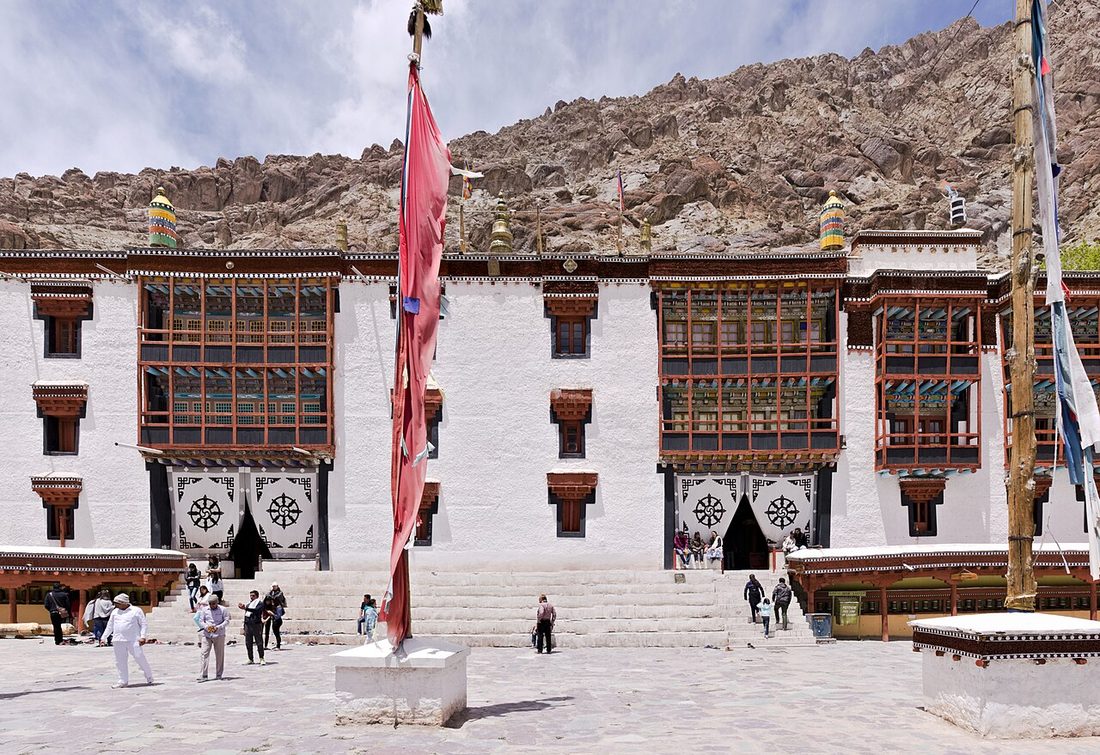
Founded in 1829 by visionary master Lama Tsultim Nima (whose spiritual successors maintained enduring links with senior Gelugpa lineages including Dharamsala and Manali), Rizong earned its nickname Yuma Changchubling—literally “Paradise for Meditation.” Unlike wealthier highway monasteries bustling with souvenir shops, Rizong enforces strict traditional Vinaya monastic discipline for its roughly thirty to forty resident monks and young novices: monks are forbidden to leave the canyon unnecessarily, possess personal private kitchens, or break evening vows of silent study.
Walk softly across the courtyard past the traditional Thekchen workshop chamber (where woodblock texts and monastic robes are carefully maintained) into the hushed Dukhang (Assembly Hall) holding serene gilded images of Shakyamuni Buddha, Lama Tsongkhapa, and the founder’s sacred relic stupa. Before descending, ask a smiling novice to show you one of Ladakh’s most unusual acoustic artifacts mounted on an upper terrace: Rizong’s famous stone prayer drum—constructed ingeniously from a hollowed-out timber tree trunk capped tightly with a flat dressed stone slab, struck rhythmically with a rounded stone hammer to call monks through the silent canyon to morning assembly. Visitors should also note Rizong’s long-standing traditional residential protocol: while women travelers are warmly welcomed for daytime visits throughout the monastery halls, overnight accommodation for female guests is traditionally hosted below amid the apricot trees of Julichen Nunnery rather than inside the monks’ quarters up at Rizong.
Alchi, Rizong & the Wider Sham Valley Monastery Comparison
Because Sham Valley stretches neatly along the scenic NH-1 highway linking Leh with Kargil, travelers can easily compare five distinct centuries of Himalayan Buddhist architecture inside one unforgettable 2-day circuit:
| Monastery | Distance from Leh | Century & Lineage | Architectural Highlight | Recommended Time & Note |
|---|---|---|---|---|
| Alchi Choskor | 66 km west | 11th Century (Kashmiri-Buddhist; Gelugpa care) | Flat riverside oasis, 4m Sumtsek statues & baroque deodar carvings | 2 – 2.5 hrs; zero indoor photography; lunch at Alchi Kitchen |
| Rizong Gompa & Julichen | 73 km west | 1829 (Strict Gelugpa retreat) | Hidden desert canyon, wool-spinning nunnery & stone prayer drum | 2 hrs including gorge drive; quiet dress & no smoking/snacking |
| Likir Gompa | 53 km west | 11th / 18th Century (Gelugpa) | Colossal 23m gilded outdoor Maitreya Buddha & bronze prayer wheels | 1 hr; sits just 5 km off NH-1 right before Saspol |
| Basgo Fort & Temples | 40 km west | 15th–17th Century (Namgyal Royal Seat) | Eroded ochre mud citadel housing giant gilded Maitreya chapels | 45 mins; striking golden-hour photography off the highway |
| Lamayuru Gompa | 115 km west | 11th Century (Drikung Kagyu) | Ancient cave-linked monastery perched above yellow clay Moonland | 1.5 hrs; combine if continuing toward Kargil or Zanskar |
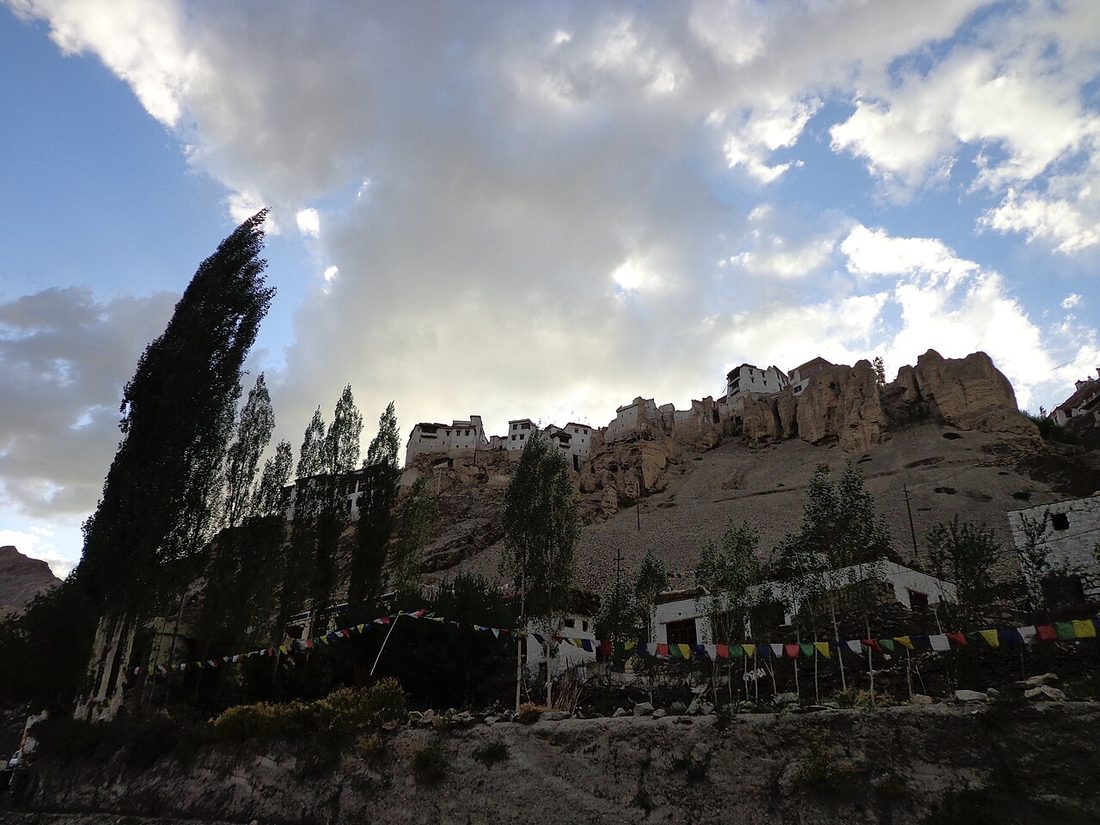
Walk 1,000 Years of Himalayan Buddhist Art in One Curated Route
Our 6N/7D Spiritual Ladakh Monastery Circuit connects Alchi, Rizong, Likir, Lamayuru, Thiksey, Shey, and Hemis with knowledgeable local Ladakhi drivers and riverside apricot stays in Sham Valley.
Best Time to Visit Sham Valley, Where to Stay & Eating at Alchi
Because Sham Valley enjoys warmer daytime sun and lower elevation than Leh, its travel calendar opens earliest and lingers latest across Ladakh:
- April – Early May (Apricot Blossom Magic): While high passes like Chang La still sit buried in snowbanks, Alchi, Saspol, Uleytokpo, and Julichen burst into frothy pink and snow-white clouds of apricot flowers against raw slate cliffs. Daytime temperatures hover cheerfully around 15°C–20°C.
- June – August (Lush Orchards & Warm Evenings): Green barley fields sway along the Indus and plump sweet apricots ripen across Alchi’s mud walls by late July (day highs 24°C–28°C, crisp nights 10°C–14°C).
- September – October (Crisp Autumn Light): Golden poplars line the river gorge, monsoon haze clears completely, and monastic courtyards return to hushed stillness—my personal favorite month to sleep beside the Indus.
Even if you only plan a half-day drive from Leh on our 3N/4D Highlights of Leh Ladakh Express Escape or 5-Day Leh, Alchi, Nubra & Pangong Itinerary, time your lunch right in Alchi village! Steps from the monastery alley sits Alchi Kitchen—founded by Ladakhi chef Nilza Wangmo and celebrated nationwide for elevating traditional village recipes into unforgettable home-style plates. Order bow-tie shaped chutagi wheat pasta simmered in rich local vegetable or lamb stew, fluffy whole-wheat khambir stuffed with fresh local cheese and wild greens, crispy barley momos, tangy cold-pressed sea-buckthorn juice, and warm Ladakhi apricot dessert. For an unhurried overnight, book an orchard cottage at Alchi or riverside camp at Uleytokpo—waking to the roar of the Indus and birdsong in the walnut branches beats rushing back to Leh in evening traffic every single time.
Hidden Sister Shrines & the Famous Sham Valley Village Walk
If eleventh-century Alchi leaves you hungry for deeper solitude, ask your Leh driver for one extraordinary detour scarcely eleven kilometers up a steep side ravine south of Alchi village: Mangyu Monastery. Built during the exact same Rinchen Zangpo era by the same Kashmiri sculptural workshops, Mangyu’s tiny cluster of mud chapels guards towering four-armed Bodhisattvas and jewel-bright mandalas untouched by tour crowds—most mornings the village key-holder unlocks the heavy wooden padlock exclusively for you in complete silence.
Active travelers staying two nights in Sham Valley can also tackle sections of Ladakh’s beloved low-altitude Sham Valley “Apricot” Village Trek (often nicknamed the Baby Trek because passes stay below 3,900 meters). Gentle three- to four-hour daily footpaths wind between Likir, Yangthang, the sacred cedar-and-juniper oasis of Hemis Shukpachan, and the royal orchard village of Temisgam, linking straight into village homestays where you sip hot barley soup beside glowing kitchen stoves without carrying a heavy tent or sleeping bag.
Unlike border sectors around Pangong Tso and Nubra Valley, neither Indian nor foreign travelers need an Inner Line Permit to visit Alchi, Rizong, Likir, or Lamayuru—just carry original photo ID/passport for highway checks and ₹50–₹100 cash per monument for ASI/monastery upkeep tickets. Postpaid Airtel and Jio 4G hold solid signal in Alchi and Uleytokpo, dropping offline once you enter Rizong’s deep rock canyon. Remember that Leh Taxi Union regulations apply here too: use a Leh-registered cab or local rental bike from Leh.
Stitching Alchi & Rizong Into Your Full Himalayan Loop
Whether you fold Sham Valley gently into Day 2 of our 6N/7D Magical Leh, Sham Valley, Nubra & Pangong Circuit, drive straight past Alchi and Rizong while descending from Kargil on our 9N/10D Srinagar-to-Leh Trans-Himalayan Expedition, or continue south toward Zanskar Valley’s remote cliff sanctuaries, few corners of India reward slow curiosity like these two quiet Indus valleys. Begin planning from the Kashmir i Tour homepage, browse all twenty-nine regional guides inside our complete destinations directory, compare all forty routes on our official tour packages index, or message our local Srinagar and Leh route desk to book an orchard stay in Alchi or arrange an art-focused Sham Valley guide.
Frequently Asked Questions about Rizong Gompa & Alchi Monastery — 1,000-Year-Old Kashmiri Murals & Sham Valley Heritage
Recommended Itineraries Including Rizong Gompa & Alchi Monastery — 1,000-Year-Old Kashmiri Murals & Sham Valley Heritage
Every route below can be customized from Srinagar, Jammu, or Leh with private cabs and verified local stays.
Spiritual Ladakh & Ancient Buddhist Monasteries Circuit (6N/7D)
7 Days • 6 Nights • ₹28,500
5-Day Leh, Alchi Monastery, Nubra & Pangong Itinerary (4N/5D)
5 Days • 4 Nights • ₹21,500
Highlights of Leh Ladakh Express Escape (3N/4D)
4 Days • 3 Nights • ₹16,999
Magical Leh, Sham Valley, Nubra & Pangong Circuit (6N/7D)
7 Days • 6 Nights • ₹28,999
Srinagar to Leh: Kashmir & Ladakh Trans-Himalayan Expedition (9N/10D)
10 Days • 9 Nights • ₹42,999Explore Nearby & Connected Destinations
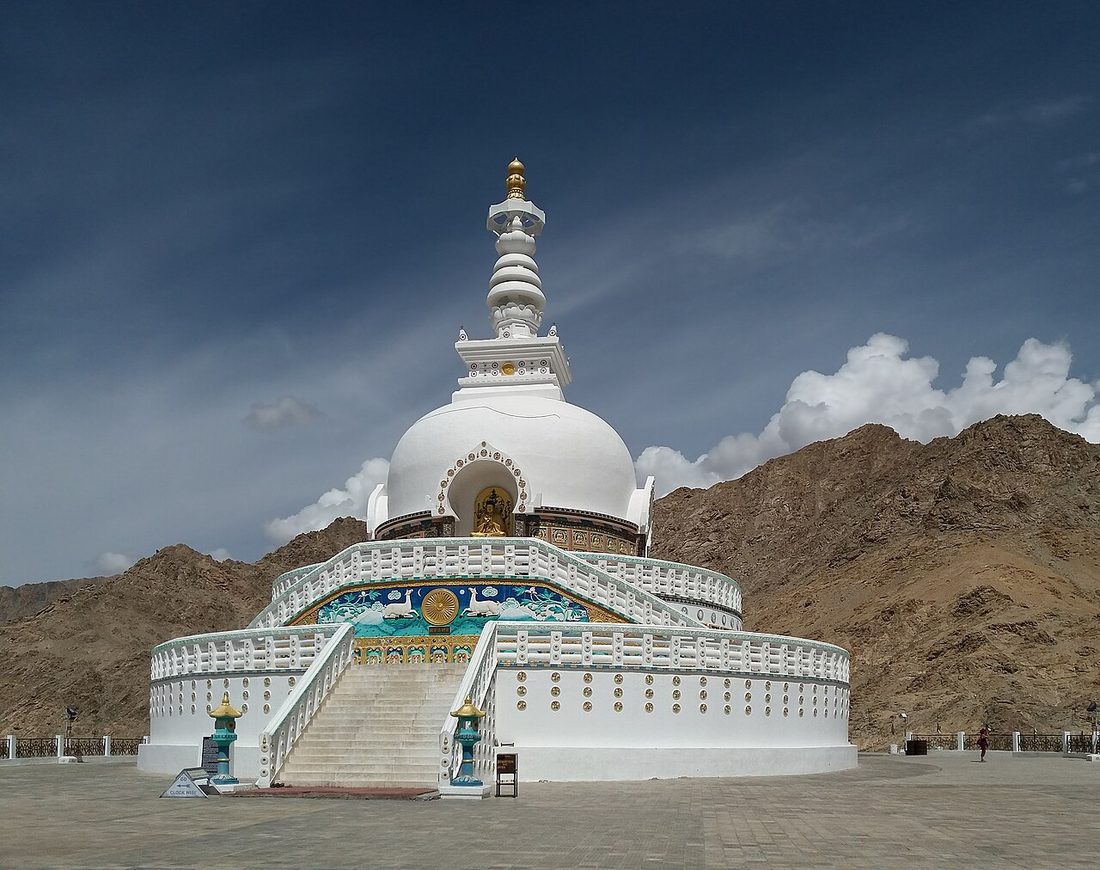
Leh Ladakh — High-Altitude Passes, Ancient Gompas & Trans-Himalayan Deserts
Leh-Ladakh →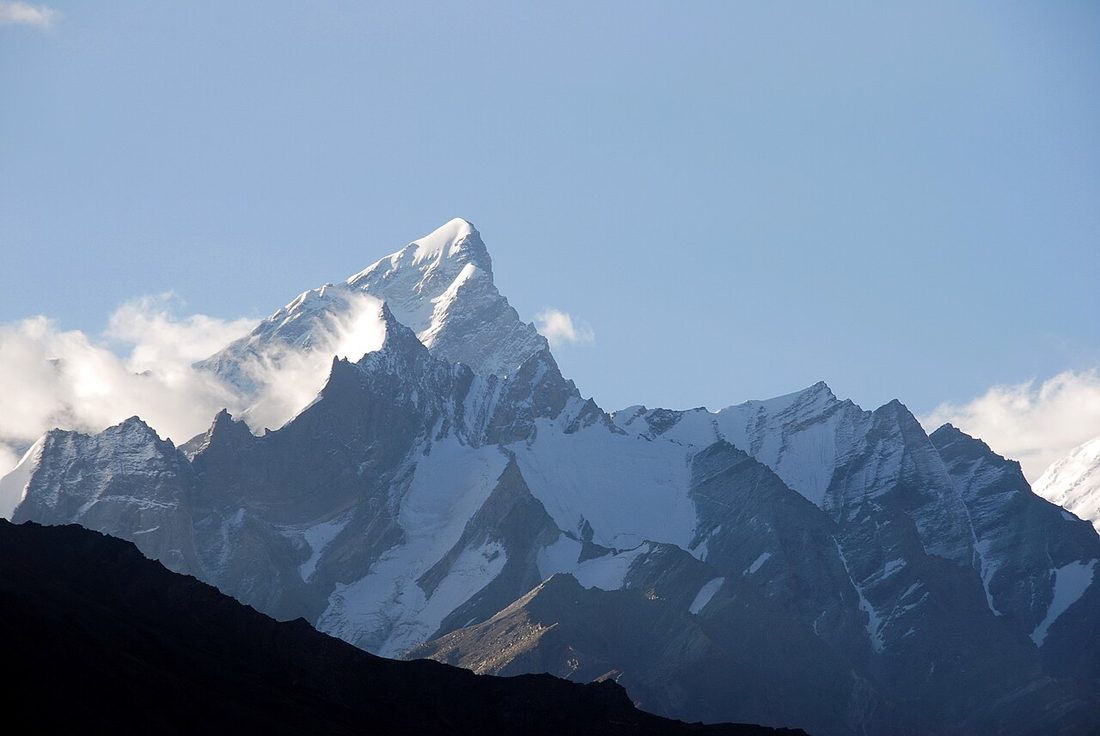
Kargil — Suru Valley, Nun Kun Peaks, Dras War Memorial & Mulbekh Maitreya
Leh-Ladakh →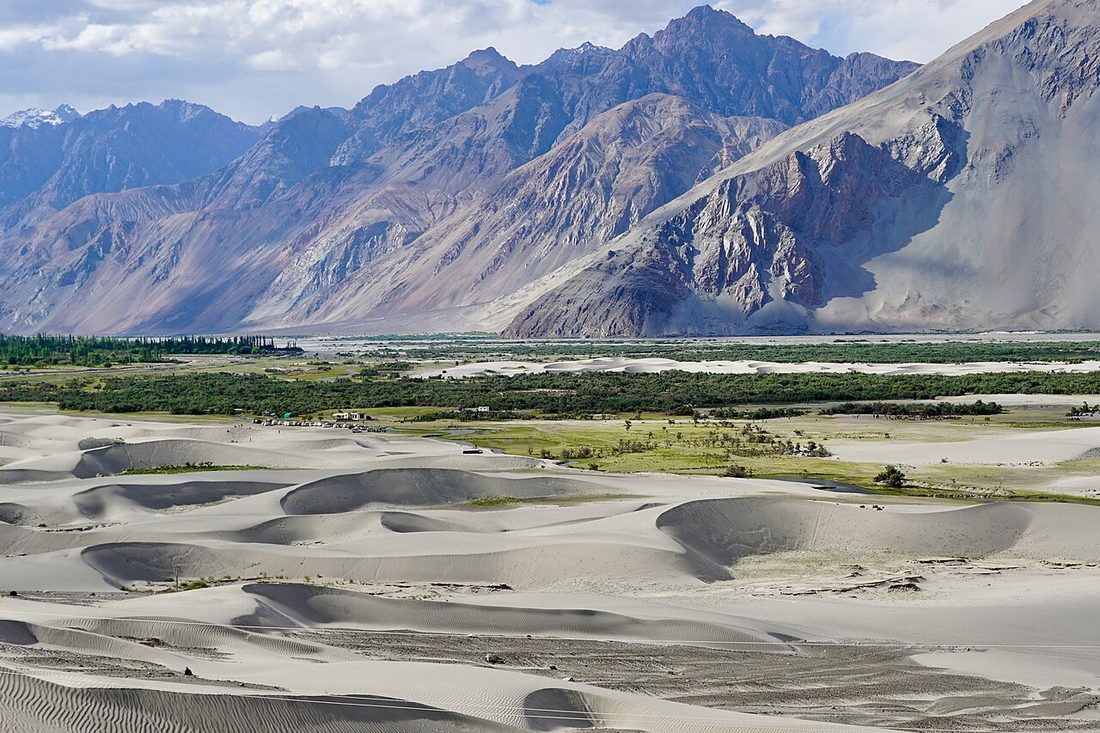
Nubra Valley — Khardung La, Hunder Silver Dunes, Diskit Maitreya & Turtuk
Leh-Ladakh →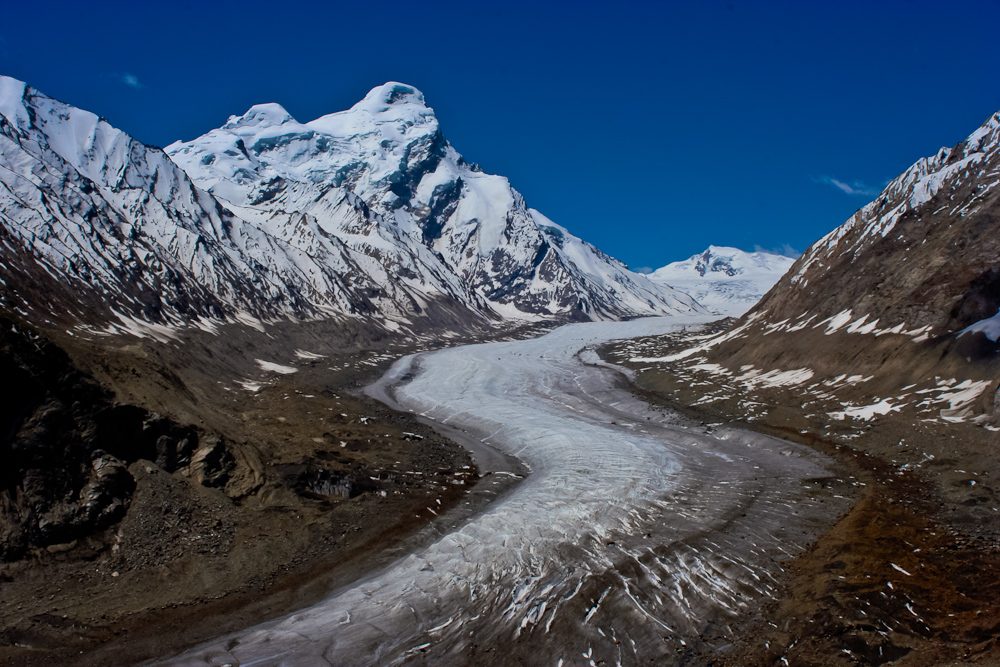
Zanskar Valley — Padum, Phugtal Cliff Monastery, Drang Drung Glacier & Pensi La
Leh-Ladakh →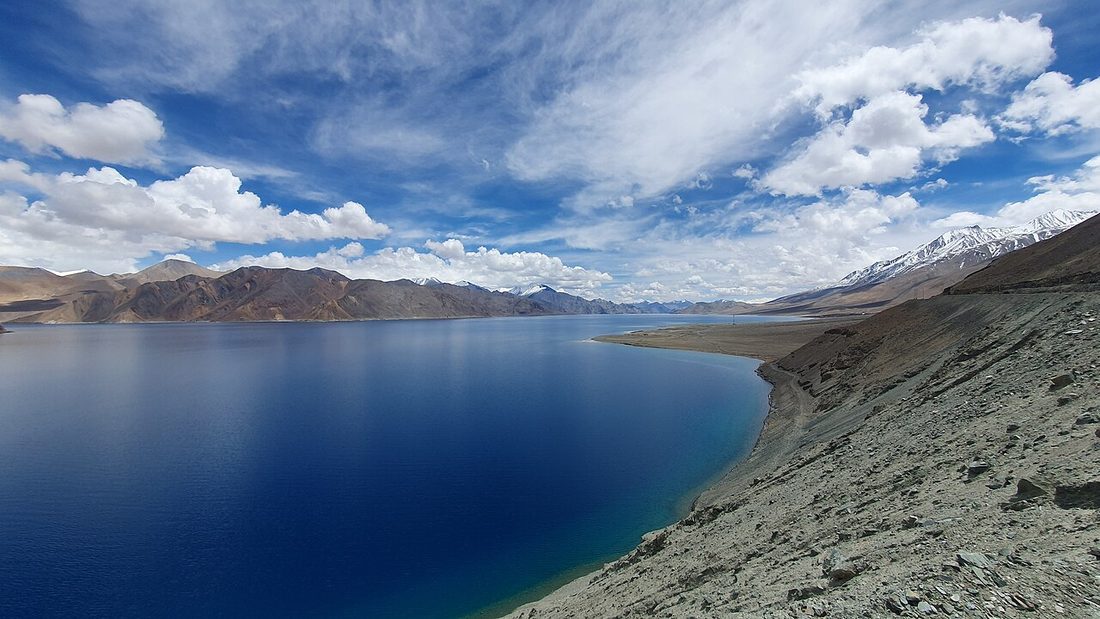
Pangong Tso Lake — Shifting Cobalt Waters, Chang La Pass & Spangmik Stargazing
Leh-Ladakh →