
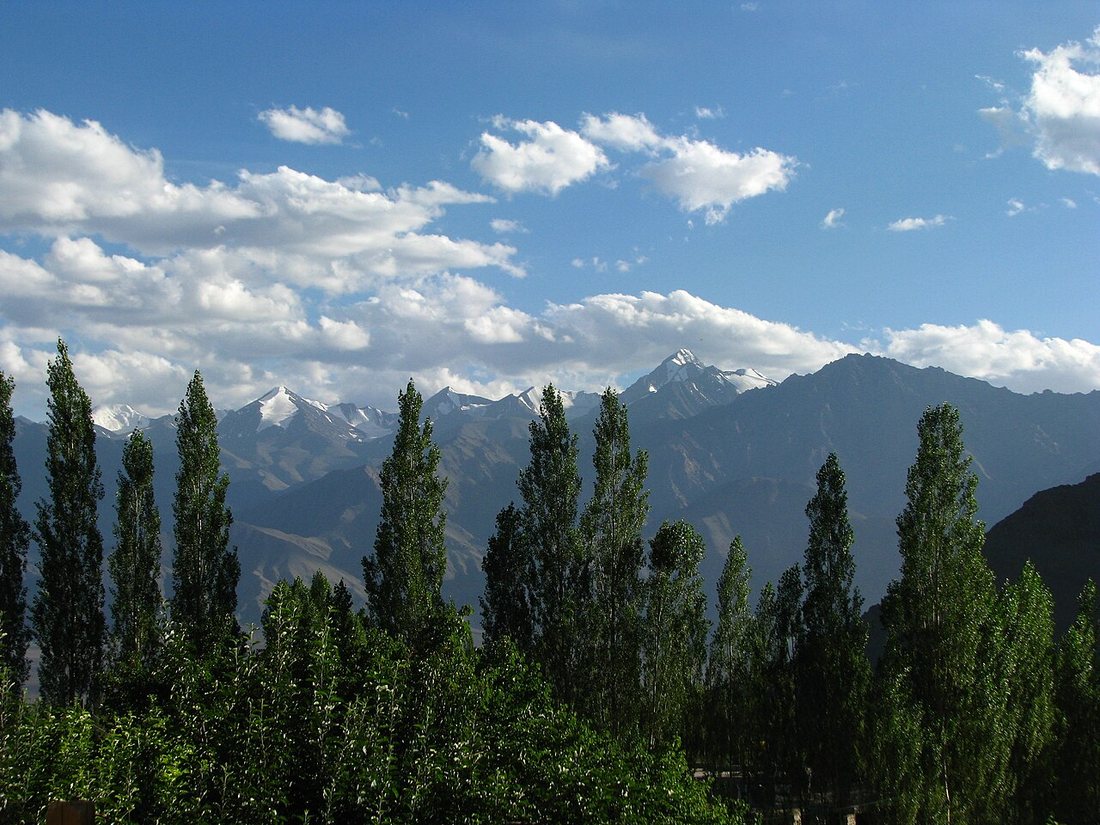
Stand in the stone courtyard of Thiksey at 5:50 AM while the Indus valley still lies wrapped in indigo frost, and you hear Ladakh before you see it. Two ten-foot copper dungchen horns groan across the cliff face, answered by silver oboes and the hollow thump of double-headed monastery drums. Young novices in burgundy wool robes jog barefoot across cold slate carrying battered aluminum kettles of salted yak-butter tea. This is not museum heritage preserved behind velvet rope. Across Leh Ladakh, Vajrayana Buddhism breathes through kitchens, debate courtyards, woodblock print rooms, and hillside caves that have held unbroken chanting for nearly a millennium.
Standard sightseeing circuits skim past two monasteries between lunch and high-pass selfies. This 6-night, 7-day contemplative pilgrimage slows the tempo down so you witness every major Tibetan Buddhist school represented in Ladakh—Nyingma, Drukpa Kagyu, Drikung Kagyu, and Gelug—while sleeping overnight right beside the willow-shaded shrines of Alchi and the lunar crags of Lamayuru. Travelers browsing cultural journeys on Kashmir Tour Packages pick this itinerary when art history, quiet reflection, and living Himalayan scholarship matter more than clocking maximum pass elevations.
Rather than dragging jet-lagged guests over a 5,300-meter mountain saddle on their second morning, Day 2 stays gentle around the Indus floor. Eight kilometers northeast of Leh sits the terraced oasis of Sabu, where crisp spring water feeds apricot orchards and a small hillside gompa overlooking barley terraces. It is the ideal unhurried altitude warm-up: short stone lanes, zero tour buses, and clear morning air to let your breathing settle.
From Sabu, the afternoon drops down to Choglamsar along the Indus riverbank—the cultural heartbeat of Ladakh’s exiled Tibetan community. Inside the SOS Tibetan Children’s Village and nearby Central Institute of Buddhist Studies (CIBS), you step beyond stone monuments into modern living scholarship. Walk quietly through the Tibetan research library lined with oblong pecha manuscripts wrapped in saffron cloth, watch artisans grind natural mineral pigments for thangka scrolls at the handicraft workshop, visit the traditional Sowa Rigpa Tibetan medical clinic, and stop for steaming thukpa in a community kitchen run by second-generation Tibetan elders. Few visitors ever set foot in Choglamsar, yet understanding its refugee history illuminates everything you encounter over the next five days.
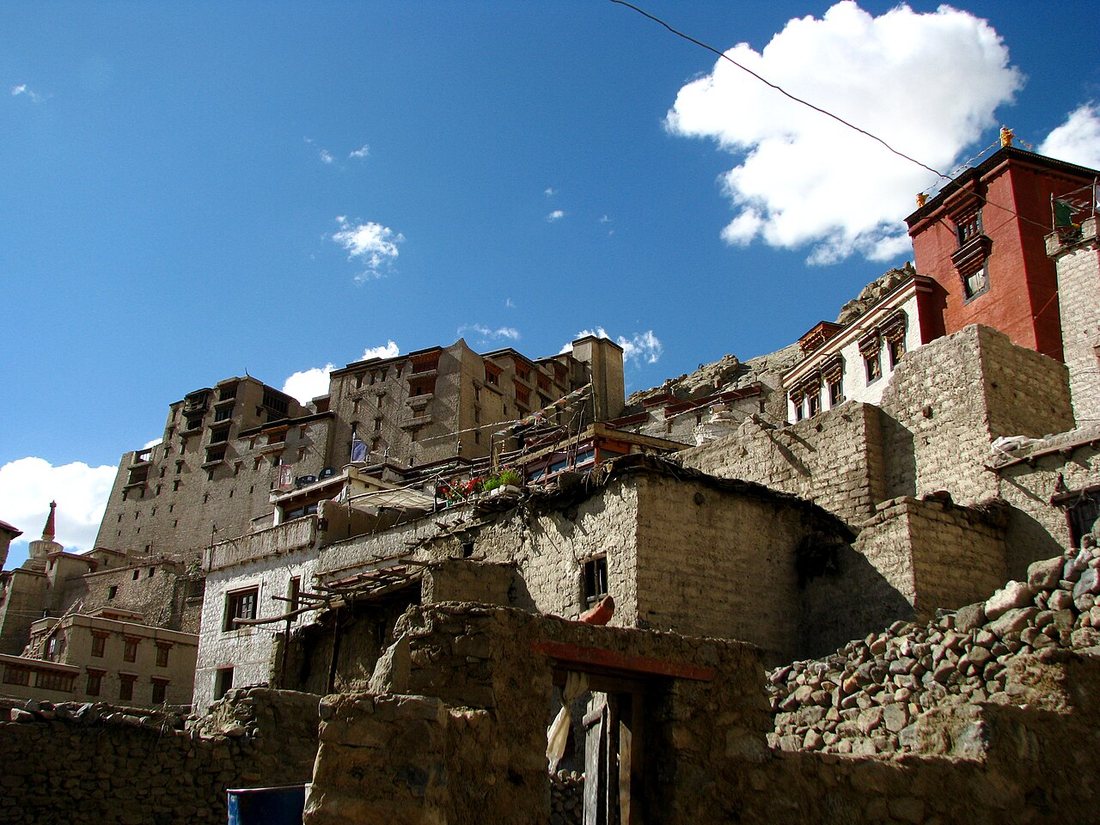
Day 3 traces the ancient caravan highway east along the Indus, where monastic estates once functioned as both spiritual universities and royal treasuries. Rising before dawn lets you sit quietly inside Thiksey Gompa’s assembly hall during morning prayers—then walk next door to face the serene two-storey gilded Maitreya Buddha commissioned in 1970 for the Fourteenth Dalai Lama’s visit. Nearby Shey Palace preserves the massive copper-gilt Shakyamuni erected in 1655 by King Deldan Namgyal inside his father’s summer capital.
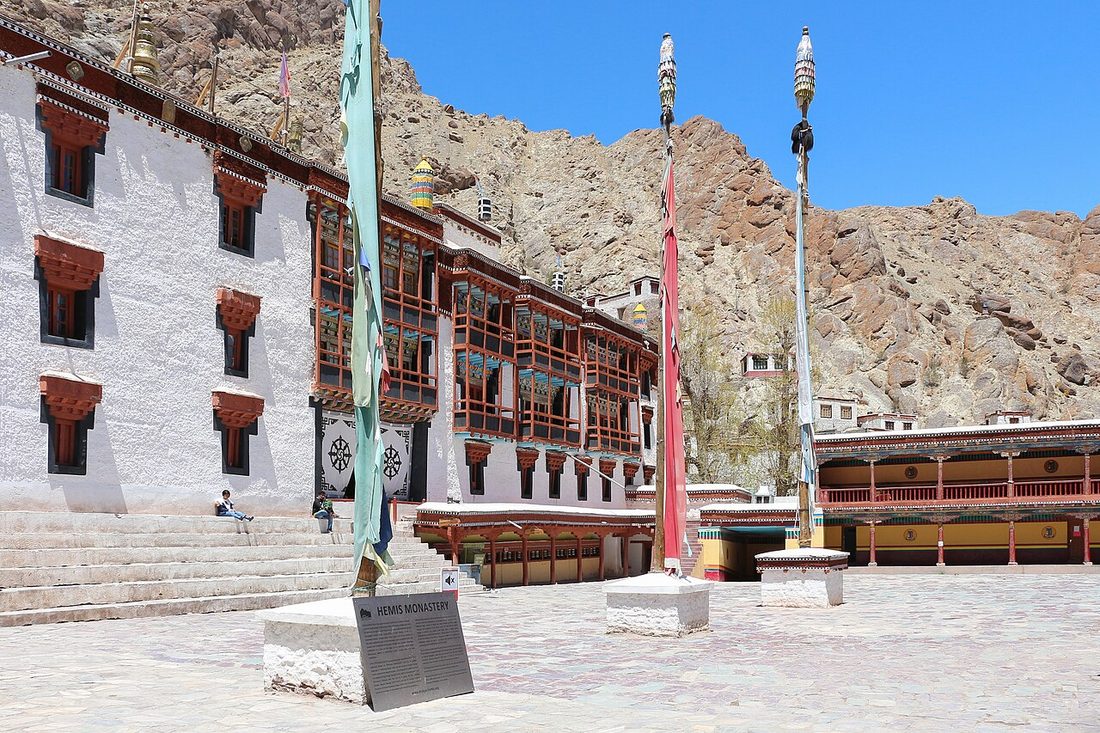
Beyond Karu, the valley splits toward Sakti and reveals Ladakh’s rarest doctrinal contrast. Perched against a black boulder ridge, Takthok Gompa (“Rock Roof”) is the only Nyingma-order monastery in all of Ladakh; its soot-blackened inner sanctum is the very cave where eighth-century tantric master Guru Padmasambhava meditated before crossing into Tibet. Just twenty minutes away rises Chemrey Gompa, built in 1644 as a funeral memorial to King Sengge Namgyal, its tiered white cells cascading down an isolated pyramid of shale like miniature Potala masonry. You finish the loop inside the sheltered side-gorge of Hemis—head seat of the Drukpa Kagyu lineage, home to Ladakh’s richest subterranean museum of gilded copper reliquaries, ancient silk applique thangkas, and the stone courtyard where horned mask dancers whirl every June–July during Hemis Tsechu.
| Monastery | Vajrayana Order | Origin Era | Signature Sacred Feature | Elevation & Zone |
|---|---|---|---|---|
| Takthok Gompa | Nyingma (Old School) | 8th–16th Century | Padmasambhava meditation cave & dark rock ceiling | 3,900m • Sakti Gorge |
| Hemis & Chemrey | Drukpa Kagyu | 1630–1644 CE | Royal Namgyal patronage, Tsechu masks & gold museum | 3,630m • East Indus |
| Phyang & Lamayuru | Drikung Kagyu | 11th–16th Century | 900-yr armory museum; Naropa cave & Moonland ridges | 3,510m • West Indus |
| Alchi Choskor | Kashmiri-Tibetan | 11th Century | Earliest surviving Kashmiri woodcarving & mandala murals | 3,100m • Lower Sham |
| Thiksey, Likir & Rizong | Gelug (Yellow Hat) | 11th–19th Century | Dawn horns, towering Maitreyas & strict hermitage discipline | 3,400–3,600m • Central/Sham |
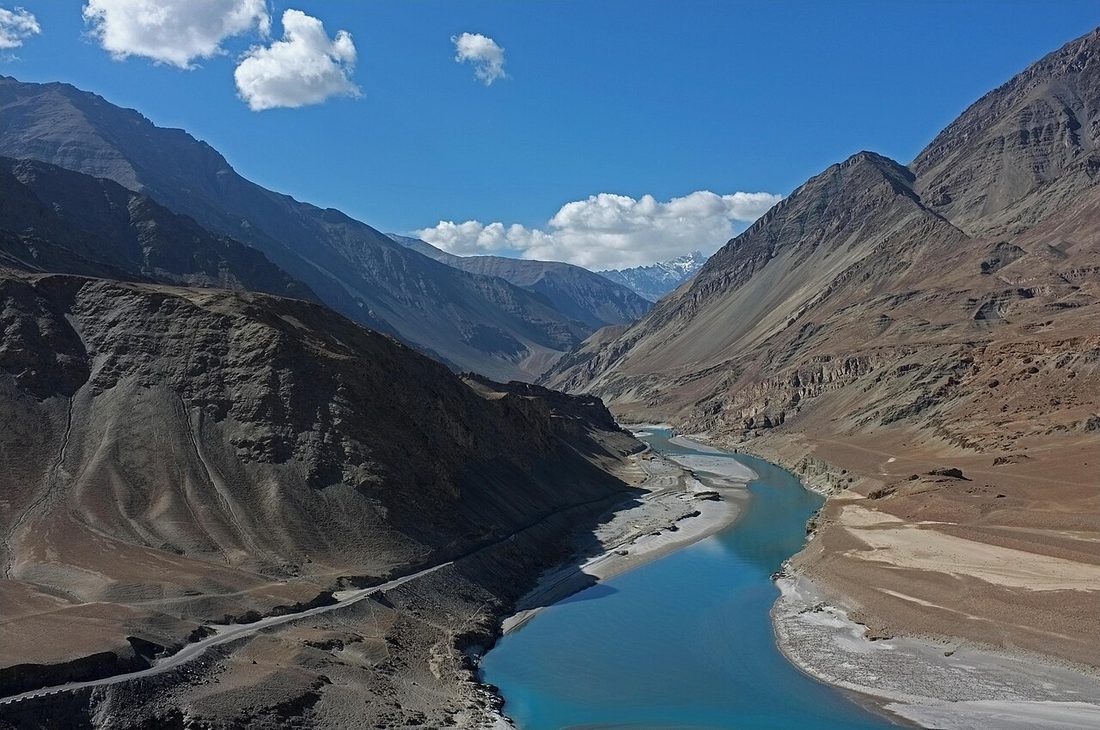
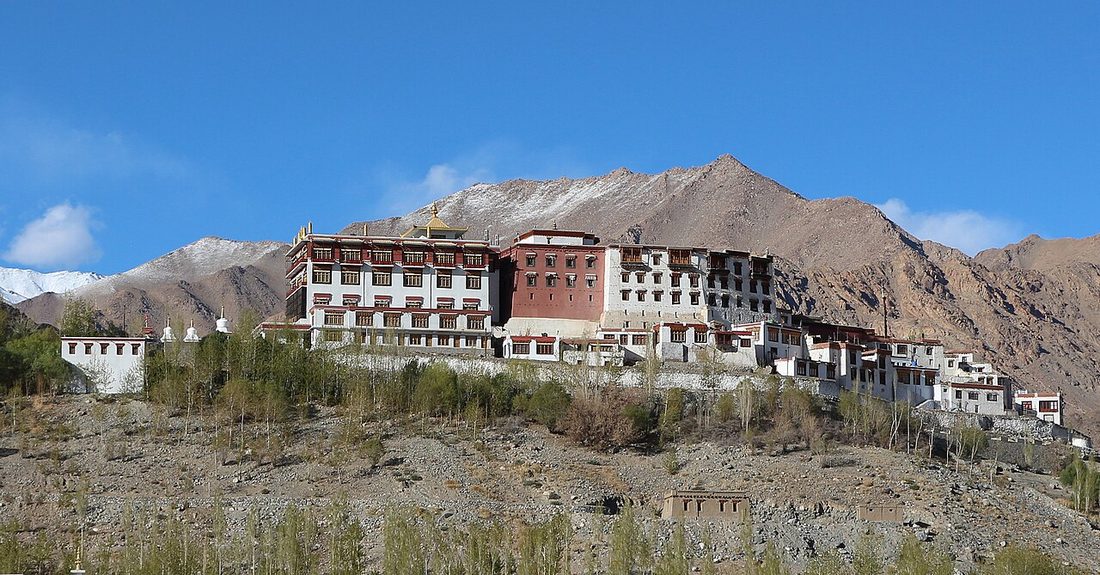
Leaving Leh westward on Day 4 flips the landscape from arid scree to deep river canyons. Along the tarmac heading out of town, you pass the Indian Army Hall of Fame, glide across the tilted horizon illusion of Magnetic Hill, and pause above the dramatic emerald-and-grey collision of the Indus and Zanskar rivers at Nimmu Sangam. Turning right into a green side valley reveals Phyang Gompa, established in 1515 when King Tashi Namgyal gifted the ridge to the Drikung Kagyu master Chosje Denma Kunga. Inside Phyang’s atmospheric museum hang medieval Mongolian mail armor, bronze Kashmiri idols, and weathered Chinese firearms donated by caravan merchants centuries ago.
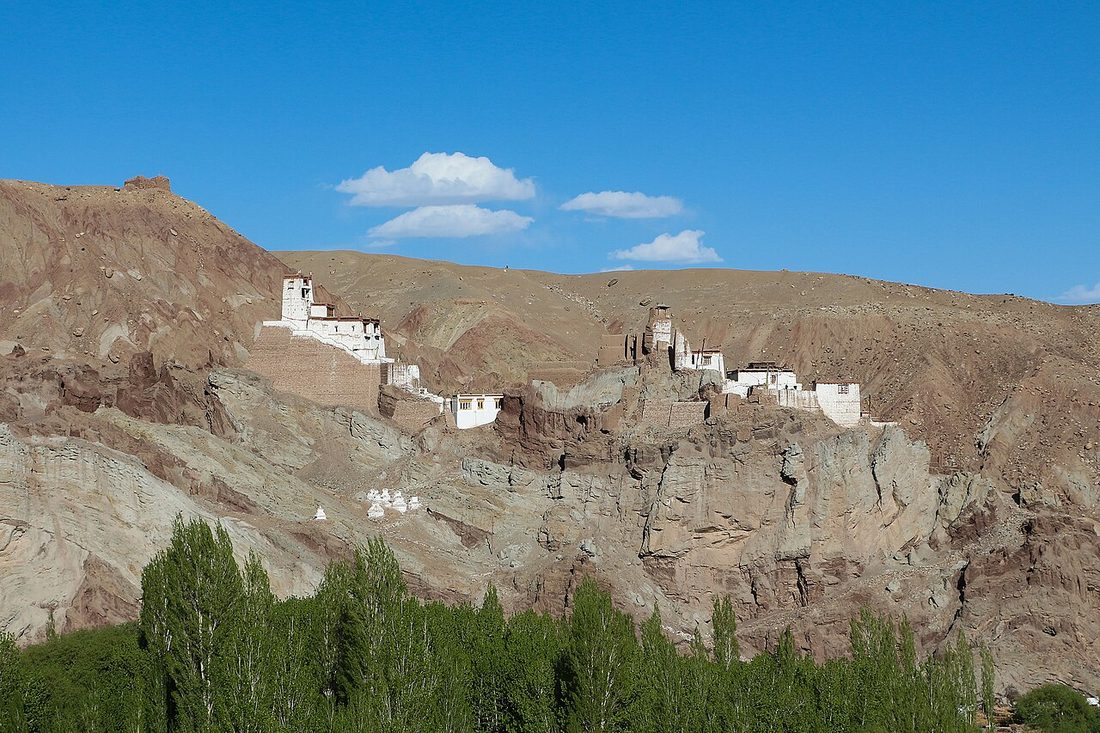
Fifteen minutes beyond Nimmu rise the surreal ochre clay cliffs of Basgo, seat of the Namgyal dynasty before Leh became capital. Crumbling mud-brick ramparts crown fluted pinnacles of red earth, hiding three unexpectedly jewel-like fifteenth- and sixteenth-century Maitreya chapels whose ceiling joists still glow with lapis lazuli and gold leaf. Notice how Basgo’s defensive geometry kept Ladakhi kings safe during the seventeenth-century Tibet-Ladakh-Mughal siege.
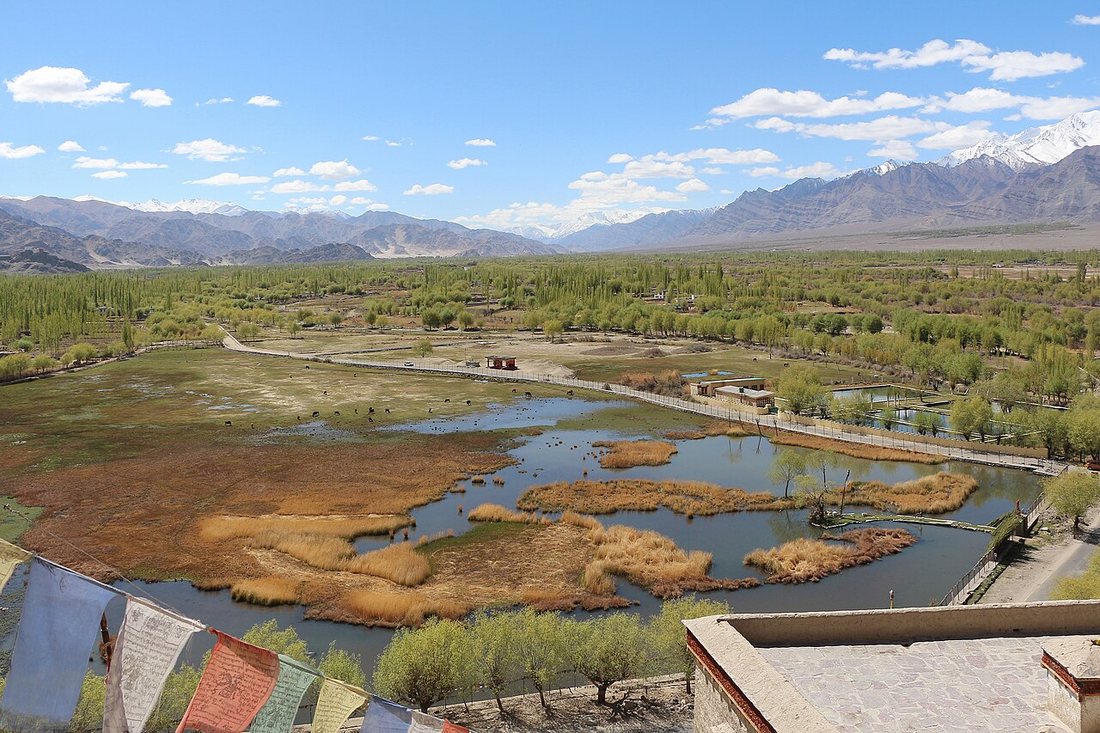
Crossing the Indus bridge at Saspol brings you to the undisputed art-historical crown jewel of the entire Himalaya: Alchi Monastery. Unlike fortress gompas perched defensively atop bare peaks, Alchi sits quietly on level orchard ground beside the river. Built around the year 1000 CE by Kashmiri master painters brought across Zoji La by the Great Translator Lotsava Rinchen Zangpo, its three-tiered Sumtsek shrine preserves wooden trefoil arches, carved Kashmiri deodar columns, and astonishingly delicate mineral paintings—dhoti-clad royal donors, Persian-patterned textiles, winged celestial musicians, and giant clay Bodhisattvas whose robes display miniature biographies of the Buddha painted finer than illuminated manuscripts.
Always walk clockwise around stupas, prayer-wheel galleries, and mani stone walls. Remove shoes before crossing wooden assembly-hall thresholds, step over—never onto—door sills, and never point your bare feet toward an altar or lama. Inside Alchi’s fragile eleventh-century temples, photography is strictly prohibited to protect mineral pigments from flash degradation; carry a small pocket flashlight with a soft beam (no lasers) to appreciate the upper mandala ceilings respectfully.
Day 5 leaves the busy highway entirely. Turning up a narrow, dead-end boulder ravine off the Indus brings you to Rizong Gompa, founded in 1840 by Lama Tsultim Nima as Ladakh’s strictest Gelugpa retreat center. Monks here historically slept on stone ledges, ate strictly after morning assembly, and kept zero fires inside private cells. Two kilometers lower along the willow stream sits Chulichan Nunnery, where elderly Ladakhi nuns spin raw wool and tend apple trees in calm self-sufficiency.
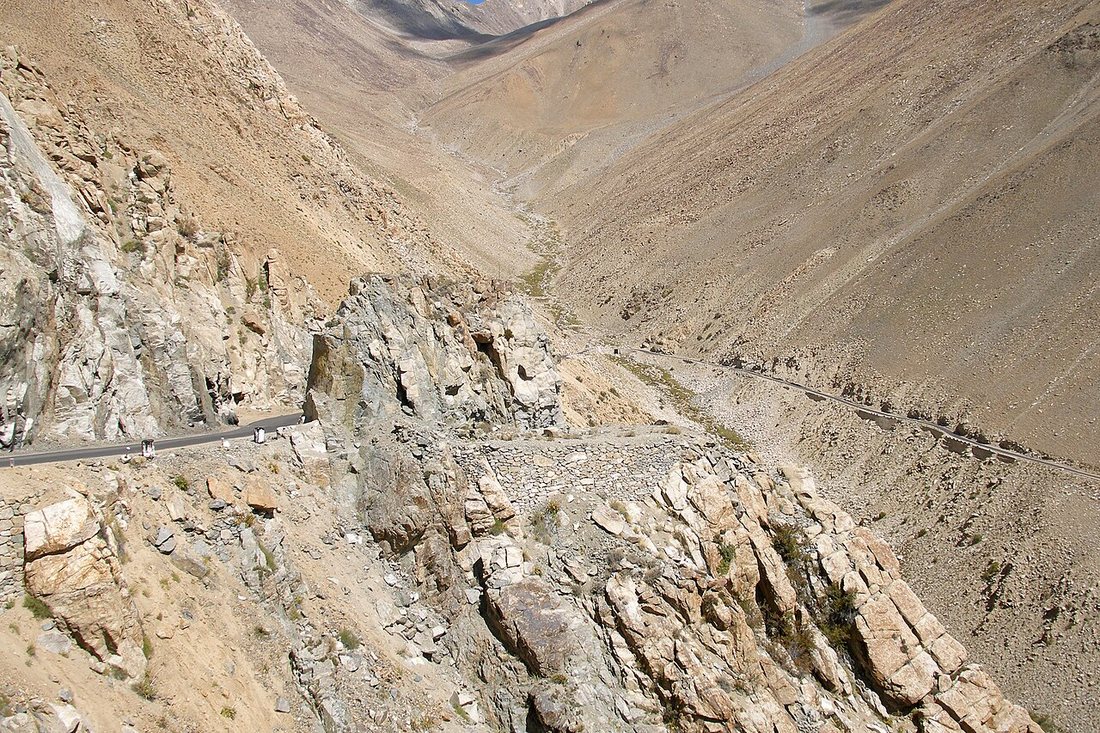
Climbing westward from Khaltse over crisp hairpin tarmac brings the sudden geological shock of Lamayuru. Millions of years ago, an ancient Himalayan lake filled this high basin; legend credits the Kashmiri Buddhist arhat Madhyantika with draining the waters by planting barley grains that sprouted in the shape of a swastika (yungdrung). Today, eroded yellow-white lacustrine clay forms a surreal “Moonland” of fluted spires below the eleventh-century cliffside gompa. Sleeping right below Lamayuru on Night 5—long after Srinagar-bound transit cars have vanished—lets you sit on your terrace watching stars ignite over Naropa’s sacred hillside cave and hear the solitary conch shell summon monks at 6:00 AM.
Notice how the sensory rhythm of food and season shifts across this monastic week too. In Alchi’s lush lower orchards, tiny family-run garden kitchens serve hand-pulled apricot juice, warm chutagi bow-tie pasta simmered in vegetable broth, and crusty khambir bread baked over poplar embers. Up at Lamayuru, air turns noticeably sharper after sunset, making steaming mugs of lightly salted pink gur-gur chai churned with yak butter and roasted barley flour (tsampa) feel less like novelty and more like mountain fuel. Even packing becomes simpler on a gompa circuit: slip-on warm wool socks save frozen toes across ancient slate prayer-hall floors where shoes stay outside, and a lightweight windproof shawl doubles as respectful shoulder cover whenever temple winds pick up around cliffside chortens.
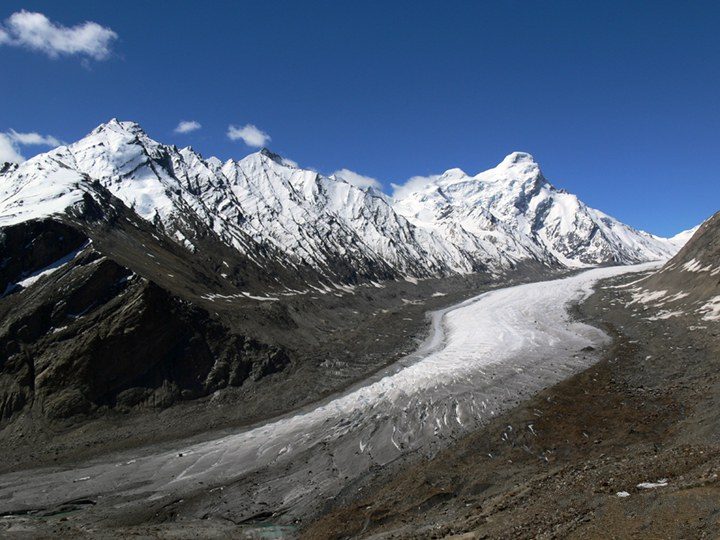
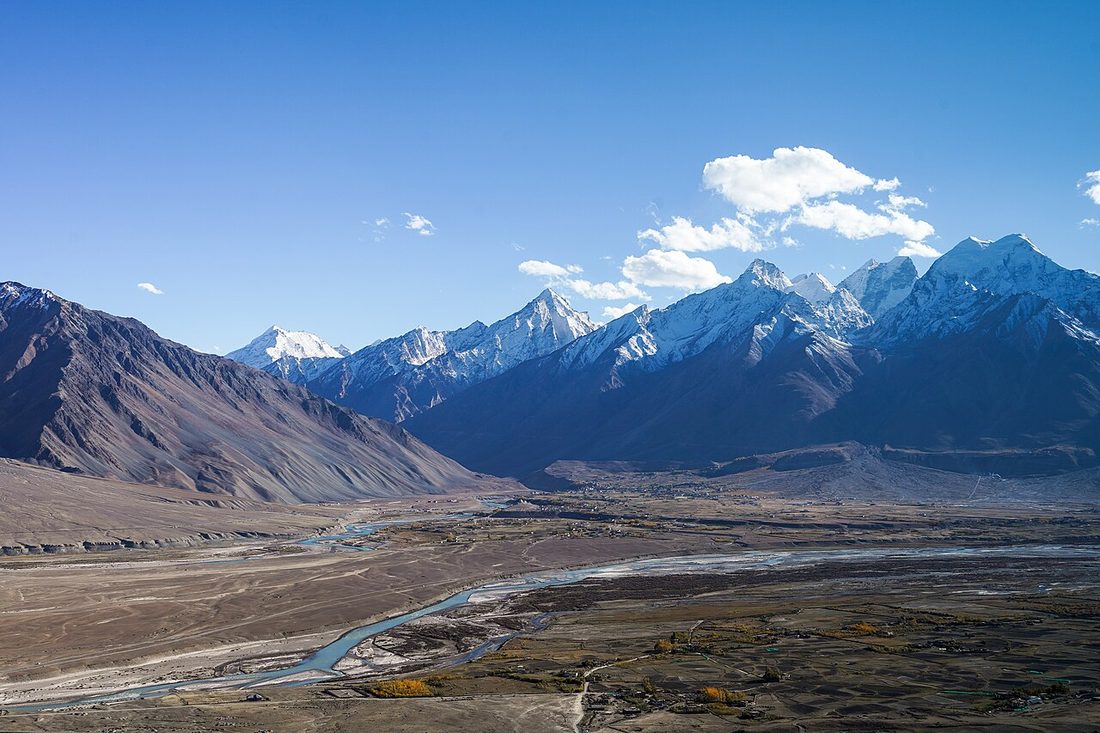
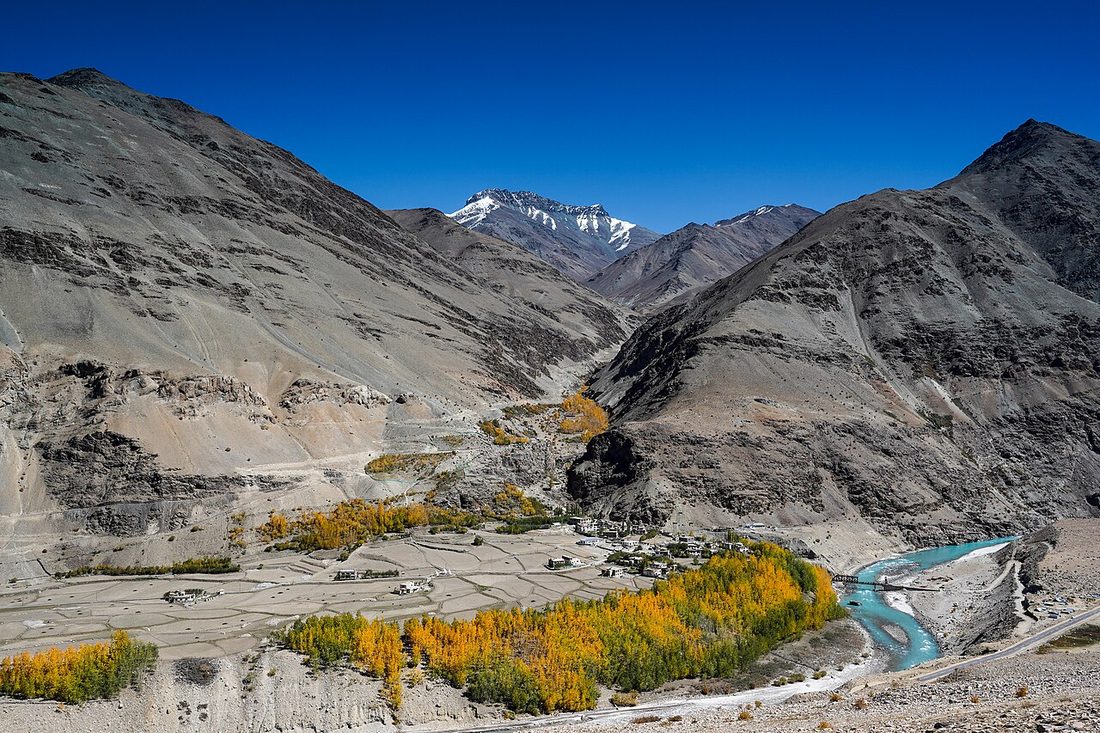
Once travelers experience the serenity of Lamayuru and Rizong, many immediately ask where Ladakh’s oldest monastic lineages continue next. Two extraordinary arteries branch off this circuit. Heading southwest from Lamayuru over Fotu La and Namika La toward Kargil opens the high Suru-Zanskar frontier, where crossing Pensi La beside the 22-kilometer Drang Drung Glacier drops pilgrims into Zanskar Valley—home to cliff-clinging Phugtal and massive Karsha Gompa towering above Padum and autumn-gold Shila village. Alternatively, riding north out of Leh over Khardung La brings you to the towering 32-meter Maitreya Buddha of Diskit in Nubra Valley, or east across Chang La to high-altitude Pangong Lake.
If your schedule flexes, align this 7-day circuit with Ladakh’s lunar festival calendar: Hemis Tsechu (June–July), Phyang Tsedup (July–August), Yuru Kabgyat at Lamayuru (June–July), or winter Dosmoche and Spituk Gustor (January–February). Monastic hotels in Alchi and Leh fill three months prior to Hemis Tsechu, so lock rooms early through our verified Ladakhi heritage hotels directory.
Compare this unhurried spiritual itinerary against our broader Kashmir and Ladakh tour packages: travelers short on days often pick the 5-Day Leh, Alchi, Nubra & Pangong Itinerary, while leisure families combine monasteries and lakes on the Amazing Leh Ladakh Tour or Magical Leh, Sham Valley, Nubra & Pangong Circuit. Want to drive overland from Srinagar across Zoji La directly into Lamayuru and Alchi? Explore our epic Srinagar to Leh Trans-Himalayan Expedition (9N/10D), review every valley across our destination guides, or write to our Customize Your Trip Desk to arrange a resident Buddhist art scholar guide.
Add just one extra night on our 7N/8D Ladakh & Kargil Overland Tour to inspect the 9-meter Kushan-era rock-carved Maitreya Buddha at Mulbekh.
We offer special tiered group tariffs for couples, families, and ski/travel groups from 02 Pax up to 14+ Pax with Deluxe centrally heated hotels & houseboats:
| PACKAGES | 02 PAX | 04 PAX | 06 PAX | 08 PAX | 10 PAX | 12 PAX | 14 PAX | EXTRA BED |
|---|---|---|---|---|---|---|---|---|
| DELUXE / BUDGET PACKAGE |
What's covered in your package
What's not included
Senior Kashmir Tour Consultant • +91- 9103232574 | Srinagar Office
Tailored Winter & Year-Round Departures from the United States (USD), Europe/UK (EUR/GBP) & Middle East / GCC (AED/SAR/OMR/QAR): Every itinerary on our New Year's Kashmir Tours & Kashmir Tour Packages portal can be customized with centrally heated Gulmarg & Pahalgam resorts, heritage Nigeen & Dal Lake houseboats, 4x4 snow-chain transfers during Chillai Kalan, 100% Zabiha Halal Kashmiri Wazwan alongside pure vegetarian/Jain kitchens, and private Toyota Innova Crysta / Force Urbania chauffeurs.
Direct GI-Tagged Kashmiri Export Assistance (USA CBP/FDA, EU REX/UK DCTS & GCC SFDA/ESMA): Travellers and boutique buyers can pair their holiday with verified Srinagar artisan studio visits for Pampore Mongra Saffron (ISO 3632), Changthangi Pashmina & Kani Shawls (CDI QR SFAL), Hand-Knotted Qaleen Silk Carpets, White Acacia Solai Honey, and Kiln-Seasoned Walnut Woodcraft shipped with insured air freight to New York, San Francisco, London, Frankfurt, Paris, Zurich, Dubai, Riyadh, Muscat & Doha. Read our 2026–2027 New Year's Kashmir Tours Complete Guide or browse all 139 Travel & Export Guides.
Read our local field guides for every stop on this itinerary before you pack:
Well-organized trip with comfortable centrally heated hotels, friendly local driver, and smooth sightseeing across Srinagar, Gulmarg & Pahalgam.
Rahul Sharma — New DelhiThe luxury houseboat stay, sunset Shikara ride, and Gulmarg Gondola & skiing arrangements were seamless. Highly recommended!
Priya Verma — AhmedabadClean hotels, heated rooms, and 24/7 trip support from Ms. Hina Beigh and the Kashmir i Tour team throughout our vacation.
Arjun Patel — PuneGet a customized itinerary & best hotel/houseboat rates from our Srinagar travel team.