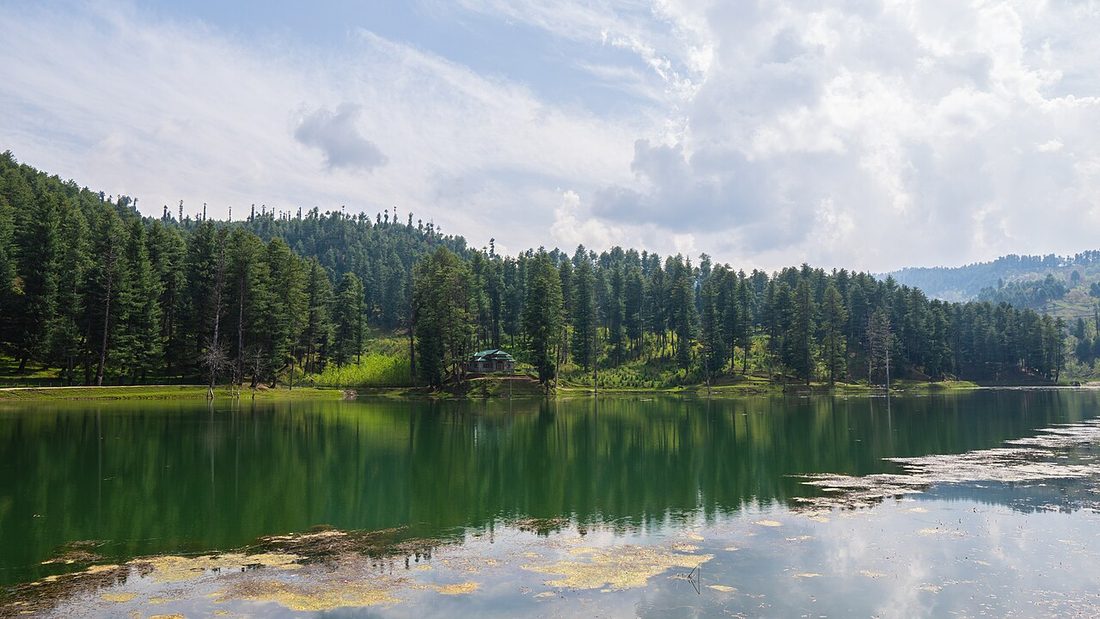
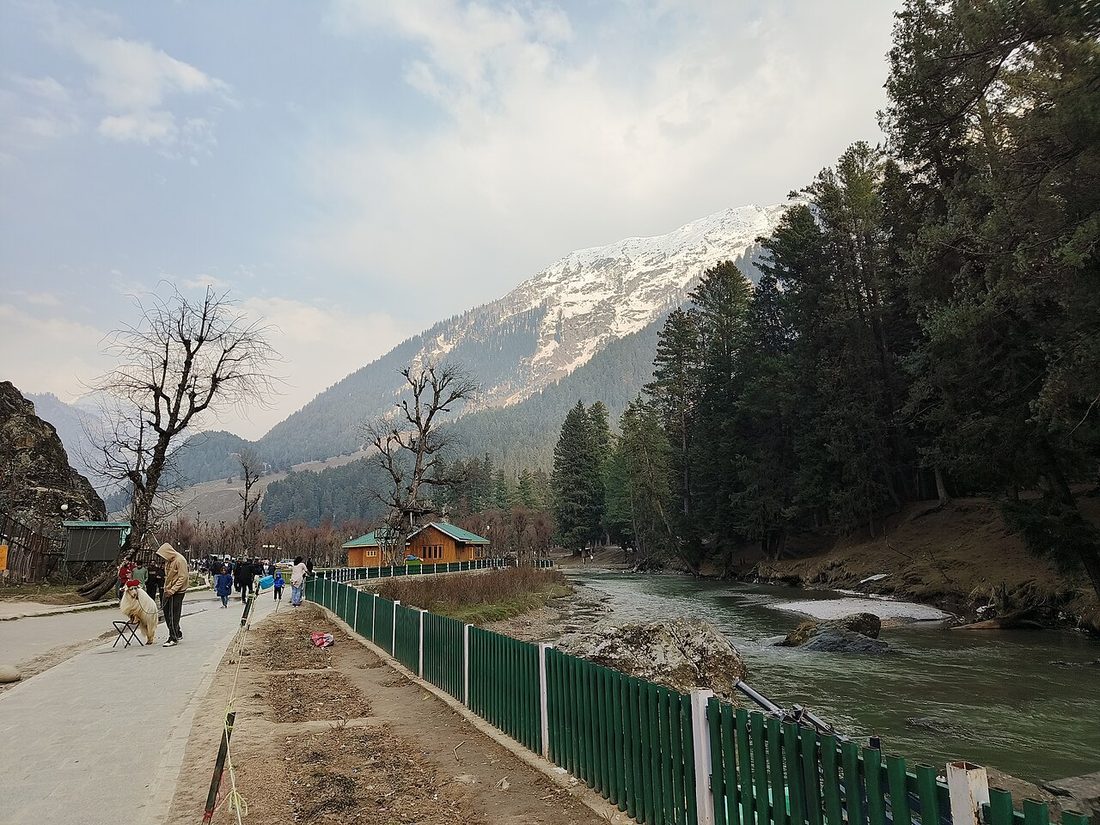
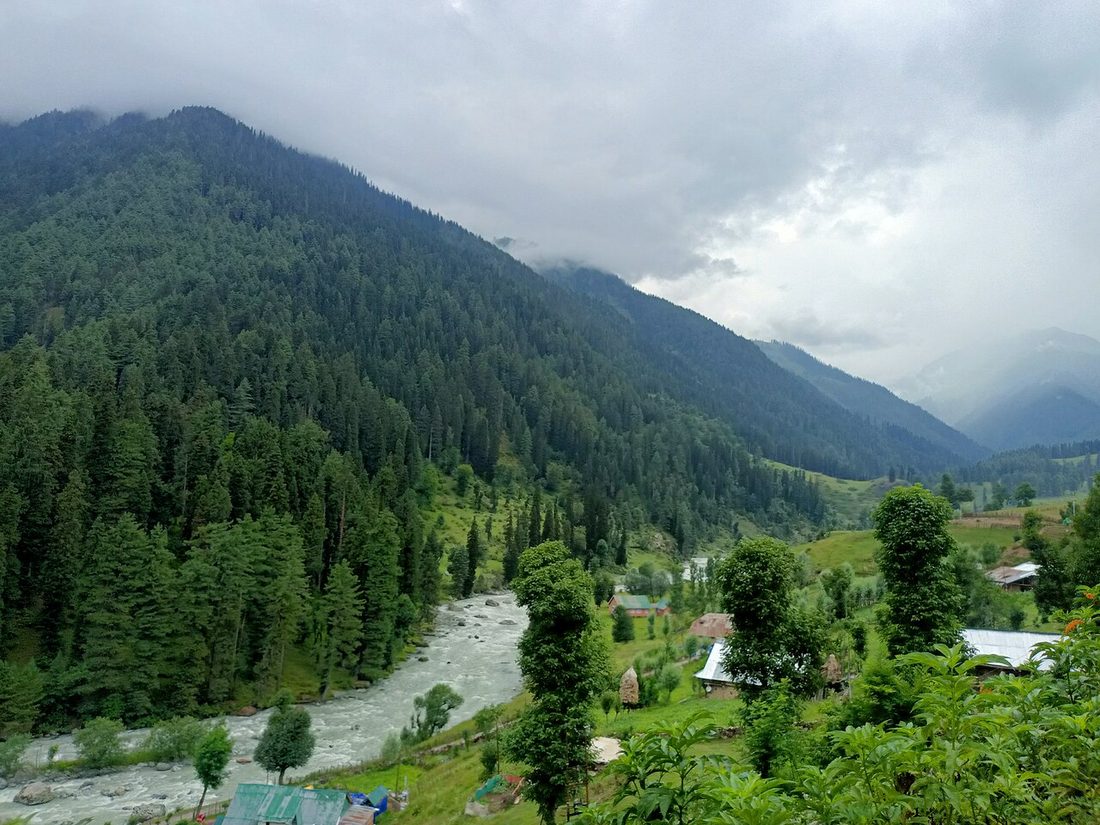
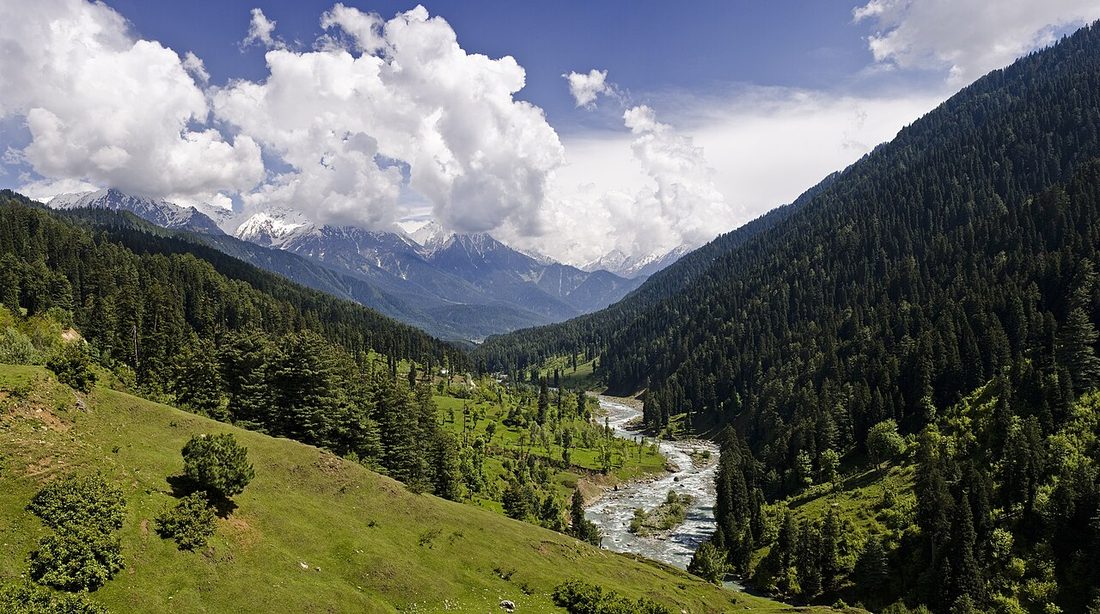
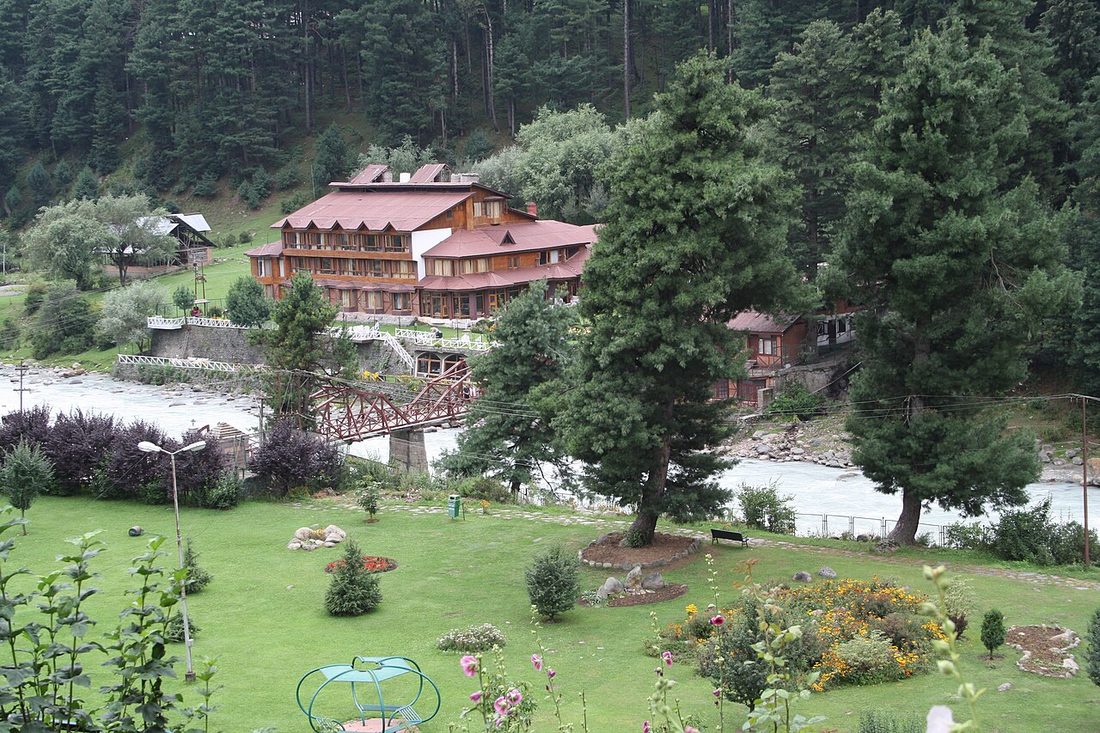
Step across the varnished timber bridge at the lower lawn of Betaab Valley at 9:15 AM, before the first wave of midday union taxis rolls down from Chandanwari, and watch what the East Lidder River does right beneath your boots. Racing cold and silver-blue off the high Sheshnag snowfields, the river parts gently around a low willow-and-pebble island before braiding back together fifty yards downstream. Mist still curls off the wild apricot boughs and deodar needles; black-and-white shepherd sheep graze unbothered along the outer rock fence; and the only sound competing with the current is the faint clink of a brass tea kettle warming over charcoal near the wooden gate.
Perched at roughly 2,400 meters (7,874 feet) between the Pir Panjal and Zanskar mountain folds in Anantnag district, Betaab Valley sits fifteen kilometers northeast of Pahalgam and 105 kilometers southeast of Srinagar. Most itineraries treat it as a rushed 45-minute photo halt on a boxed-in afternoon cab loop. Give it two proper hours—and know which bend of the riverbank to walk toward—and Betaab Valley easily earns its reputation as one of Kashmir’s most soothing alpine hollows.
From Hagan Valley to Bollywood Lore: The Story Behind the Name
Long before film crews unloaded cameras onto these pastures, Kashmiri villagers knew this terraced hollow as Hagan Valley (locally pronounced Hagoon). Chroniclers trace human settlement and pastoral passage through the gorge back centuries—Mughal court writings mention the lush Lidder meadows along the pilgrimage corridor, and local oral history still recalls the generous patronage of Kashmir’s beloved fifteenth-century ruler, Sultan Ghiyas-ud-Din Zain-ul-Abidin (Budshah), whose administrative reach brought lasting stability, craft traditions, and warm hospitality to Anantnag’s highland villages.
Everything changed in the summer of 1983, when filmmaker Rahul Rawail shot extensive romantic sequences here for the blockbuster Hindi film Betaab, launching Sunny Deol and Amrita Singh against those unmistakable red-roofed timber huts, white boulders, and surging snowmelt channels. Tourists immediately began asking Pahalgam pony guides and drivers to take them to “the Betaab valley”—and the nickname stuck so completely that even official Jammu & Kashmir Tourism signboards adopted it. Later Hindi cinema productions, including scenes from Rockstar and Highway, returned to these exact same wooden bridges and autumn chinar-fringed bends.
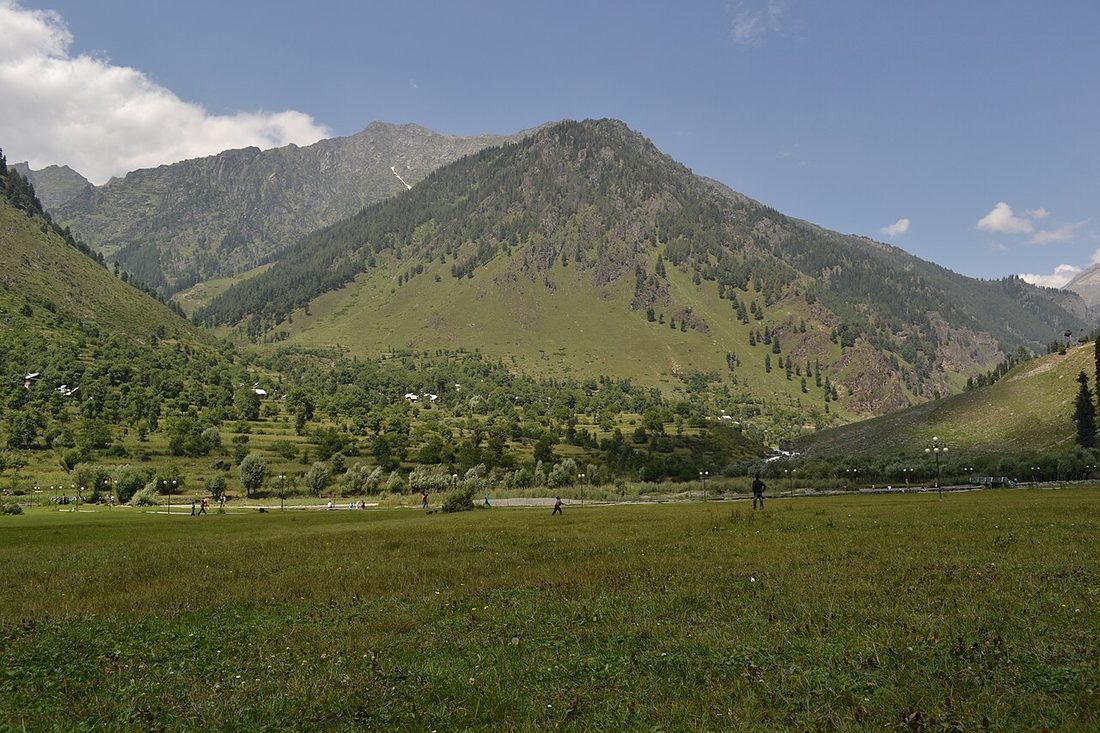
Inside the Park Grounds: Finding Calm Away from the Entry Lawn
Managed and landscaped by the Pahalgam Development Authority (PDA), Betaab Valley charges a modest gate fee (₹100 per adult Indian citizen; modest parking fee paid by your union cab outside) and stays remarkably well-maintained compared to busier northern hill parks. Yet layout matters enormously here. Ninety percent of tour groups cluster within the first 200 meters of the main entry lawn—posing near the colorful cottages, renting embroidered Kashmiri pheran costumes for quick portraits, and crowding the first arched footbridge.
Do yourself a huge favor: walk straight past the costume stalls, cross the first twin-stream bridge onto the central river island, and keep strolling upstream for ten quiet minutes along the shaded dirt path curving beneath tall blue pines, wild willows, and apricot trees. Within three hundred paces, the selfie chatter vanishes. You will find smooth flat granite slabs right beside crystal-clear shallows where kids can safely dip fingers into icy glacial water (never wade into the fast central channel—the current is deceptively strong and snowmelt rocks are slick with algae), benches overlooking snow-streaked ridges, and tucked-away meadow glades ideal for unrolling a picnic shawl.
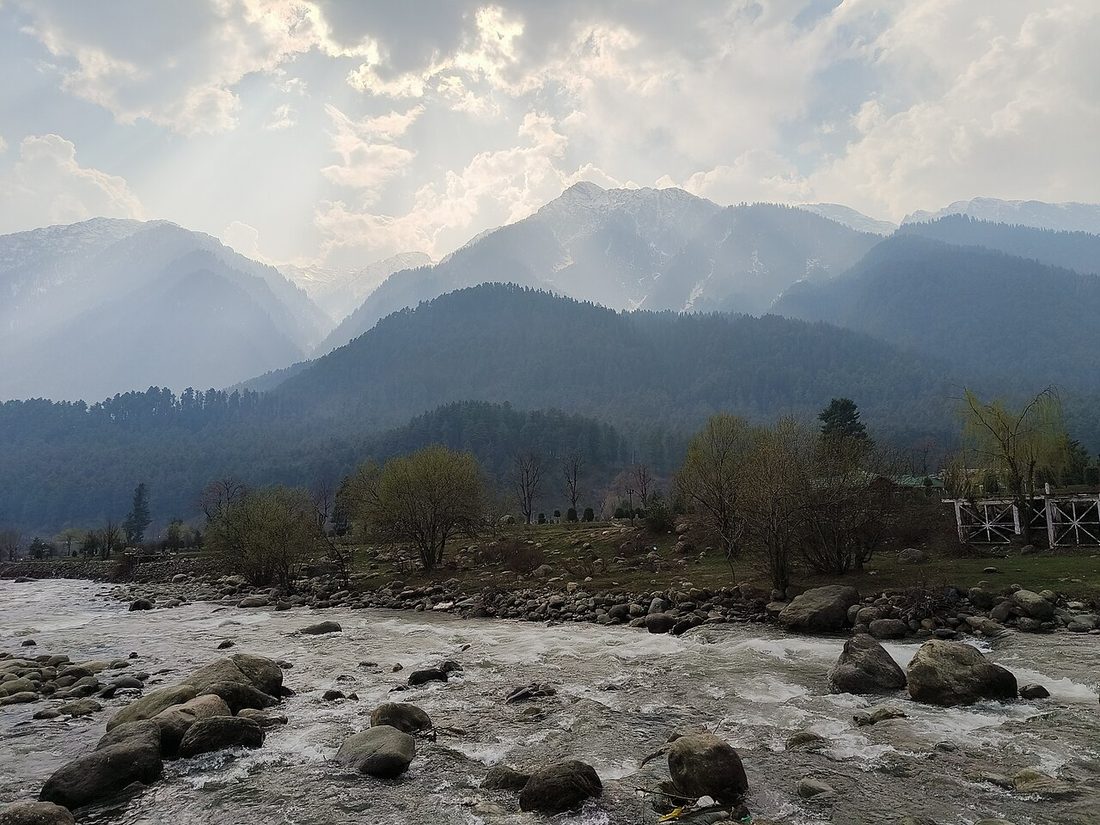
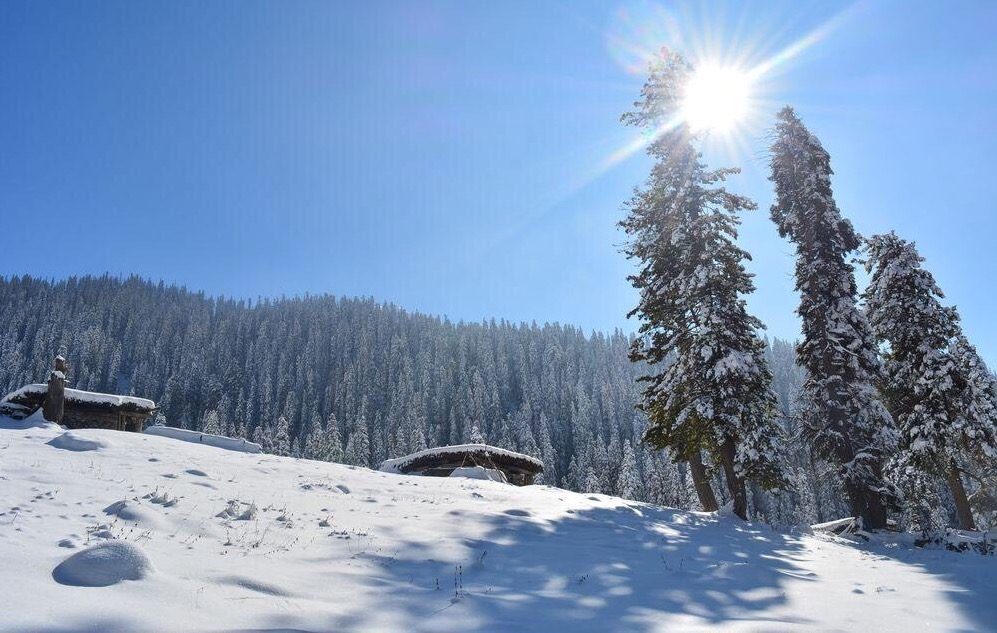
Union taxi convoys pour out of Pahalgam hotels between 10:30 AM and 12:30 PM, packing the narrow single-lane approach road and filling the main garden lawns until 3:00 PM. Aim either for an early gate entry (8:30 AM – 9:30 AM)—when sunlight angles low across dewy grass and birdsong fills the pines—or a late afternoon window (3:45 PM – 5:30 PM) as day-trippers roll back toward town and golden light warms the upper cliffs.
Mastering the Pahalgam Union Taxi Loop: Pairing Betaab, Chandanwari & Aru
Because Betaab Valley sits directly on the road linking Pahalgam to the pilgrimage staging point of Chandanwari, it falls strictly inside the Pahalgam Local Taxi Union zone. Cars hired in Srinagar or Jammu are stopped at the Pahalgam barrier and cannot drive those final 15 kilometers into Betaab. Instead, you book a Pahalgam-registered union cab from the central stand or your hotel reception, almost always bundling three distinct valleys in one sweeping circuit:
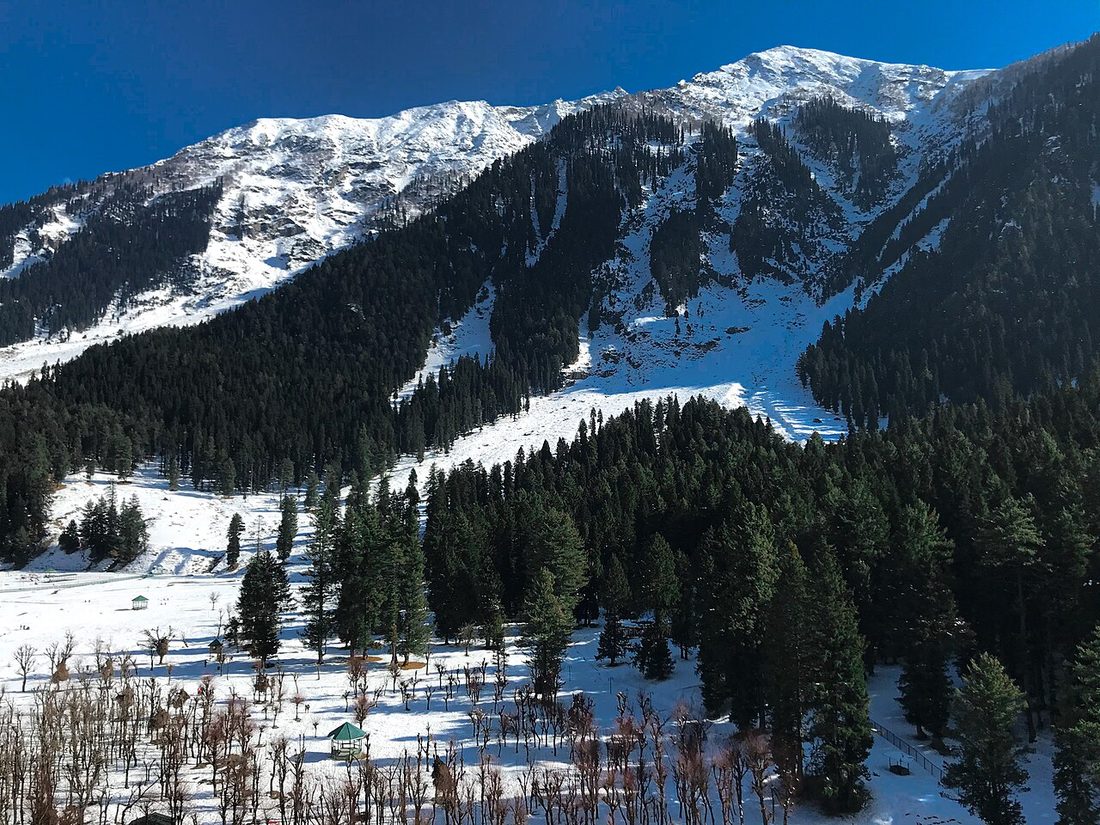
- Chandanwari First (16 km from Pahalgam, 2,895 m): Have your union driver roll straight past Betaab’s gate at 8:30 AM up to Chandanwari first. Here the motorable road terminates at the official foot-trailhead for the Shri Amarnath Holy Cave pilgrimage. In spring and early summer, thick residual snow bridges span the gorge, offering easy snow sledging before afternoon sun turns the snow slushy.
- Betaab Valley Mid-Morning (15 km from Pahalgam, 2,400 m): Drop ten minutes back downhill from Chandanwari directly into Betaab Valley. Spend 90 to 120 relaxed minutes exploring the willow island, timber footbridges, and upper forest bends while sipping hot cinnamon kahwa from the riverside shacks.
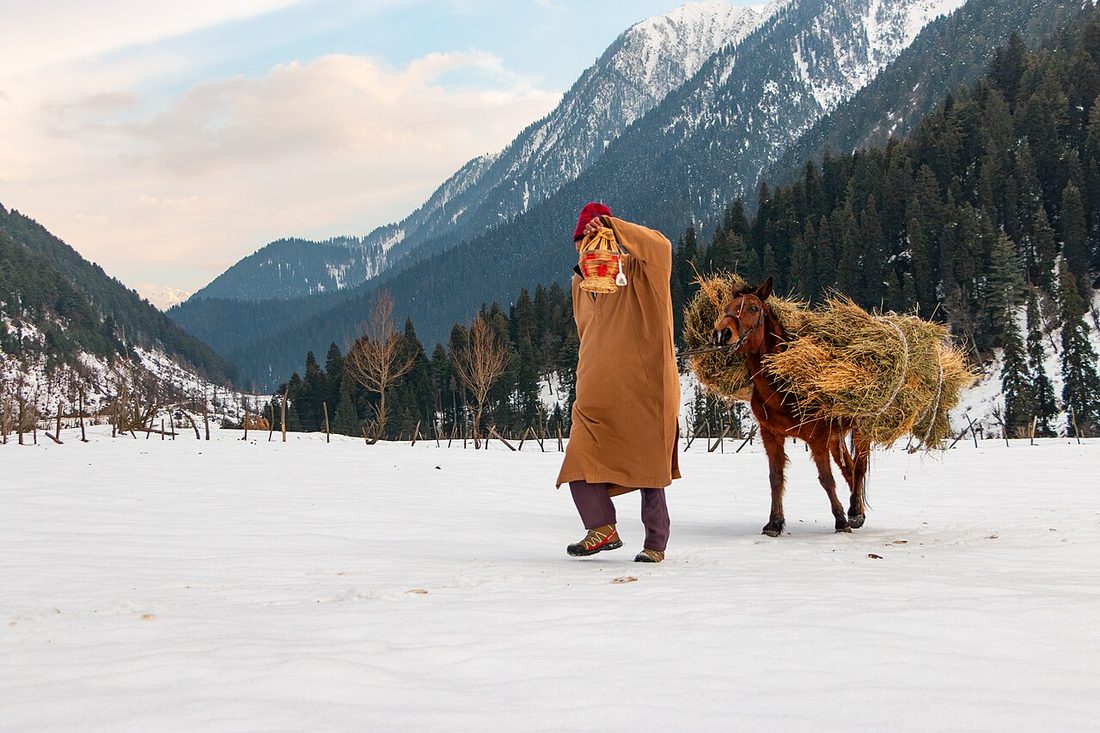
- Aru Valley Afternoon (12 km up the West Lidder fork, 2,426 m): Return to Pahalgam’s river junction and climb the opposite West Lidder spur into Aru Valley—a rustic timber village backed by open grazing meadows where local horsemen still carry traditional woven Kangri charcoal pots under their pherans on chilly spring mornings.
Couples traveling on a 7-day Kashmir honeymoon itinerary or families booking our 7-day comfort valley holiday often rate this three-valley day as their favorite single outing in Kashmir—and even travelers pressed for time can fit Pahalgam and Betaab neatly into a 5-day express Kashmir tour.
Betaab vs. Aru vs. Baisaran: Choosing Where to Spend Your Extra Hours
Because Pahalgam’s union cabs tie you to a fixed sightseeing window, travelers frequently ask which of the three famous meadows deserves extra waiting time. Having guided hundreds of families, senior groups, and photographers around this gorge, the honest breakdown is straightforward:
- Choose Betaab Valley for Effortless Accessibility & Riverside Framing: No other valley in the Pahalgam basin lets grandparents in soft walking shoes step straight out of a car onto groomed grass beside splitting glacier channels, timber cottages, and shaded wooden footbridges. Landscape photographers also get cleaner foregrounds here—especially from the upstream pebble spit looking back through weeping willows toward the triangular snow ridges.
- Choose Aru Valley for Raw Shepherd Village Life & Overnight Quiet: Twelve kilometers up the opposite West Lidder fork, Aru drops the landscaped park gate completely. Horses wander loose beside hand-stacked timber homes, wooden dhabas fry crisp onion pakoras over wood stoves, and overnight visitors wake to mist drifting across unfenced pastures.
- Choose Baisaran Only If You Enjoy Horseback Rides or Steep Forest Walks: Reaching Baisaran demands a bouncy 45-minute pony climb or 90-minute uphill trek through muddy pine roots. Save it for a second Pahalgam morning if you have energetic kids or trekkers; skip it if anyone in your group dislikes saddles or uneven slopes, and pour those extra two hours into Betaab and Aru instead.
Amarnath Yatra Traffic Windows (Late June – Mid-August)
One seasonal reality every summer traveler should double-check before locking a July visit: Betaab Valley sits directly on NH-501—the primary artery carrying thousands of pilgrims toward Chandanwari during the annual Shri Amarnath Yatra. On busy Yatra days, district administration and security forces regularly enforce timed road cut-offs between Pahalgam’s Nunwan camp and Chandanwari, pausing casual tourist entry during peak morning pilgrim surges or after 3:00 PM. Always confirm live daily movement hours with your Pahalgam hotel reception the evening prior, carry original Aadhaar or passport ID for routine checkpoint scans along Hagan bridge, and stay flexible—occasionally shifting Betaab to a serene early-morning slot before Yatra return convoys roll downhill saves an hour of bumper-to-bumper delay.
A Suggested 2-Hour Walking Loop Inside Betaab & Hagan
Instead of lingering by the entrance archway, treat Betaab like a slow riverside stroll. Start by crossing the lower wooden footbridge directly onto the willow island for clean photos of the twin streams before light turns harsh overhead. Next, veer right along the narrow conifer lane climbing slightly past the painted wooden rest huts—here you catch elevated views looking straight down onto the river’s emerald fork and grazing flocks across the outer meadow. Circle back along the southern boulder bank, pick a shaded cedar tree for fifteen silent minutes with hot salted tea or saffron kahwa, and step outside the gate to stroll ten minutes along the quiet orchard edges of Hagan village, where local farmers dry walnuts on tin roofs every September and welcome polite travelers with genuine warmth.
Beyond the Park Fence: Connecting Trails to Baisaran & Tulian Lake
While Betaab itself is gentle enough for toddlers and grandparents in walking sandals, the broader Lidder basin right outside its fence rewards travelers who want serious elevation under their boots. Back toward Pahalgam town, forest tracks wind up through silent blue pines to Baisaran Meadow, offering sweeping aerial perspectives over the entire valley floor.
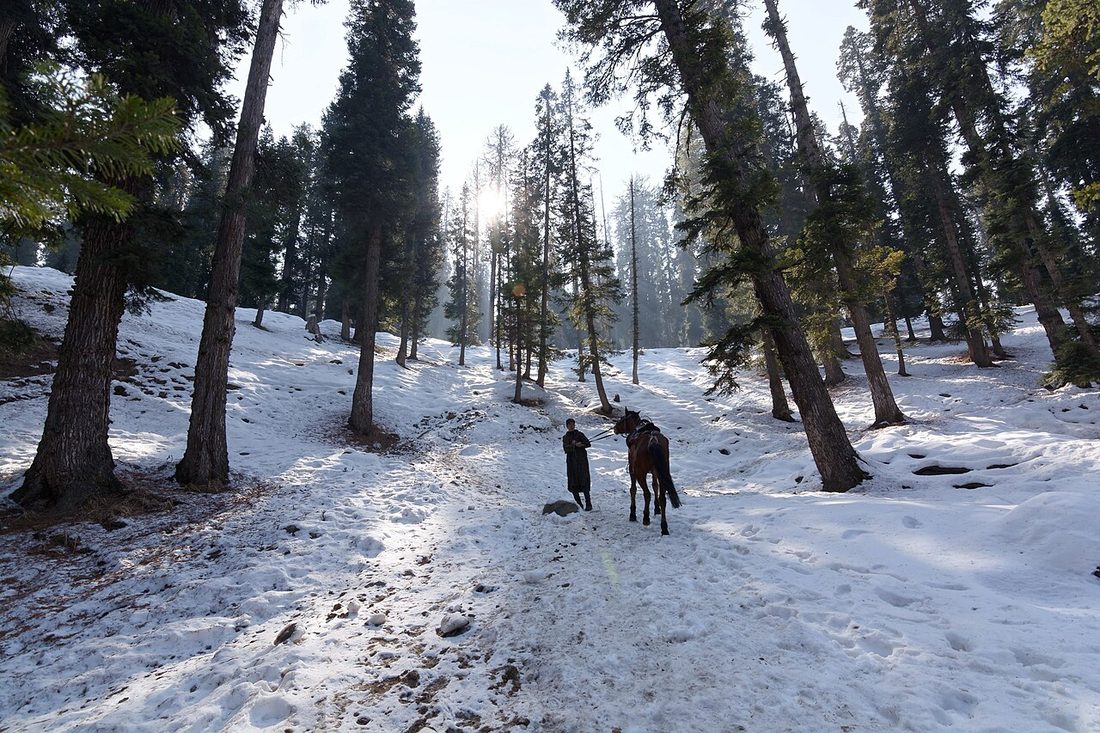
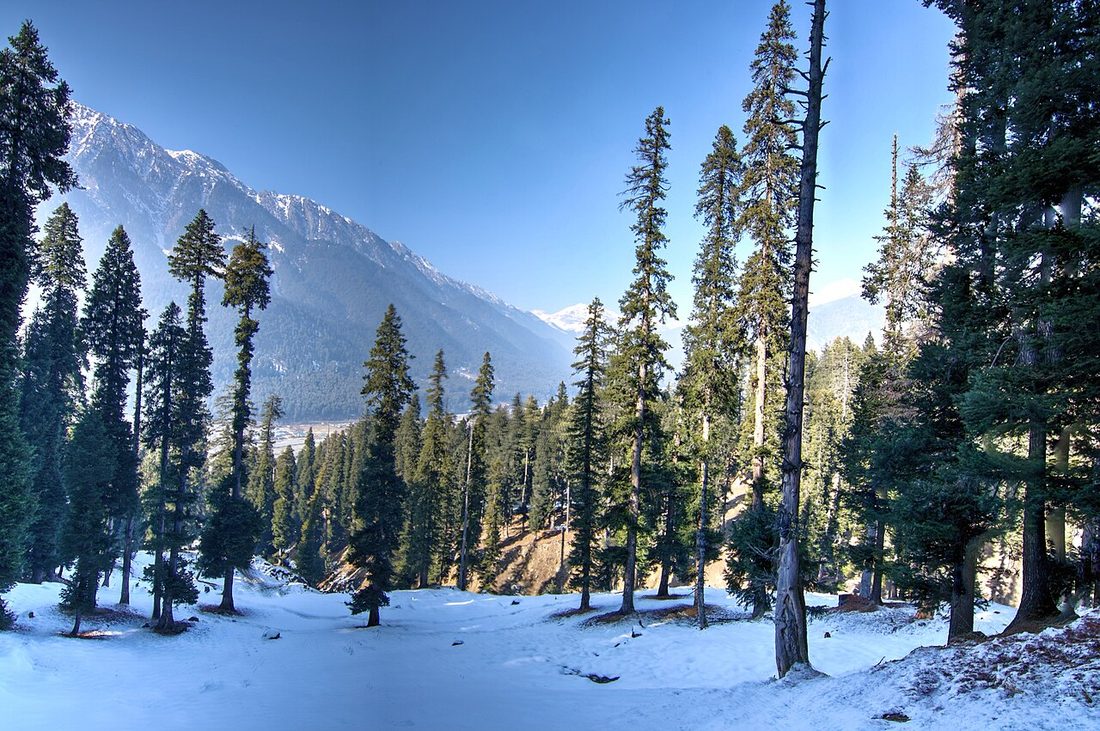
Experienced hikers staying an extra night in Pahalgam frequently pair a relaxed Betaab morning with an alpine day hike (or overnight shepherd camp) up to Tulian Lake at 3,684 meters—a dramatic steel-blue tarn cradled between Pir Panjal and Zanskar snow walls where floating slabs of winter ice often last into July. On clear summer weekends, you can also drive forty minutes south of Anantnag toward the botanical springs and quiet trout streams of Kokernag, or compare Betaab’s landscaped charm with Kashmir’s wilder western pastures like Yusmarg and high-altitude Gulmarg.
Four Seasons in the Lidder Gorge
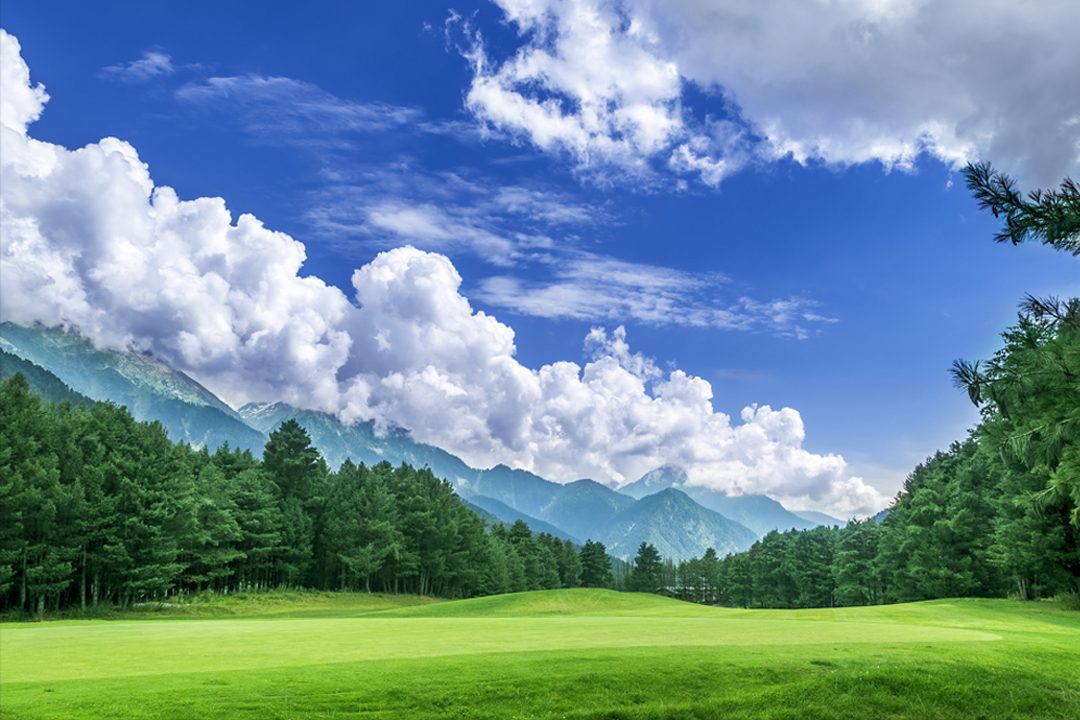
Betaab Valley wears four genuinely distinct wardrobes across the calendar, and each rewards a different kind of traveler (compare valley-wide weather trends in our month-by-month Kashmir travel guide):
- Spring (April – Mid-May): Melting glacier snow swells the East Lidder to an electric sapphire roar; apricot trees along the outer slopes explode in pale white blossom; and daytime warmth (14°C–20°C) makes walking effortless while fresh snow still clings tightly to surrounding cliffs.
- Summer (Late May – August): Cool refuge from Indian lowland heat (18°C–25°C by day, 8°C–11°C after dark). July and early August coincide with the Amarnath Yatra—meaning occasional highway convoy stops and brisk afternoon monsoon showers that drape misty curtains right down to the pine tops.
- Autumn (September – Early November): Arguably Betaab’s visual peak. Rain clears out, skies turn crisp cobalt, willows along the island blaze pale gold, and tourist footfall drops by nearly half. Carry a warm fleece jacket—temperatures slide swiftly toward 4°C once sun dips behind the ridge at 4:30 PM.
- Winter (December – February): Snow settles waist-deep across the lawns and wooden bridges, turning the valley into a hushed monochrome snow globe. Note that Chandanwari beyond Betaab usually shuts due to heavy snow drifts, whereas the road up to Betaab gate itself often stays cleared on sunny winter weeks—verify live snow clearance with local drivers before heading up.
Betaab Valley 2026 Costs, Entry Fees & Timing Breakdown
| Expense Item | Typical 2026 Tariff | Operational Details | Local Money-Saving Tip |
|---|---|---|---|
| Betaab Valley Gate Ticket | ₹100 / adult (kids often ₹50) | Collected at PDA entry booth; cash or UPI (signal patchy) | Carry small ₹100 cash notes—mobile data drops near the gate. |
| Union Cab (Betaab + Chandanwari) | ₹1,900 – ₹2,500 / cab | 2-point Pahalgam Union Cab (Eeco/Sumo/Innova) | Bundle Aru Valley too (₹2,800–₹3,800 total) for far better value. |
| Traditional Costume Photo Rental | ₹200 – ₹400 / set | Embroidered pheran & headgear near the main lawn | Fix price and photo print count strictly before dressing up. |
| Riverside Kahwa & Maggi Snack | ₹60 – ₹180 / person | Small licensed stalls near the entry meadow & bridge | Pack Kashmiri bakery kulchas and fresh fruit from Pahalgam market. |
| Overnight Hotel Base (Pahalgam) | ₹3,500 – ₹22,000 / night | 15 km away (25 min drive along East Lidder) | Choose riverside properties near Laripora/KP Road for peaceful nights. |
Where to Stay & Eat Around Betaab Valley
Strict environmental conservation protects the Betaab park meadow from commercial hotel towers—there are no hotels directly inside the fenced park grounds, only a handful of basic seasonal campsites and modest homestays along the approach village of Hagan. Practically every visitor bases themselves 25 minutes downhill in Pahalgam town (where riverside properties, boutique timber chalets, and five-star resorts line the West and East Lidder banks) or up in rustic Aru Valley. Explore verified hillside and riverside stays on our Kashmir hotels and cottages directory.
Betaab Valley stays spotless precisely because local PDA staff enforce strict plastic-litter rules along the riverbanks. Bring a reusable steel water bottle, pack dry snacks like fresh Pahalgam bakery sheermal, roasted walnuts, or apples, and carry every wrapper straight back to the wooden bins near the exit gate. If visiting between June and September, stash a compact folding umbrella—afternoon clouds build swiftly over Zanskar ridges and can drench open lawns in ten minutes flat.
Inside the park, rustic wooden tea shacks serve piping-hot saffron kahwa, salted pink tea, corn roasted over glowing charcoal, and instant noodles—simple fuel after a crisp riverbank walk. Save your main sit-down meal for Pahalgam town afterward, where local kitchens serve tender Kashmiri rogan josh, lotus-stem nadru yakhni, crisp golden river trout, and hot naan straight from clay tandoors. Whether you are planning a romantic autumn getaway or a multigenerational family loop across our complete Kashmir and Ladakh destination guides and 40 customizable tour packages at Kashmir i Tour, our Srinagar local desk can seamlessly lock in your Pahalgam riverside stay and honest union cab timing before you land.
Add Betaab Valley, Aru & Chandanwari to Your Kashmir Plan
Browse our tailored honeymoon and family valley tours with verified Pahalgam stays, private airport transfers, and stress-free local union cab coordination.
Frequently Asked Questions about Betaab Valley — Glacial Streams, Deodar Meadows & Lidder Gorge
Recommended Itineraries Including Betaab Valley — Glacial Streams, Deodar Meadows & Lidder Gorge
Every route below can be customized from Srinagar, Jammu, or Leh with private cabs and verified local stays.
7-Day Kashmir Family Holiday Itinerary (6N/7D Comfort Valley Circuit)
7 Days • 6 Nights • ₹28,999
7-Day Romantic Kashmir Honeymoon Itinerary (6N/7D Houseboat & Valleys)
7 Days • 6 Nights • ₹31,999
Charismatic Kashmir Heritage & Valley Itinerary (5N/6D)
6 Days • 5 Nights • ₹22,999
Kashmir Paradise Tour Package (5N/6D: Srinagar, Gulmarg, Pahalgam & Sonamarg)
6 Days • 5 Nights • ₹21,999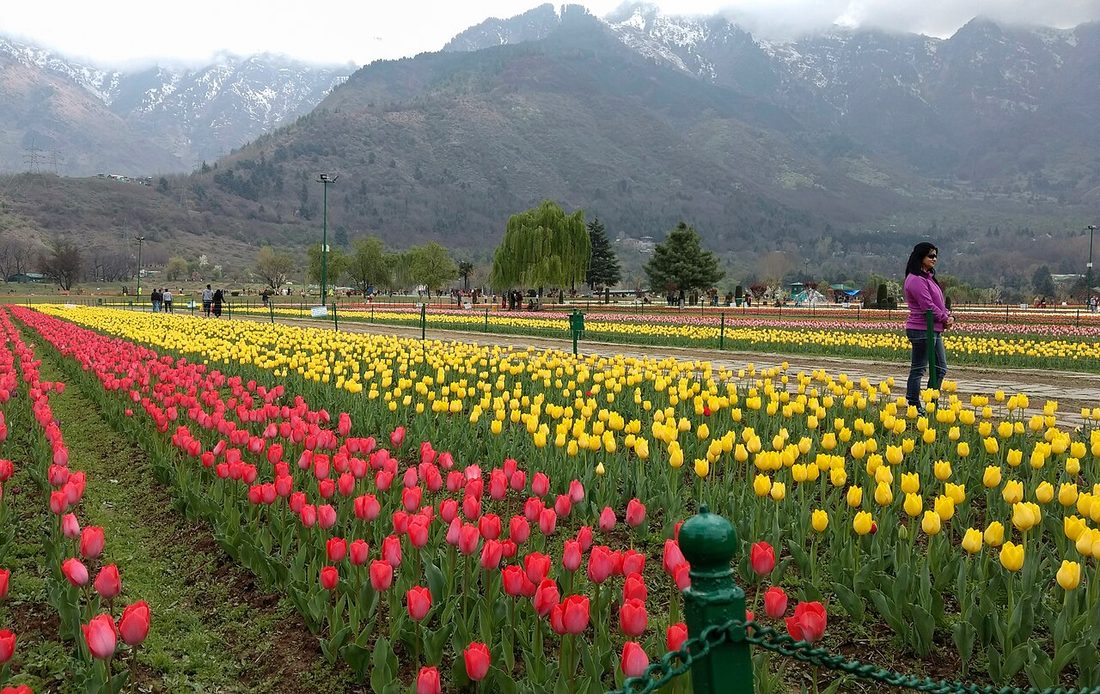
Discover Kashmir 5-Day Express Itinerary (4N/5D Srinagar, Gulmarg & Pahalgam)
5 Days • 4 Nights • ₹16,999Explore Nearby & Connected Destinations
Pahalgam — Valley of Shepherds, Lidder River & Pine Trails
Kashmir Valley →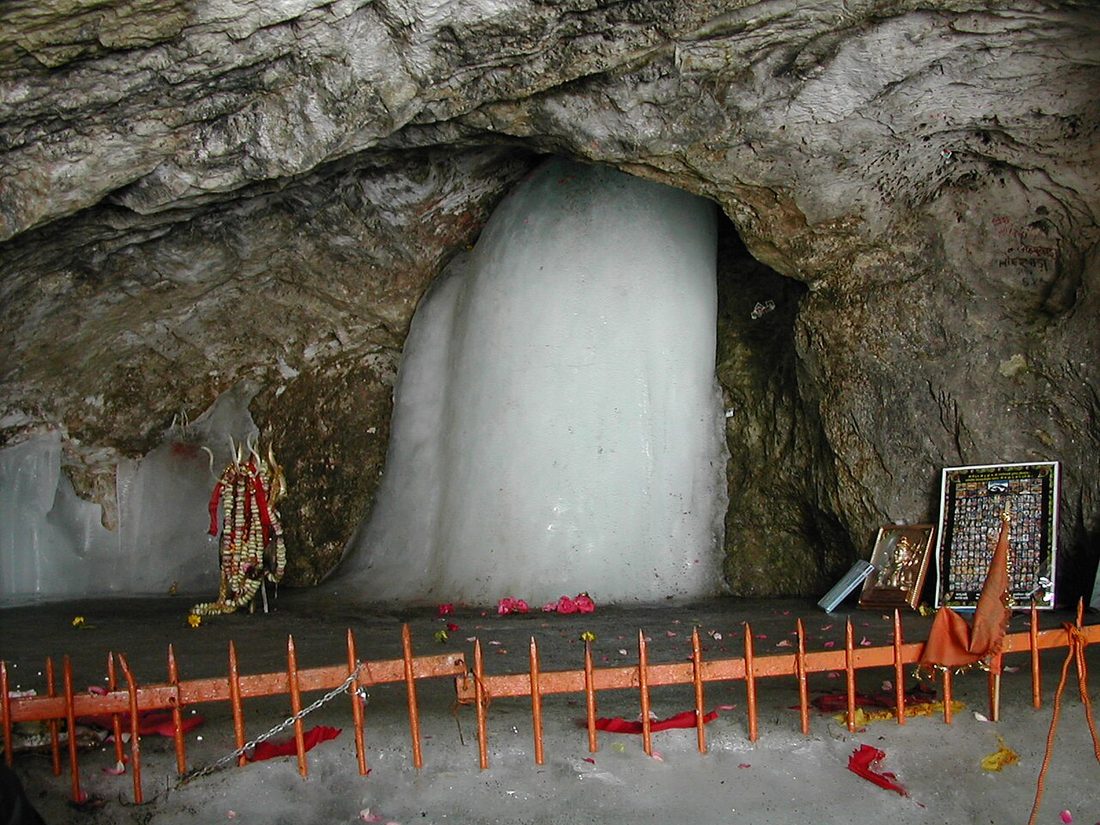
Shri Amarnath Holy Cave — Pahalgam & Baltal Yatra Routes, Registration & Helicopter Guide
Kashmir Valley →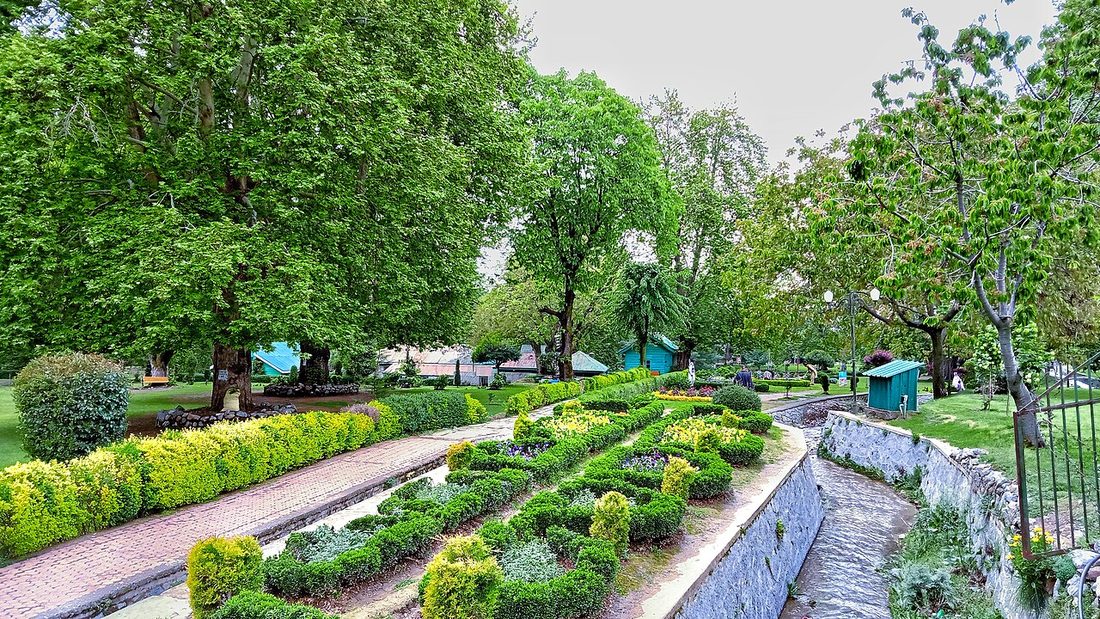
Kokernag — Kashmir’s Largest Freshwater Springs, Botanical Gardens & Trout Streams
Kashmir Valley →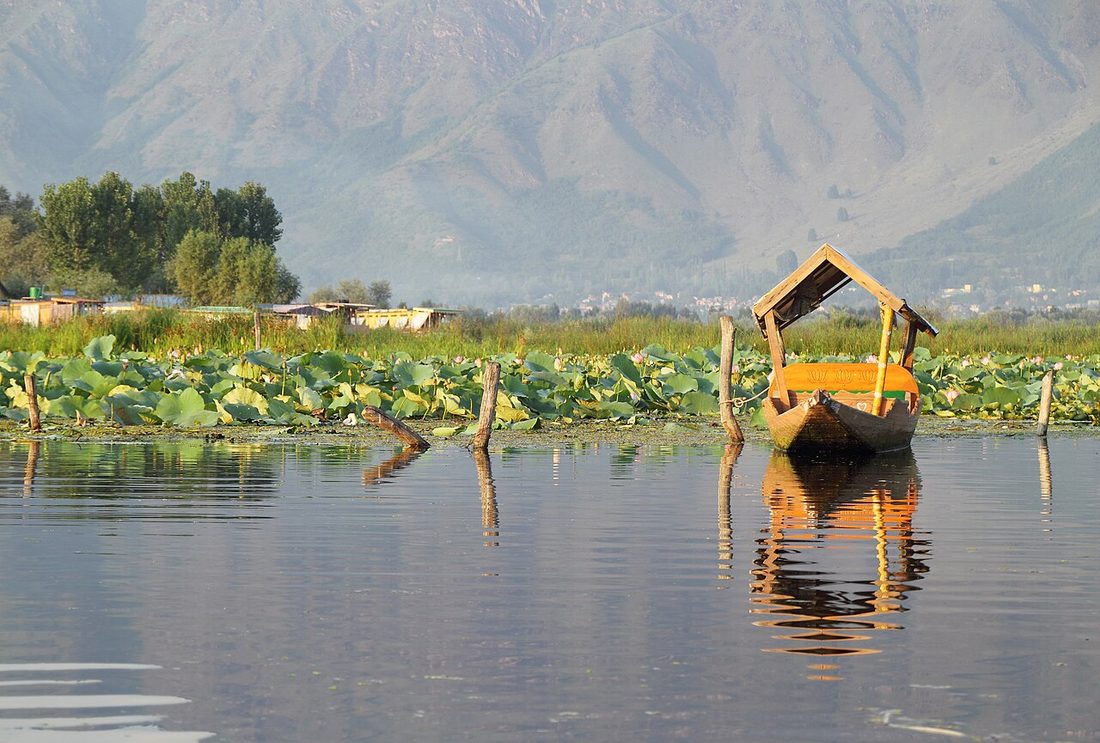
Srinagar — The City of Lakes, Mughal Gardens & Old City Heritage
Kashmir Valley →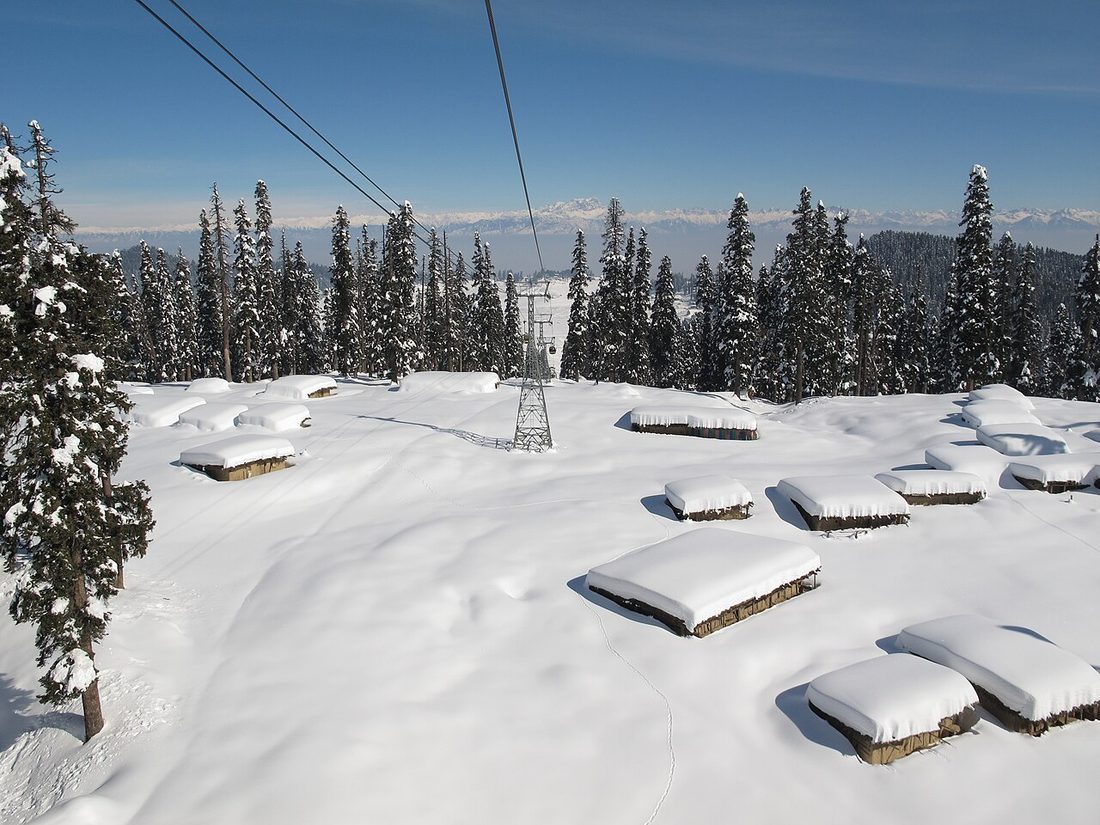
Gulmarg — Meadow of Flowers, Gondola Peak & Himalayan Ski Capital
Kashmir Valley →