
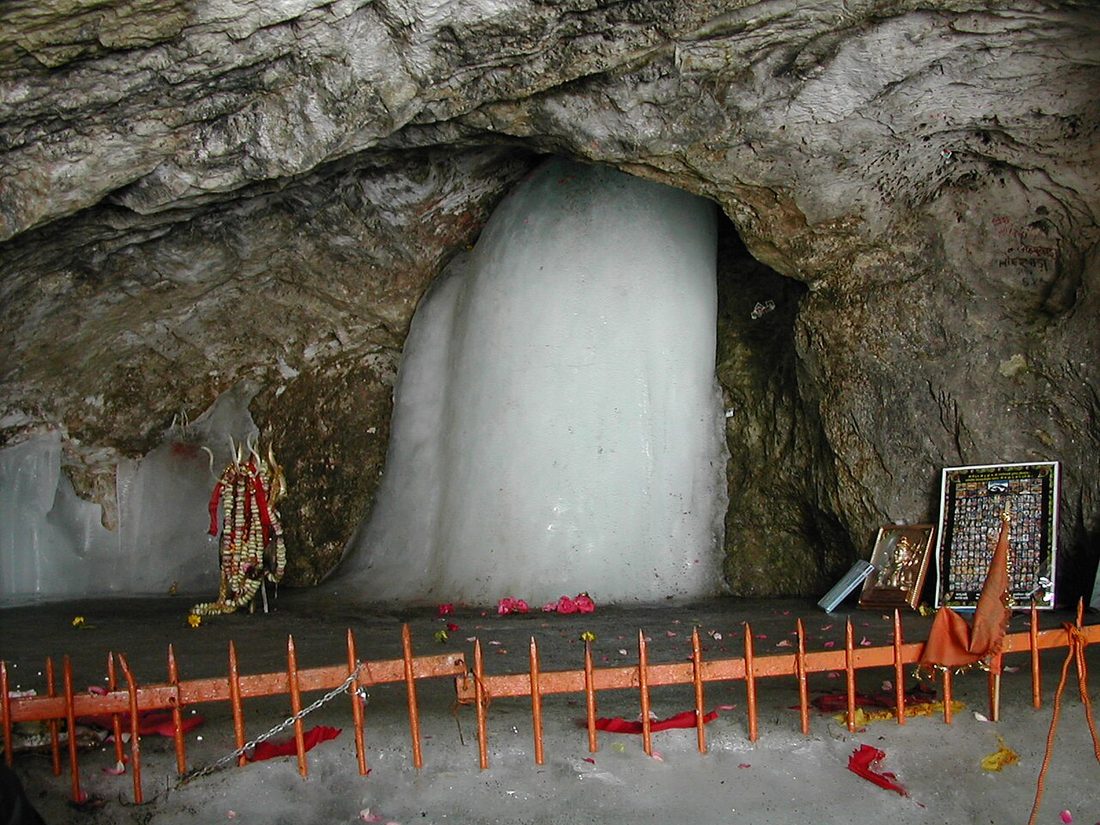
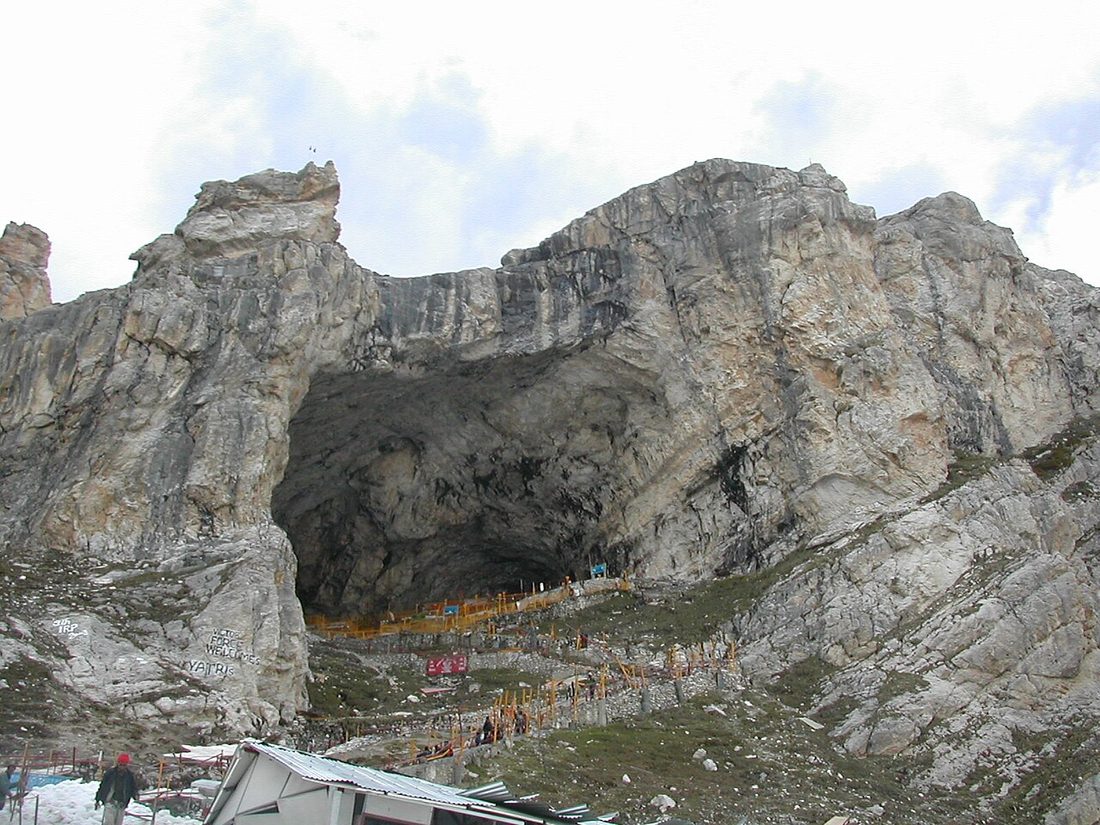
Every Shravan summer—usually between late June and the full moon of Raksha Bandhan in August—the snow bridges above the Lidder Gorge melt just enough to reveal the naturally formed ice Shivling inside Shri Amarnath Holy Cave at 3,888 meters. Devotees call the pilgrimage a calling from Baba Barfani, yet anyone who has escorted yatris out of Srinagar at 3:30 AM knows that devotion alone does not clear security cutoffs, mountain cloud banks, or Shri Amarnathji Shrine Board (SASB) medical verification desks.
This 3-night, 4-day Amarnath Yatra via Pahalgam & Panchtarni Itinerary is structured specifically around the calmer, greener southern axis out of Pahalgam—pairing an atmospheric arrival night on Dal Lake with helicopter-assisted transit between Pahalgam and Panchtarni, plus a crucial third day in Srinagar that serves both as a restorative heritage circuit (Shankaracharya Temple and Mughal Gardens) and a smart weather-delay safety cushion. Unlike tight 48-hour sprints that collapse if morning fog lingers over Panchtarni for four hours, this four-day cadence gives you breathing room to stand calmly before the ice lingam without racing an evening flight back home.
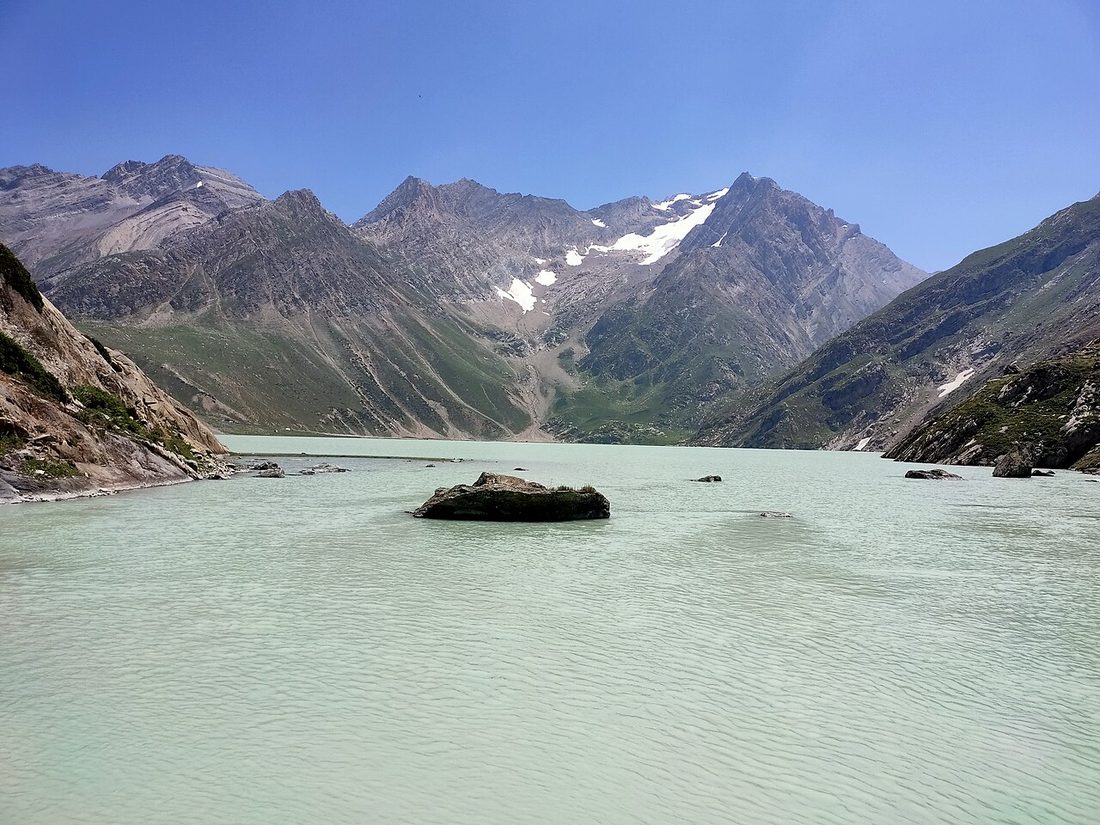
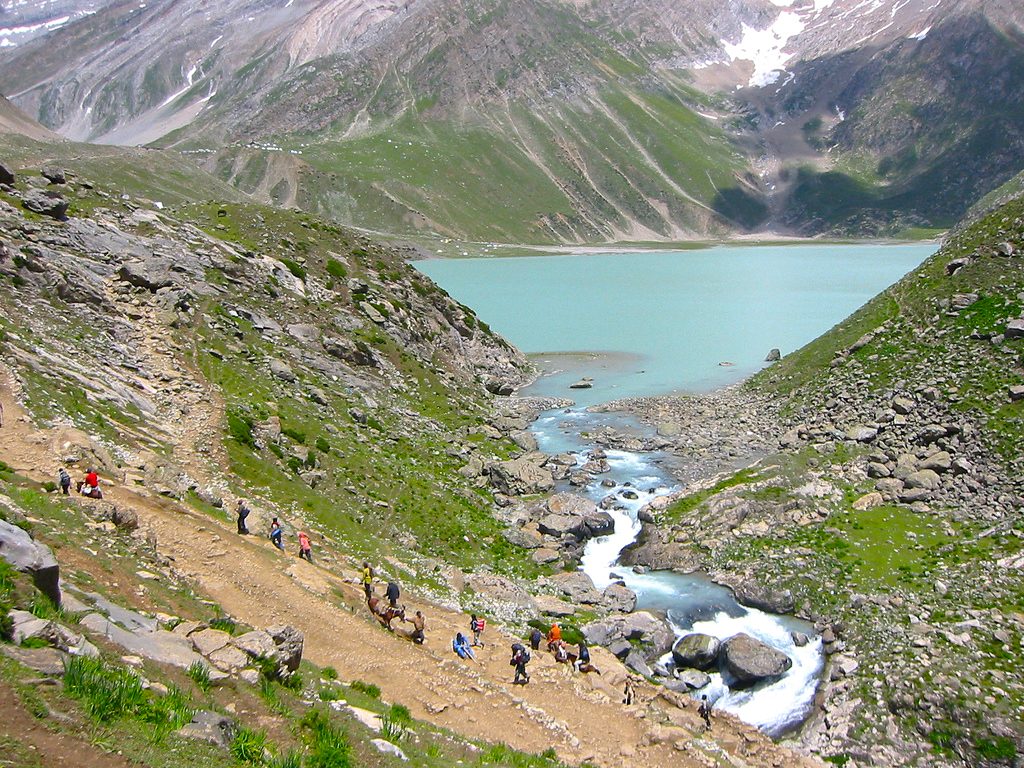
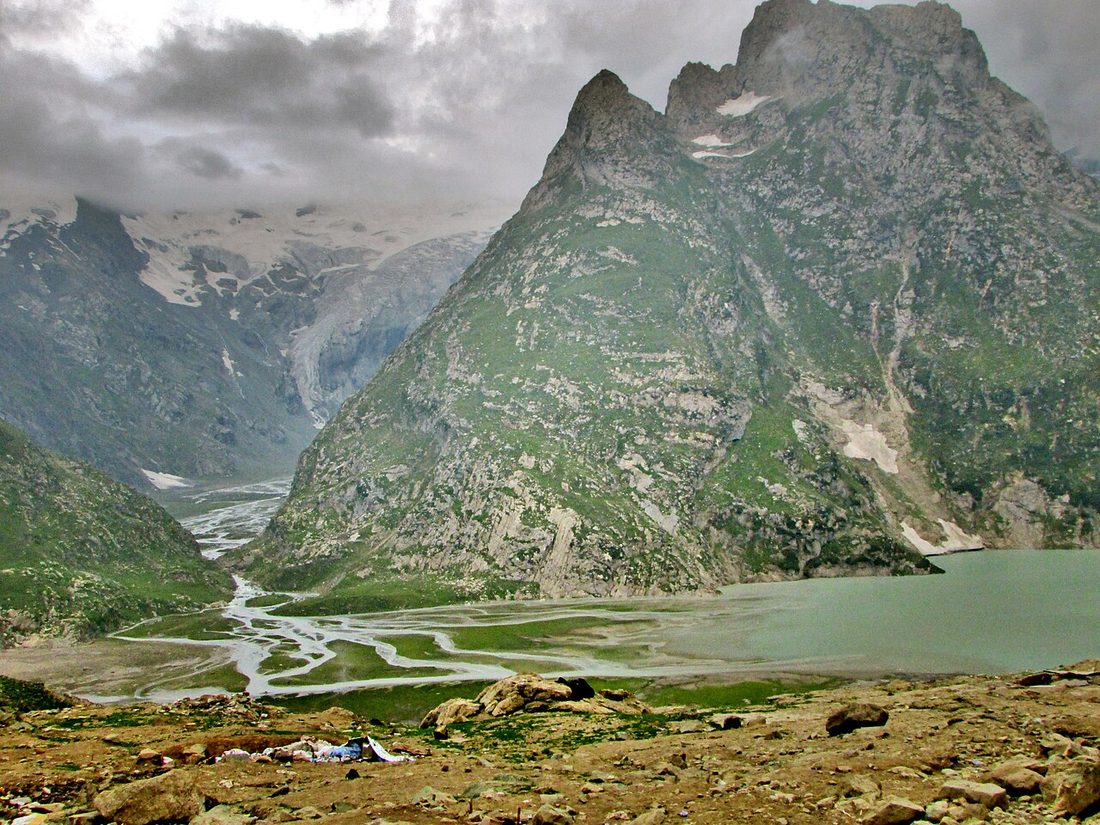
Traditional foot pilgrims walking the classic 46-kilometer southern trail spend three to four hard days climbing past Chandanwari (2,895 m), grinding up the steep switchbacks of Pissu Top, camping beside the icy turquoise waters of Sheshnag Lake (3,590 m), crossing snow-patched Mahagunas Top (4,276 m), and descending to the five-stream confluence at Panchtarni (3,657 m). When you fly the Pahalgam–Panchtarni helicopter sector, you trace that exact sacred watershed from the air in roughly 15 minutes—looking straight down onto Chandanwari’s glacial Harwat Nala, the snow-rimmed basin of Sheshnag, and braided tents dotting the valley floor below.
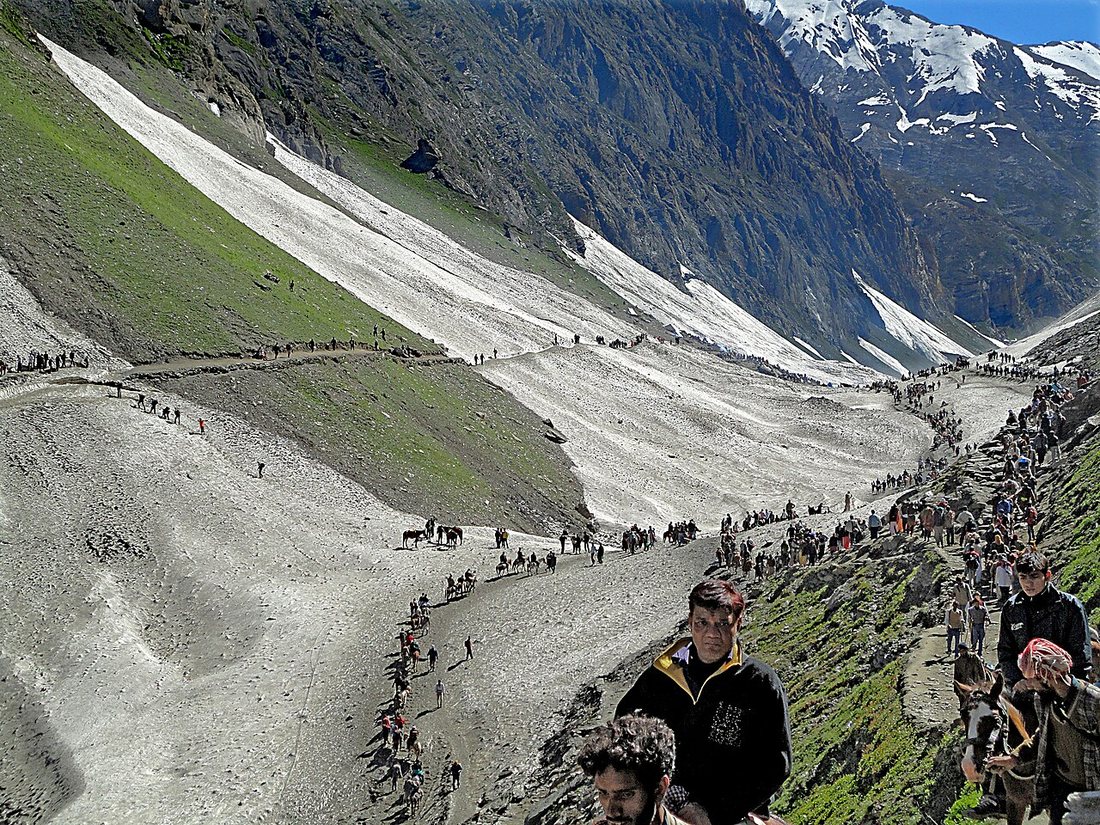
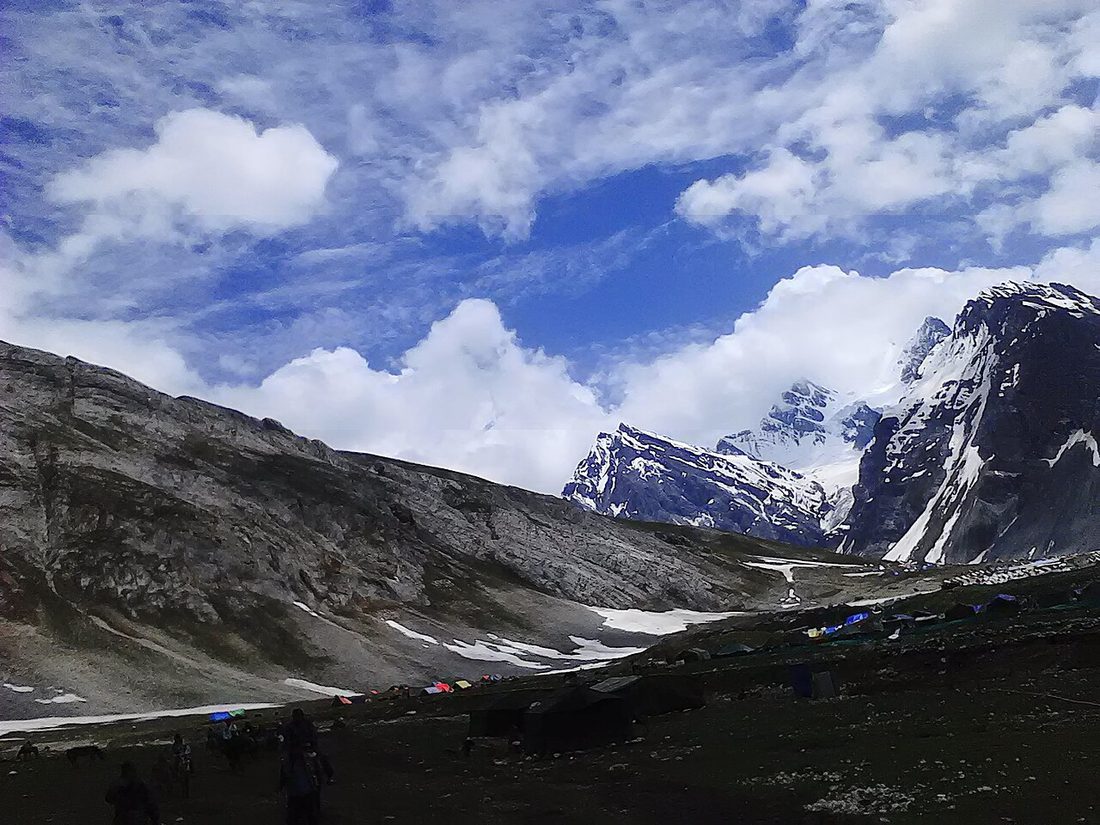
Touchdown at Panchtarni Helipad still leaves the final, unforgettable 6-kilometer mountain stretch between Panchtarni and the Holy Cave via Sangam Top. That last leg sits above 3,650 meters in thin Himalayan air. Fit pilgrims cover it on foot in 2.5 to 3 hours one way, pausing frequently at free community bhandaras for hot tea and glucose. Devotees conserving knees or breath can hire SASB-registered ponies, 4-bearer wooden palkis (dandis), or pitthu porters directly outside the Panchtarni heli-barricade at regulated board tariffs. Our ground team briefs you the evening prior on realistic walking times, return helicopter cutoff windows, and what to carry in a single 2-kilogram daypack.
Every summer we meet disappointed travelers at Srinagar Airport who bought flight tickets and booked hotels, assuming helicopter passengers skip Shrine Board formalities. That assumption stops your yatra cold at the very first barricade. During Yatra months, joint J&K Police and CRPF checkpoints enforce strict highway cutoff timings along NH-44 south of Pantha Chowk and at the Mir Bazar–Anantnag turnoff toward Pahalgam; tourist cabs carrying registered yatris pass smoothly only when every passenger’s documents are already printed, laminated, and paired with an active biometric lanyard. Whether you trek for four days or fly via Pahalgam or Sonamarg–Baltal, SASB enforces three strict entry rules without exception:
Morning convoys leaving Srinagar for Pahalgam cross tightly regulated security cutoffs along the Pantha Chowk–Anantnag highway during Yatra season. Never wait until Day 2 morning at Nunwan camp to queue for your RFID card—a 90-minute biometric queue can easily cost you your morning Pahalgam heli-boarding window. On Day 1 afternoon, our Srinagar representative escorts you straight to the nearest Srinagar RFID desk before your sunset Shikara ride so you depart pre-cleared before dawn.
Knowing exact altitudes and transit blocks removes guesswork on yatra morning. Review the operational timeline below for the Pahalgam–Panchtarni darshan day, and align your travel dates with our Best Time to Visit Kashmir Month-by-Month Guide (the first three weeks after Yatra opening consistently display the fullest ice Shivling before late-July warmth accelerates melt):
| Yatra Stage | Altitude | Distance / Duration | Mode & Operational Reality |
|---|---|---|---|
| Srinagar → Pahalgam Helipad | 1,585 m → 2,130 m | 92 km / 2.5 – 3 hrs | Private cab; depart 3:30–4:30 AM to beat Yatra convoy gates |
| Pahalgam → Panchtarni Flight | 2,130 m → 3,657 m | ~15 min flight | Bell 407 / twin-engine chopper; strict 5 kg soft baggage limit |
| Panchtarni → Holy Cave | 3,657 m → 3,888 m | 6 km / 2 – 3 hrs one way | Foot trek, SASB pony (1.5 hrs), or 4-man palki; langars en route |
| Holy Cave Darshan Queue | 3,888 m | 45 min – 2.5 hrs | Cameras & phones deposited at lockers; cold wind off ice wall |
| Return Cave → Panchtarni → Pahalgam | 3,888 m → 2,130 m | 3 – 4 hrs total | Report back by afternoon heli-cutoff; optional Pahalgam night halt |
Jumping rapidly from Srinagar’s 1,585 meters to Panchtarni’s 3,657 meters inside a single fifteen-minute helicopter climb bypasses gradual multi-day acclimatization. Even fit runners feel shortness of breath along the uphill switchbacks past Sangam. Treat that final six-kilometer walk with quiet respect: keep your stride measured, breathe rhythmically through your nose, sip lukewarm water every twenty minutes, and never sprint uphill to beat a queue. Free volunteer community bhandaras (langars) funded by charitable trusts from Punjab, Delhi, Gujarat, and Maharashtra line both Panchtarni camp and the final Cave approach—serving steaming khichdi, hot rotis with light dal, herbal tea, glucose water, and warm milk at zero cost. Eat lightly before ascending; heavy fried snacks sit stubbornly in the stomach at high elevation.
Two practical field realities catch first-time visitors off guard every Yatra season. First, outside prepaid SIM cards do not connect anywhere inside Jammu & Kashmir—carry an active postpaid Jio, Airtel, or BSNL connection (or pick up a temporary J&K Yatra SIM at Pantha Chowk) so you stay reachable by our driver and your family when sortie boards change. Second, remember that return helicopter flights out of Panchtarni generally wind down by mid-afternoon as valley thermals build clouds over Mahagunas ridge. If darshan queues stretch long and you miss the final return chopper, clean SASB-regulated weatherproof tents with thick quilts are available right beside Panchtarni Helipad (typically ₹600–₹1,200 per bunk during peak July), and your ticket carries forward to the earliest next-morning return flight—another reason Day 3 in Srinagar protects your homeward airfare.
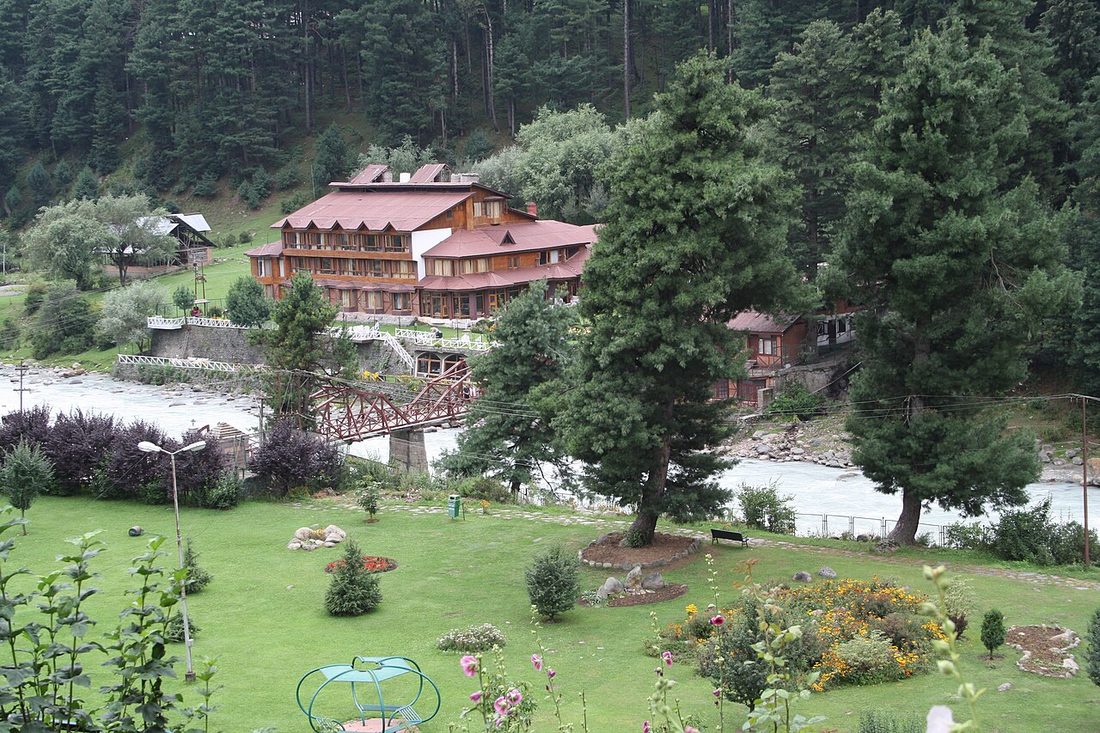
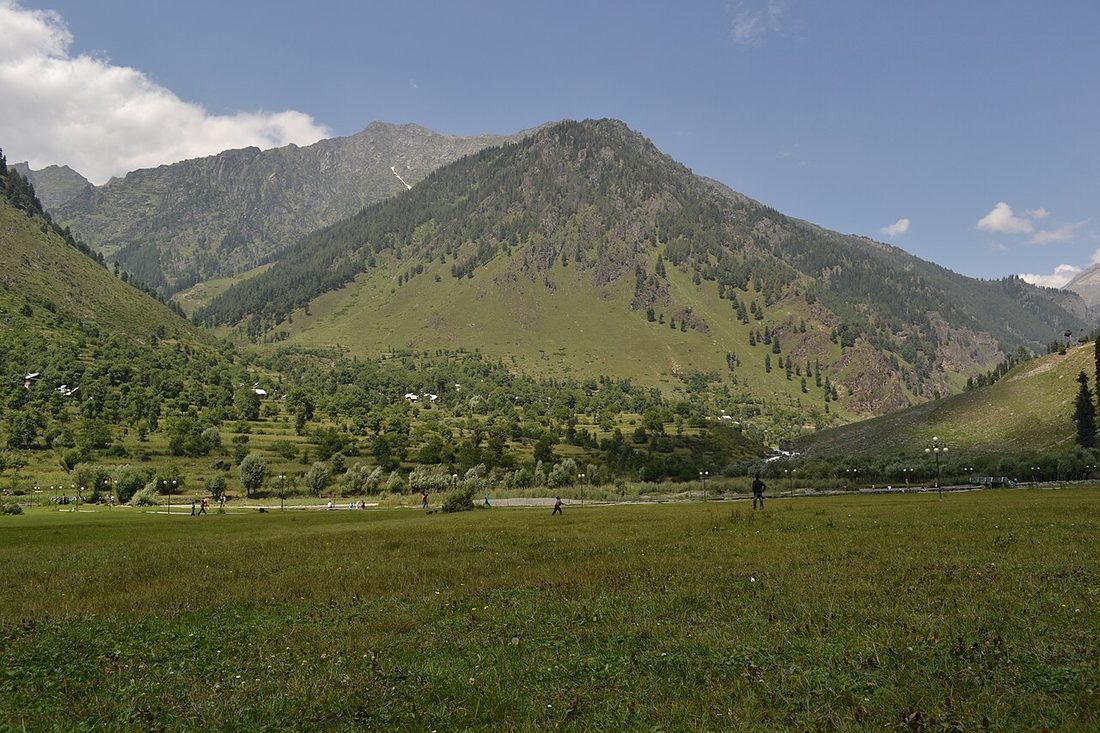
One genuine advantage of routing your pilgrimage through Pahalgam rather than the steeper northern canyon is what welcomes you when you step off the return chopper. Set beside the churning West and East Lidder streams, Pahalgam town sits wrapped in tall spruce forests and crisp 18°C summer breezes. If mountain clouds hold up afternoon return sorties—or if senior family members feel drained after six hours above 3,650 meters—this itinerary gives you the flexibility to rest overnight in Pahalgam rather than enduring a three-hour twilight highway drive back to Srinagar, then roll gently past pine meadows and Betaab Valley ridges the next morning.
Compare our express 2N/3D helicopter circuit operating via both Neelgrath–Baltal and Pahalgam helipads for weekend pilgrims.
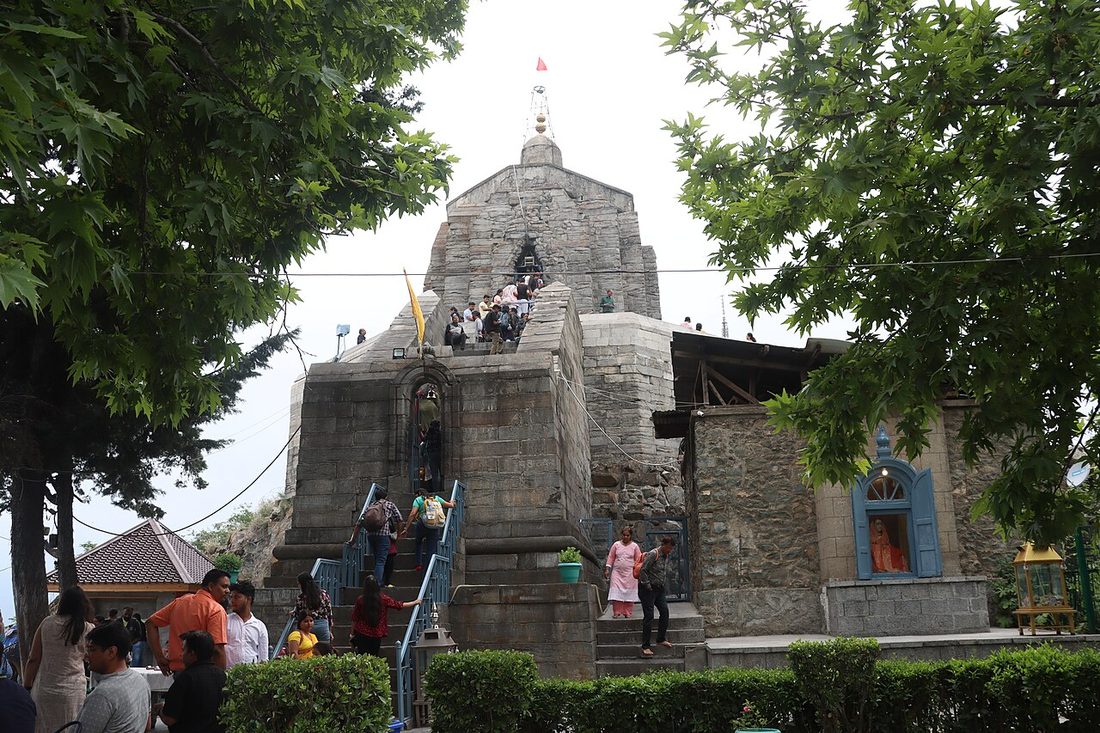
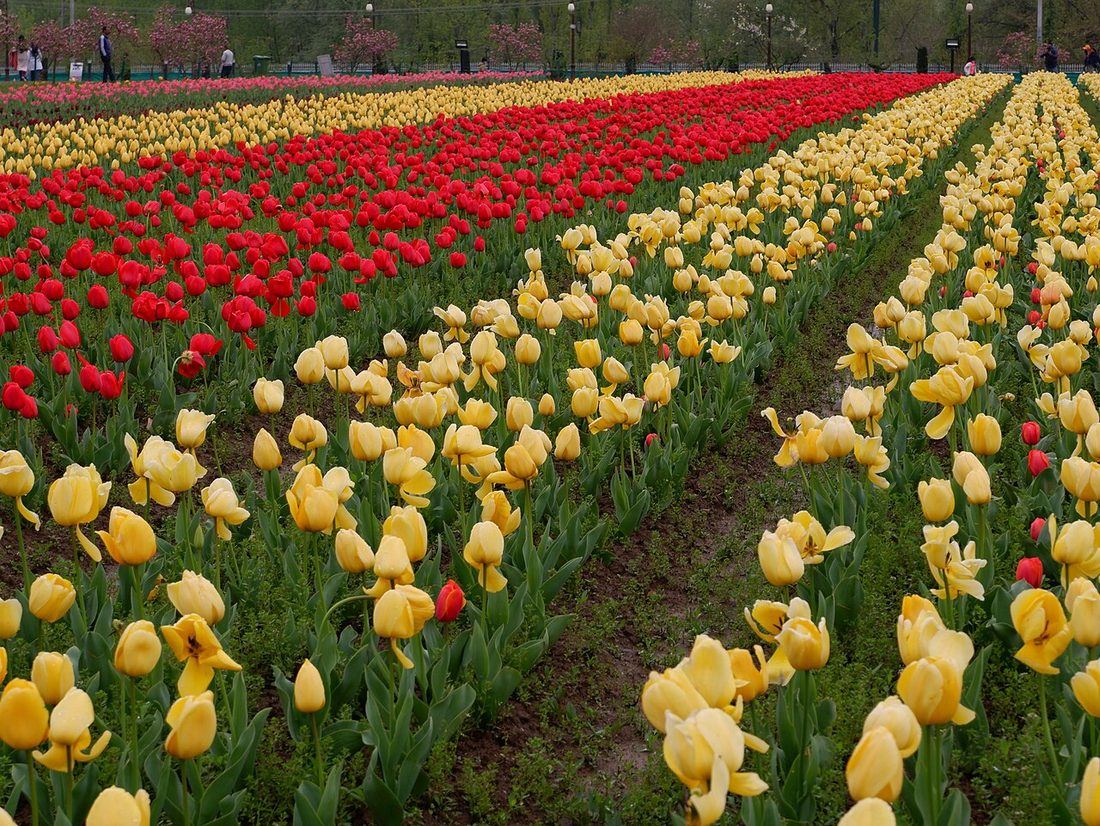
Closing your pilgrimage with a unhurried Day 3 in Srinagar brings deep spiritual symmetry. High atop Gopadri Hill (300 meters above the valley floor), the 9th-century grey-limestone Shankaracharya Temple is dedicated to Lord Shiva—traditionally visited by Shaivite yatris either before or right after Baba Barfani darshan. Climb its 240 carved stone steps in crisp morning light and the entire basin opens below: Dal Lake silvered by lotus channels, the winding Jhelum, and the Zabarwan ridge lined with Nishat Bagh, Shalimar Bagh, Chashme Shahi, and the hillside terraces of Asia’s largest Tulip Garden (famous in spring and overlooking the boulevard road year-round).
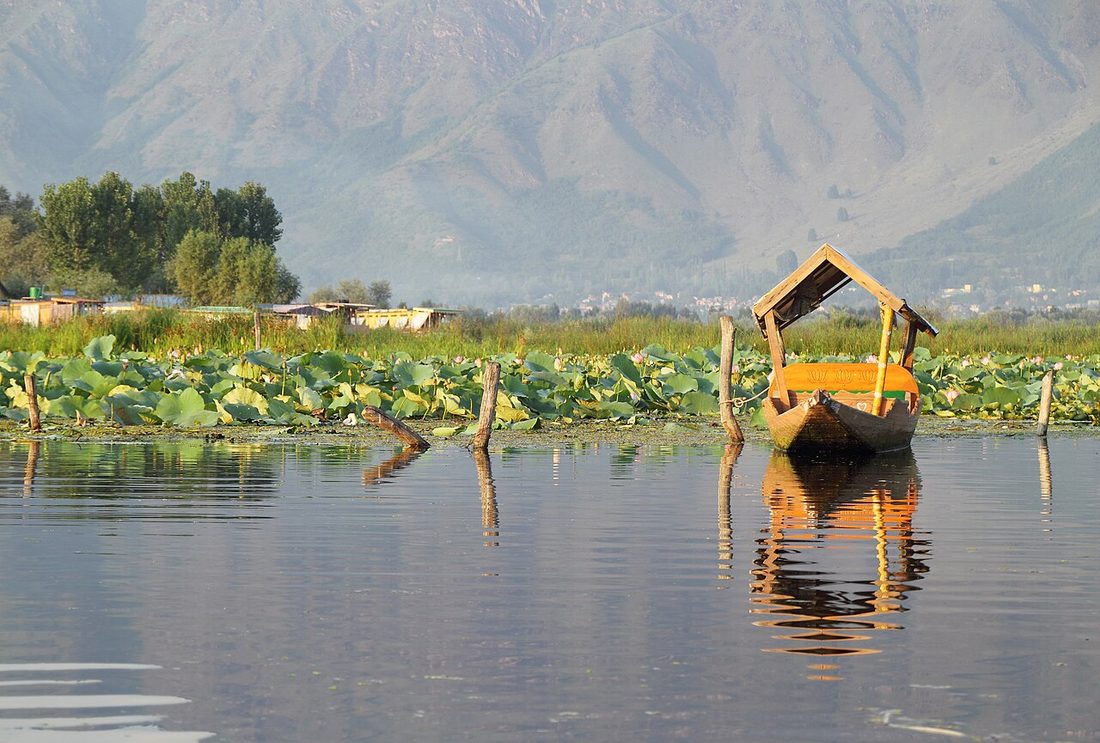
Evenings unfold aboard our Verified Hotels & Houseboats, where a quiet wooden Shikara carries you out to Char Chinar island as sunset turns the lake copper. Every meal is customizable—pure satvik vegetarian dinners (zero onion/garlic on request) are prepared cleanly throughout your stay so devotees observing vrat or Shravan fasting eat comfortably.
Even when Srinagar hits 30°C in July, wind slicing off the Amarnath ice face drops windchill near 2°C–5°C, and sudden hail squalls roll over Sangam within ten minutes. Leave loose cotton saris, jeans (which stay soaked and heavy once wet), and smooth leather sandals at your hotel: wear moisture-wicking thermal tops, quick-dry trek trousers, a lightweight fleece, a full-length waterproof poncho (umbrellas snap immediately in ridge gusts), woollen gloves, a warm skull cap covering your ears, and broken-in waterproof trekking shoes with deep rubber lugs for wet slush along the Cave stairs. Slip a dry pair of socks, lip balm, SPF-50 sunscreen, camphor tablets, and ₹2,000 in small cash notes inside a zip-lock pouch—digital UPI stalls frequently above Nunwan.
Many yatris who travel all the way to Kashmir combine Baba Barfani darshan with North Kashmir’s historic Sharda Peeth Temple (Teetwal LoC) Yatra, or continue south after Srinagar to bow at Mata Vaishno Devi in Katra on a custom extension similar to our Grand Kashmir Valley & Mata Vaishno Devi Combined Tour. For full seasonal logistics, check our Complete 2026 Kashmir Tour Packages Official Booking Guide, browse All Kashmir & Ladakh Tour Packages and Kashmir, Jammu & Ladakh Destination Guides, or reach our Srinagar pilgrimage desk via Customize Your Trip Desk and Kashmir Tour Packages.
We offer special tiered group tariffs for couples, families, and ski/travel groups from 02 Pax up to 14+ Pax with Deluxe centrally heated hotels & houseboats:
| PACKAGES | 02 PAX | 04 PAX | 06 PAX | 08 PAX | 10 PAX | 12 PAX | 14 PAX | EXTRA BED |
|---|---|---|---|---|---|---|---|---|
| DELUXE / BUDGET PACKAGE |
What's covered in your package
What's not included
Senior Kashmir Tour Consultant • +91- 9103232574 | Srinagar Office
Tailored Winter & Year-Round Departures from the United States (USD), Europe/UK (EUR/GBP) & Middle East / GCC (AED/SAR/OMR/QAR): Every itinerary on our New Year's Kashmir Tours & Kashmir Tour Packages portal can be customized with centrally heated Gulmarg & Pahalgam resorts, heritage Nigeen & Dal Lake houseboats, 4x4 snow-chain transfers during Chillai Kalan, 100% Zabiha Halal Kashmiri Wazwan alongside pure vegetarian/Jain kitchens, and private Toyota Innova Crysta / Force Urbania chauffeurs.
Direct GI-Tagged Kashmiri Export Assistance (USA CBP/FDA, EU REX/UK DCTS & GCC SFDA/ESMA): Travellers and boutique buyers can pair their holiday with verified Srinagar artisan studio visits for Pampore Mongra Saffron (ISO 3632), Changthangi Pashmina & Kani Shawls (CDI QR SFAL), Hand-Knotted Qaleen Silk Carpets, White Acacia Solai Honey, and Kiln-Seasoned Walnut Woodcraft shipped with insured air freight to New York, San Francisco, London, Frankfurt, Paris, Zurich, Dubai, Riyadh, Muscat & Doha. Read our 2026–2027 New Year's Kashmir Tours Complete Guide or browse all 139 Travel & Export Guides.
Read our local field guides for every stop on this itinerary before you pack:
Well-organized trip with comfortable centrally heated hotels, friendly local driver, and smooth sightseeing across Srinagar, Gulmarg & Pahalgam.
Rahul Sharma — New DelhiThe luxury houseboat stay, sunset Shikara ride, and Gulmarg Gondola & skiing arrangements were seamless. Highly recommended!
Priya Verma — AhmedabadClean hotels, heated rooms, and 24/7 trip support from Ms. Hina Beigh and the Kashmir i Tour team throughout our vacation.
Arjun Patel — PuneGet a customized itinerary & best hotel/houseboat rates from our Srinagar travel team.